By Priyajit Debsarkar
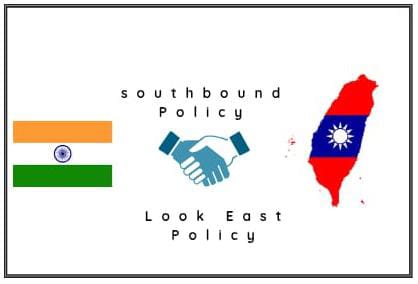
There could be potentially a lot of common ground between Taiwan’s new Southbound Policy and India’s Look East Policy, which can work in synergy. It can be a viable alternative to the rise of the Middle Kingdom in spheres such as economics, military ties, and influence over respective regions.
India plans to evolve and grow, seeking deep economic, strategic and cultural ties in the Indo-Pacific region, specifically in Southeast Asia as the critical keystone in this jigsaw could be Taiwan. India’s strategic engagements, which includes defence cooperation, especially maritime joint exercises with South Asian nations can work in conjunction with Taiwan’s effort to strengthen and secure her ties in her neighbourhood.
The maritime security domain is where both countries’ strategic interests not only align but they also can determine the course of their relationship in the future. The location of Taiwan in this domain is of vital importance, especially when it comes to joint indoor Taiwanese naval exercises, which also includes intelligence sharing, disaster relief and humanitarian assistance.
Both India and Taiwan can not only enhance their security relationship with multilateral border framework arrangements but also could exponentially increase on focusing of intelligence sharing, cyber security defence research and development, which could deliver cutting edge technology and countermeasures.
India has already strengthened intelligence sharing agreements with other regional partners such as Japan and has established cyber security cooperation frameworks, which effects the broader Indo-Pacific hence Taiwan and India could easily replicate such an arrangement, which will further strengthen this framework.
Lastly, both India and Taiwan’s engagement with each other fits appropriately with the QUAD strategic objectives, which is based on a vision of a free, open and fundamentally inclusive Indo-Pacific region which is of utmost strategic influence for India.
Indian Taiwan are also in the process of exploration and establishment of a semiconductor hub and levitating Taiwan’s expertise in the same conductor manufacturing industry is of paramount importance to India. This strategic alignment will aim to diversify the supply chains and to reduce India’s over-reliance on other nations to create a robust technology based ecosystem.
We have seen recently the shift in the United States policy towards moving semiconductor businesses into India and hence private players like Tata electronics and Taiwan’s semiconductor manufacturing corporations can become the benchmark in the fabrication of search technology, leapfrogging in India itself. Taiwan also will benefit from such an arrangement as they themselves want to reduce their dependence on China when it comes to the supply chain and India will provide a sustainable and an economic alternative.
Indian Migrant Workers in Taiwan
There’s a labour shortage in Taiwan in the manufacturing sector and to overcome it, Taipei is planning to bring 1000 Indian migrant workers. Last year Taiwan’s Ministry of Labour decided to receive workers from India when labour shortage reached 66,000 workers including 21,000 vacancies in the manufacturing sector alone.
Post the initial 1000 trial migrant workers, the potential could be to take much higher number probably 50 to 100 thousand. There are also both permanent and semi-permanent work agreements where seasonal workers could be recruited which might take the number a bit higher.
There has been some controversy for recruiting Indian workers for example Taipei’s labour ministry has officially apologised last year in March where a comment was made that preference would be given to Indian workers hailing from the Northeastern states based on their fairer skin tone, eating habits and religious and cultural affiliation in comparison to the northern or the southern parts of mainland India.
This is a very important social-cultural aspect and linguistic barriers as well which need to be carefully gauged and could have potential pitfalls in this recruitment process. There is a lack of familiarity and working opportunities in Taiwan amongst Indian workers who see the Middle East or European landscape as more greener pasture land compared to Southeast Asia and Taiwan could become one of the benchmark models to change the landscape.
Indian workers benefit from a wide range of skills and intellectual levels, so it would add in to the rich diversity of the emerging industries in Taiwan and it could work in synergy for both the employees and employers.
Another area of concern is workers are often subject to brokerage fees for example those arriving from other countries in Southeast Asia like Indonesia, Philippines, Thailand and Vietnam–so the Indian government will have to ensure that there is no potential scam or any kind of financial irregularities when it is coming to opening up this new recruitment drive.
Priyajit Debsarkar, is a UK-based geopolitical analyst and author with expertise in the South-Asian region.
Views expressed in this article are of the author and do not necessarily reflect the views of the publication, The Indo-Pacific Politics.
 क्षेत्रीय संवाद (Platform for Regional Discourse ) 區域對話的平台