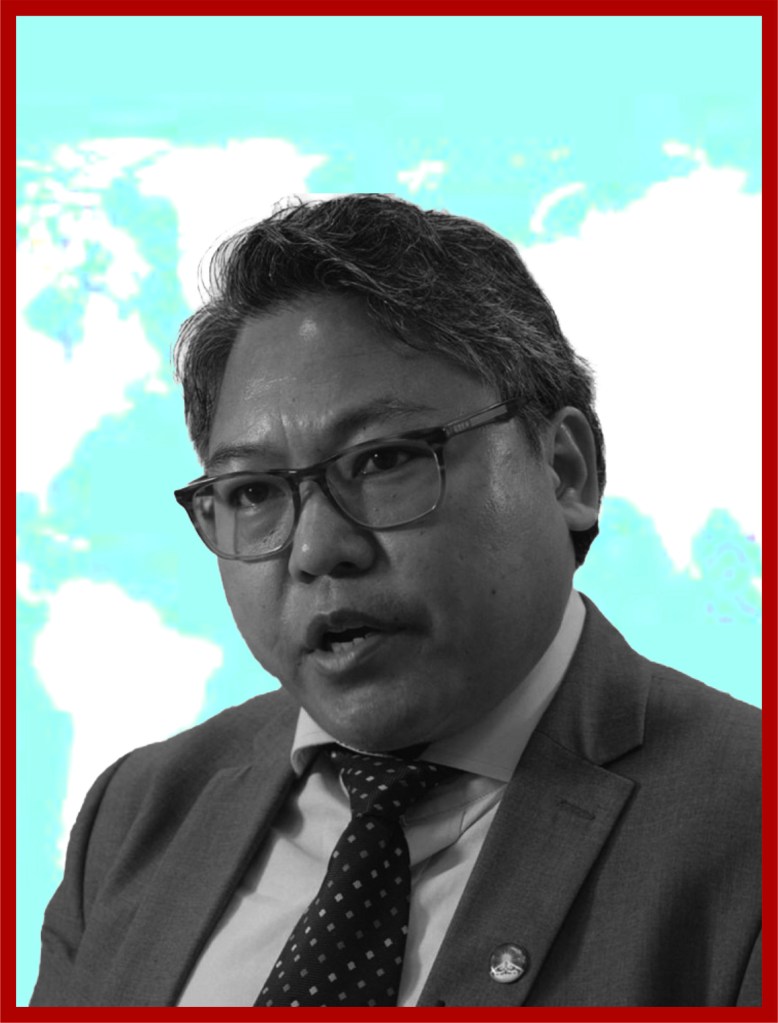
By Tsering Passang
The United States has long been a beacon of democracy and freedom, championing the rights of oppressed peoples worldwide. Yet, recent decisions to terminate foreign aid to key allies – including Tibet’s Government-in-Exile (the Central Tibetan Administration) – and withdraw federal grants to Radio Free Asia (RFA) and Voice of America (VOA) threaten these fundamental values. These cuts not only jeopardise the Tibetan struggle for justice but also undermine America’s strategic interests while emboldening Beijing’s authoritarian grip.
As the son of a veteran of the Tibetan resistance movement in Mustang – a movement that directly contributed to U.S. strategic interests in the 1960s and 1970s – I make this urgent appeal with profound conviction. My father spent a decade in the rugged Himalayan mountains fighting for Tibet’s freedom. While his battlefield was physical, mine is one of advocacy. From London, I work to counter China’s disinformation campaigns and stand alongside allies to expose the Chinese Communist Party’s (CCP) brutal oppression.
The ongoing occupation of Tibet has resulted in the deaths of an estimated 1.2 million Tibetans since 1950. Today, Beijing continues its systematic repression by forcibly assimilating nearly a million Tibetan children into state-run boarding schools, erasing their language, culture, and identity. The International Commission of Jurists (ICJ) has documented these atrocities, which constitute genocide under the 1948 Genocide Convention.
The recent U.S. funding cuts deliver a devastating blow to the Tibetan freedom struggle. RFA and VOA’s Tibetan-language services provide uncensored news to Tibetans inside occupied Tibet, where independent journalism is ruthlessly suppressed. These broadcasts serve as lifelines for Tibetans across the Himalayan region and beyond, exposing Beijing’s human rights abuses, religious persecution, and environmental destruction.
China’s propaganda machine wasted no time celebrating these cuts. State-run media gleefully framed them as victories in silencing critics and expanding Beijing’s influence. Weakening RFA and VOA emboldens the CCP’s propaganda while silencing marginalised voices fighting for their identity and dignity.
Discontinuing these critical services is not just a moral failure – it is a strategic blunder. It undermines Washington’s ability to counter Beijing’s malign influence, particularly in the Indo-Pacific. Sustaining RFA and VOA’s Tibetan services is both a strategic necessity and a moral imperative. These platforms also help preserve Tibetan language and culture, which the CCP seeks to eradicate.
For decades, RFA and VOA have been indispensable to Tibetans risking everything for information. Dismantling these services is akin to turning a blind eye to China’s campaign of terror against its own citizens and persecuted communities.
My father and his generation contributed significantly to regional stability, aligning with America’s commitment to democracy and human rights before the U.S.-China relations shifted under President Nixon. As Beijing aggressively challenges international norms ahead of the CCP’s centenary celebrations, supporting the Tibetan diaspora and its allies is crucial to advancing U.S. strategic interests and upholding core American values.
Born and raised in Tibetan refugee camps in Nepal, I have witnessed firsthand the impact of these vital services. The Mustang resistance, in which my father and his comrades bravely fought, sought not only Tibet’s freedom but also regional stability – objectives aligned with America’s historic commitment to defending democracy. Supporting the Tibetan diaspora remains essential for reinforcing U.S. interests in the Indo-Pacific and preserving the values that define America’s global leadership.
I acknowledge America’s enduring support for Tibet in Congress and deeply appreciate the commitments made by President Trump during his first term. His administration’s passage of the Reciprocal Access to Tibet Act (2018) and the Tibetan Policy and Support Act of 2020 sent a powerful message to Beijing: the United States stands firmly with the Tibetan people. These measures provided renewed hope to Tibetans worldwide and reinforced America’s leadership in defending oppressed communities.
Now more than ever, the world needs the United States to stand firm in protecting fundamental freedoms and resisting authoritarian oppression. I urge U.S. leaders to reinstate and increase funding for Tibet’s Government-in-Exile and sustain federal grants for RFA and VOA. Tibetans have been steadfast allies of America, and our youth must be equipped to carry forward the legacy of resisting CCP oppression and securing freedom, justice, and global peace.
To withdraw support now would be a gift to Beijing’s brutal CCP regime – a regime that exploits America’s generosity while undermining the rules-based order and silencing dissent worldwide.
I call on U.S. leaders, including President Trump, to recognise that defending persecuted communities like Tibetans, Uyghurs, and Hong Kong democracy activists is not just an act of compassion – it is a strategic necessity in countering Beijing’s aggression and protecting America’s global standing.
To retreat now would be to betray those who place their hope in America’s moral leadership while empowering the most dangerous authoritarian power in the world today. For Tibetans worldwide, steadfast support from the United States represents a vital step toward justice and freedom.
*Tsering Passang is the Founder and Chair of the Global Alliance for Tibet & Persecuted Minorities.
Views expressed in this article are of the author and do not necessarily reflect the views of the publication, The Indo-Pacific Politics.
 क्षेत्रीय संवाद (Platform for Regional Discourse ) 區域對話的平台