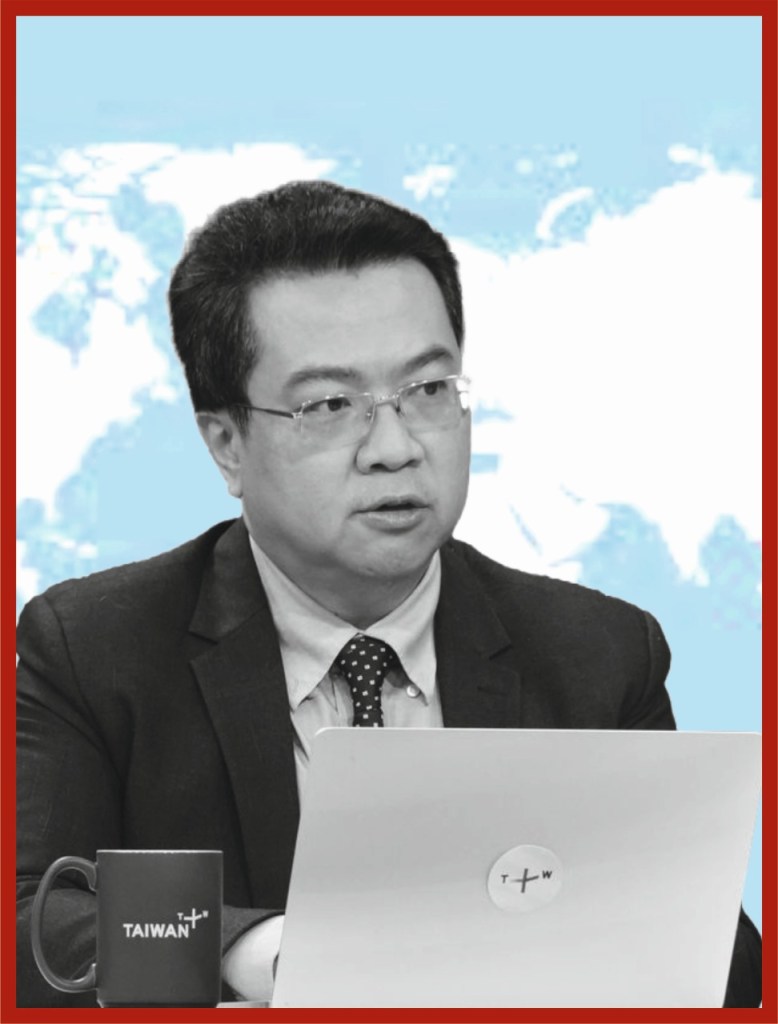
Roger Liu, a Professor at the International Master Program in Asia-Pacific Affairs at Taiwan’s National Sun Yat-Sen University talked with Venus Upadhayaya about Taiwan’s recent military reforms. Many media have earlier defined these reforms as a tougher stance towards the Chinese which includes the Taipei government identifying five key areas of threats to Taiwan’s national security and defining seventeen strategies to counter these.
Venus Upadhayaya: What’s the context to President Lai taking a tougher stance towards China? How urgent has this been?
Prof. Roger Liu: After President Lai Ching-te’s inauguration, he clearly reaffirmed the position that the Republic of China (Taiwan) and the People’s Republic of China are not subordinate to each other. In response, China has intensified its military intimidation against Taiwan. The frequency of Chinese warplanes and naval vessels circling the island has more than doubled, reaching over 5,000 occurrences. Beyond the People’s Liberation Army Navy, China has also begun deploying its Coast Guard to conduct drills for potential future quarantine or isolation operations.
China’s strategy appears to be exerting strong military pressure from the outside so that local collaborators within Taiwan will echo Beijing’s narrative and call for a peace agreement with China, thereby disrupting public sentiment and weakening morale. Consequently, President Lai has issued 17 corresponding guidelines aimed at preventing further infiltration by China.
Venus Upadhayaya: There’s a lot of news about Chinese Espionage in Taiwan. Do you think the Taiwanese administration’s recent military reforms are to address this? What should the world understand about this?
Prof. Roger Liu: Taiwan’s police, prosecution, and investigative agencies—such as the Investigation Bureau under the Ministry of Justice—have consistently carried out intelligence-gathering and anti-infiltration operations. Recently, the government has begun revising legislation to increase penalties for espionage offenses, while restoring military trials for cases where military personnel leak classified information, aiming to enhance deterrence through stricter sentencing.
A current concern in Taiwan is the behavior of some Chinese spouses married to Taiwanese citizens. On social media platforms like TikTok or Xiaohongshu, certain individuals have been posting videos promoting the People’s Liberation Army and advocating for unification of Taiwan by force. Their strategy, sometimes referred to as “salami-slicing,” seeks to gradually legitimize the PLA’s potential military unification actions—akin to a “boiling frog” approach.
In response, the Taiwanese government has initiated investigations into Chinese spouses who espouse forceful unification. At least three such cases are under investigation, and one individual has already been deported. Notably, upon this person’s arrival in Fuzhou, she was surrounded by eight or nine plainclothes national security officers—a very unusual development.
Venus Upadhayaya: The Chinese activities in the waters around Taiwan has only been increasing. How has the Taiwanese administration dealt with it? What should the world understand about it?
Prof. Roger Liu: China has increased the deployment of warships and military aircraft around Taiwan, apparently aiming to establish a fait accompli in international law and undermine the long-standing “median line” in the Taiwan Strait—a tacit understanding between both sides for many years. Furthermore, China has begun to utilize the world’s largest coast guard, particularly near restricted waters surrounding the outlying island of Kinmen, to exert military pressure on vessels of Taiwan’s Coast Guard Administration.
China has begun to “exert military pressure on vessels of Taiwan’s Coast Guard Administration.”
Prof. Roger liu
However, these actions are conducted very cautiously. China does not actually cross the 24-nautical-mile contiguous zone, nor does it enter the 12-nautical-mile territorial waters. Instead, it is playing a precarious game, operating just near the boundary without overtly violating it. Consequently, beyond maintaining vigilance and dispatching our naval and air forces to drive them away, there is little in the way of a direct response that Taiwan can undertake.
Nevertheless, the Taiwanese government has begun more rigorous “social resilience” exercises. These drills consider hypothetical scenarios in which the People’s Liberation Army infiltrates Taiwan to cause social unrest, and they outline strategies to respond to such disruptions. Faced with Beijing’s intensified pressure, Taiwan requires further international support—both in terms of freedom of navigation operations in the region and stronger diplomatic backing.
Venus Upadhayaya: Do you think it’s time the QUAD talks about Taiwan? Should Taiwan become a part of QUAD plus? How should the Taipei administration diplomatically convey it?
Prof. Roger Liu: If the QUAD were to issue a joint statement supporting security around the Taiwan Strait, Taiwan would certainly welcome it. Indeed, the four countries have previously made statements emphasizing the importance of maintaining peace in the Taiwan Strait. However, a statement alone is insufficient, because the People’s Liberation Army will continue to test the resolve and potential actions of the United States, Japan, India, and Australia.
The QUAD should also take concrete measures in certain hotspots, such as the conflicts between the Philippines and China in the South China Sea. If the four countries can successfully help the Philippines resist China’s military intimidation, it would have a positive demonstrative effect for Taiwan and also serve as a deterrent to the People’s Republic of China. Since the United States and the Philippines have a formal mutual defense treaty, the U.S. side is fully justified in defending the Philippines.
Venus Upadhayaya: Is there anything else that you want to convey to our readers on this topic?
Prof. Roger Liu: Taiwan’s citizens have largely become immune to the Chinese Communist Party’s verbal threats and intimidation. What we are more concerned about is the possibility that the People’s Liberation Army (PLA) might escalate from conducting drills to launching a surprise attack—specifically, a “decapitation strike” targeting Taiwan’s command centers—then collaborate with local cooperators to rapidly dismantle our government system from within.
“What we are more concerned about is the possibility that the People’s Liberation Army (PLA) might escalate from conducting drills to launching a surprise attack.”
Prof. Roger liu
Another issue to watch is that the PLA and other armed forces, especially the China Coast Guard, may form mixed fleets to “quarantine” Taiwan—essentially imposing a blockade. Neighboring countries, particularly QUAD members, should prepare for such a scenario in advance and conduct joint exercises with Taiwan’s naval and coast guard forces to develop countermeasures.
On the international legal front, legislatures in Europe and the United States have begun passing resolutions refuting China’s misleading claim, purportedly based on UN Resolution 2758, that “Taiwan is part of China.” While this is a positive start, it remains crucial for Europe, the U.S., and other key Indo-Pacific nations to move more quickly to prevent China’s multi-pronged strategy—combining propaganda and military intimidation—from compelling Taiwan into de facto unification. A blockade of Taiwan would disrupt the global semiconductor supply chain, with profound consequences for the entire world.
 क्षेत्रीय संवाद (Platform for Regional Discourse ) 區域對話的平台