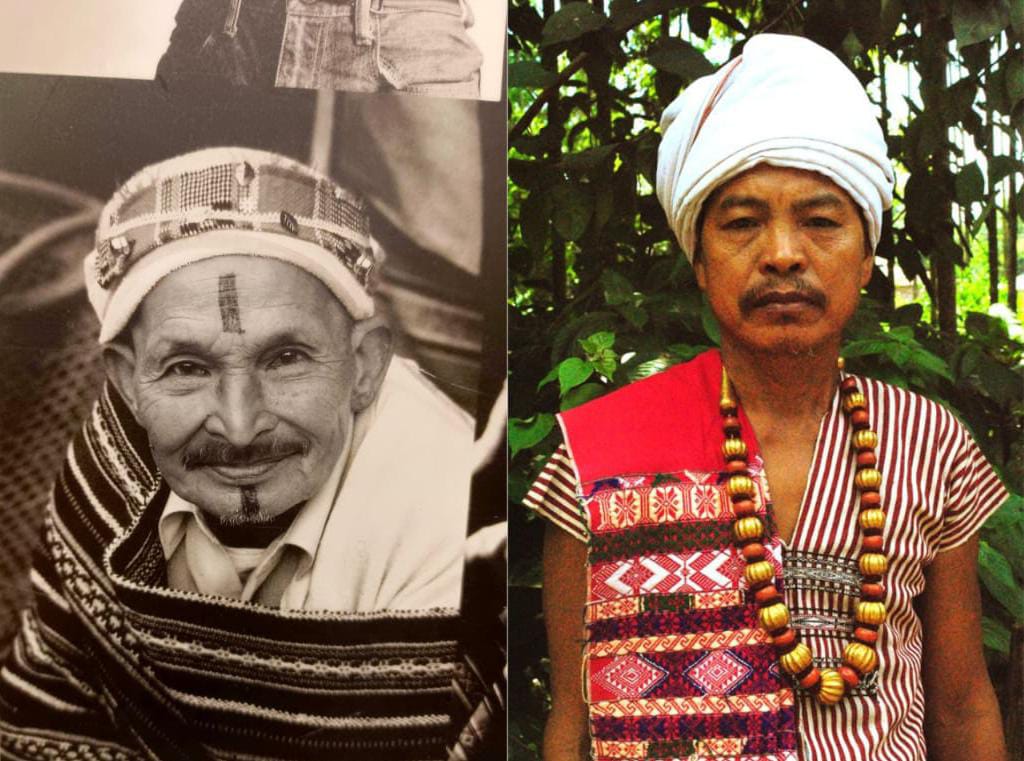
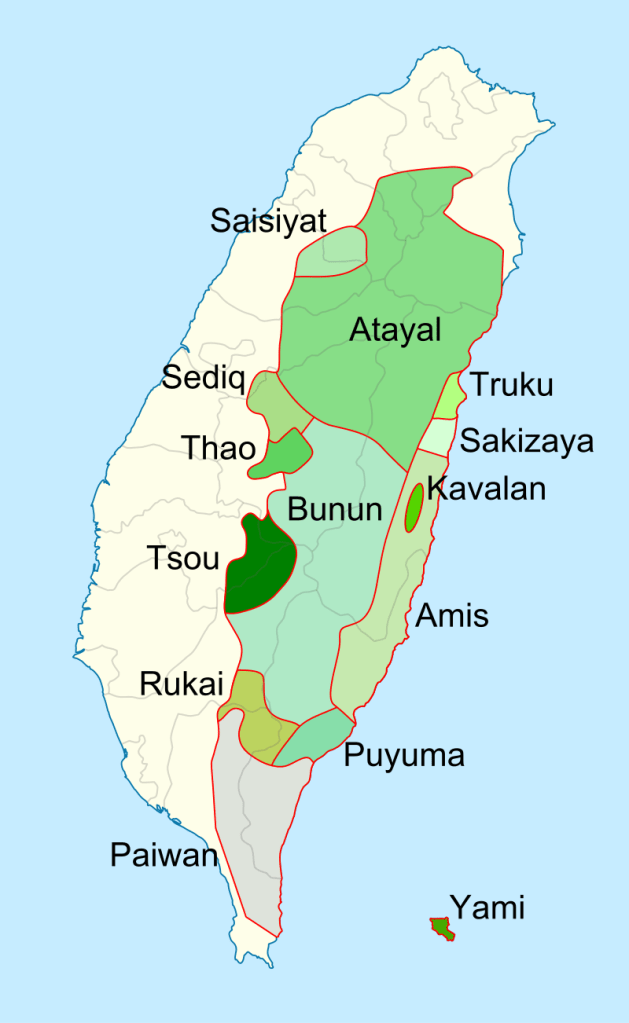
There are 16 Austronesian tribes in Taiwan: Amis, Atayal, Paiwan, Bunun, Pinuyumayan, Rukai, Cou, Saisiyat, Yami, Thao, Kavalan, Truku, Sakizaya, Sediq, Hla’alua and Kanakanavu. Their population is 571,816 (2019), or 2.42% of the total Taiwanese population, according to the International Work Group for Indigenous Affairs. Their affairs are managed by the ministry known as the Council of Indigenous Peoples (CIP) and under Taiwan’s constitution, they are given political representation in the national parliament. Electoral districts and legislature seats are designated for them separately.
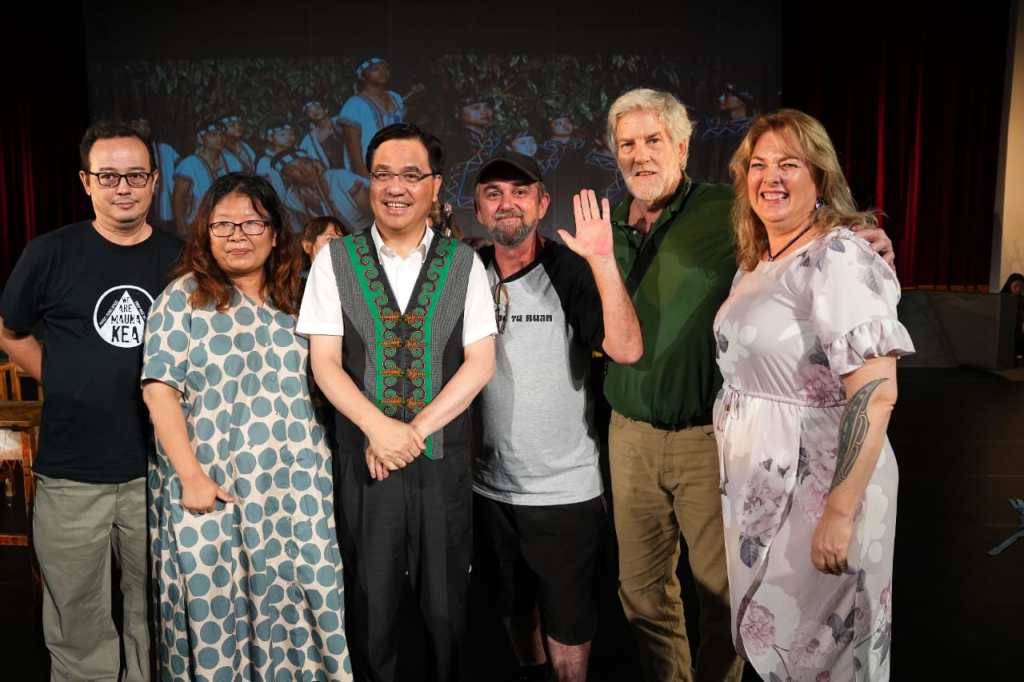
The Indo-Pacific Politics (IPP) talked with Gary Smoke, the Director/Vice President of the Indigenous Bridges, a charity with a vision to preserve Indigenous culture and wisdom. It runs the Indigenous Bridges Youth Ambassador Program (IBYAP) that brings youth from various indigenous groups together from around the world for empowerment and leadership building. The next IBYAP is scheduled for July and the IPP discussed with Gary about the possibility of a cultural connection and exchange between the Taiwanese and the Indian indigenous tribes.
IPP: You are involved with two organizations: Atayal and Indigenous Bridges. Tell us about them and what kind of cultural heritage do they represent for Taiwan?
Gary Smoke: I know this seems a little confusing but ATAYAL/Indigenous Bridges are one in the same. Our original name and registered name, as an NGO, is ATAYAL. This is the tribe that our founder’s relatives come from. His name is Tony Coolidge and he lives in America currently. Indigenous Bridges focuses on youth and we have a Youth Ambassador Program that provides opportunities for these young people.
IIP: What are the upcoming events?
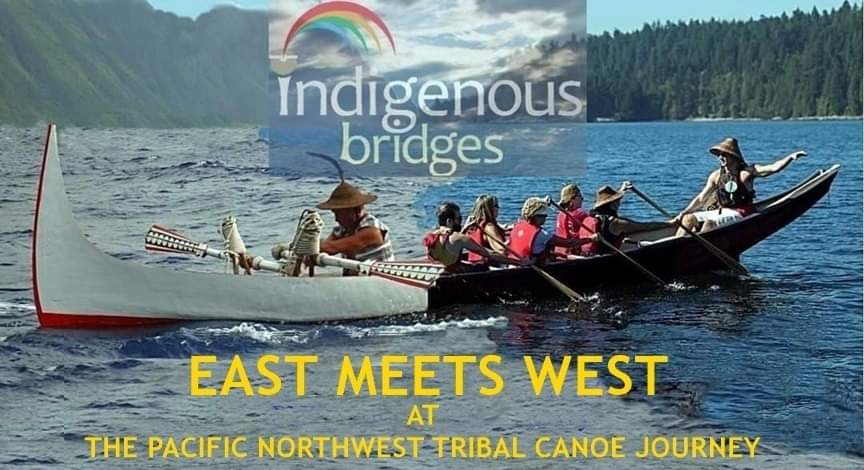
Gary Smoke: As this summer approaches, we look forward to once again travel to America for the Pacific Northwest Tribal Canoe Journey. “Our Journey VI” departs on July 20th. The tribal canoe journey is a yearly event that began in 1986. It has been a cultural gathering every year since that time except during the COVID years.
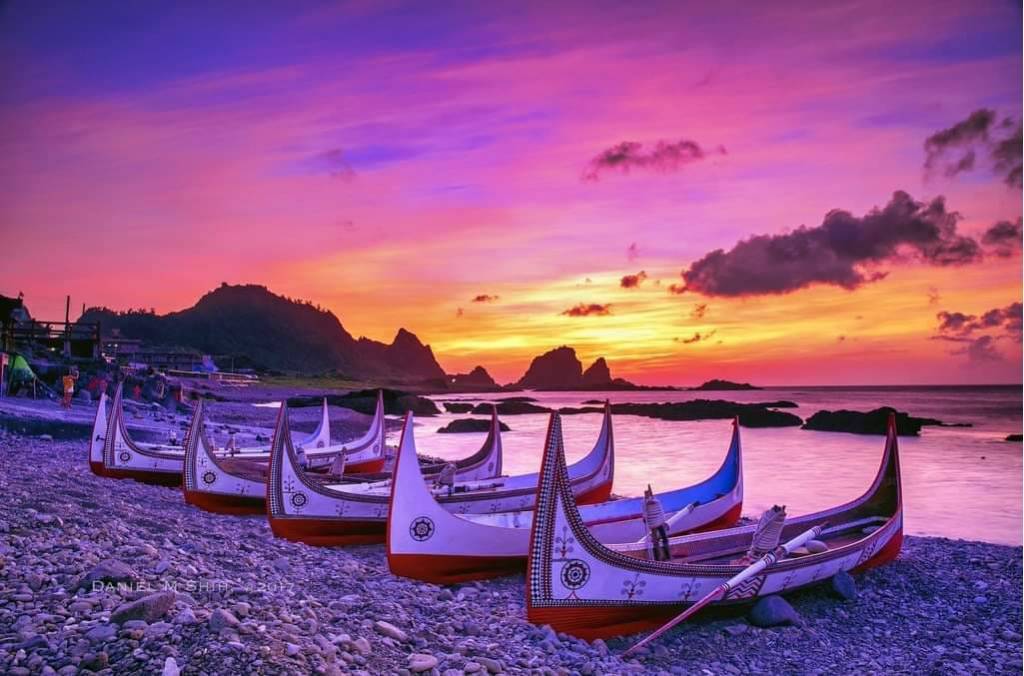
“Our Journey I” took place in 2017. Most of our delegation was from Lanyu Island. The people from Lanyu share a canoe culture with the Native Americans and Canadian First Nations people and this is the foundation of our cultural exchanges.
I attended in 2016 and had the opportunity to formulate a plan to attend in 2017. We were also invited to become part of the Nisqually Tribe Canoe Family.
Since that time, we have been able to formulate relationships with several Pacific Island nations. We have Ambassador level contacts here in Taiwan with New Zealand, Palau, The Marshall Islands and Tuvalu. Our other contacts include Madagascar, Indonesia, Philippines and several Native American tribes.
IIP: How are the 16 Taiwanese tribes connected to other Austronesian tribes around the globe?
Gary Smoke: The Austronesians populated Taiwan some 10,000 years ago. Since that time, they have dispersed throughout the island. Eventually forming three different groups, the mountain people, the coastal people and the plains people. Sometime between 4,000 to 5,000 years ago the southern tribes from Taiwan spread south towards the Philippines.
This marked the beginning of the Austronesian migration. The other tribes developed their own cultures based on their location. There were occasional skirmishes between tribes and some were fiercely protected their territory. The Atayal were known as headhunters and place the heads on poles or racks to warn those who entered. Today the Yami (Tao) people from Lanyu and the Paiwan tribe from Pingtung are the most prominent groups that continue to explore this shared heritage. The Tao recently built a Chinurikura (10 man boat) and will make the journey south to the northern most Philippine islands possibly this summer.
IIP: What does this shared heritage mean for today’s humanity? Why should it be preserved and conserved?
Gary Smoke: Understanding our past is the foundation of our future endeavors. In my view, culture should be preserved and shared. There is also much to be learned from indigenous history. Indigenous people are the people closest to the land. They have developed techniques and processes that have provided for their existence without the convenience of modern technology.
I recall being in the States some years ago and was told by a Native American friend that there was an outbreak of some type of weevil or bug and the bureau of Land Management couldn’t bring it under control. They finally approached the Native American tribe and asked for their assistance. It was promptly given and the problem was solved within a few years. I’m sure there are many other things that indigenous cultures can provide to modern day cultures around the world.
IPP: India doesn’t has Austronesian tribes but its north east region has Astroasiatic tribes–these two have separate origins but in course of long history have come to share some cultural features and do have a strong genetic linkage according to research studies. What kind of a common research approach or exchange do you suggest between India and Taiwan in this context of their indigenous people?
Gary Smoke: I’m not sure if there are any Austronesian Organization here in Taiwan. I would also be interested in exploring this in the future.
IPP Editorial: Taiwan is the origin of the Austronesian-speaking people and its indigenous tribes began migrating to South-east Asia and what’s today Pacific Island nations as early as 5000 years ago, according to research studies. India has Austroasiatic tribes in its north-east. The latter is also found in Malaysia, Thailand, Nepal, Laos, Myanmar, Bangladesh and southern China. The relationship between the Austronesian and Austroasiatic tribes has been a topic of research. In 2024, Waruno Mahdi from the Fritz Haber Institute of the Max Planck Society, Berlin, Germany published a paper titled ‘Austroasiatic loanwords in Austronesian languages (pdf)’ that throws some light on the linguistic connection between the two. There could be other possibilities of cultural connection and historic exchange between Austronesian and Austroasiatic tribes that India and Taiwan can explore under their cultural diplomacy.
In 2024, Waruno Mahdi from the Fritz Haber Institute of the Max Planck Society, Berlin, Germany published a paper titled ‘Austroasiatic loanwords in Austronesian languages (pdf)’ that throws some light on the linguistic connection between the two.
IPP Editorial
IIP: In India, the Tribal art and local produce is provided market and also marketing help locally and federally. That’s a part of our grassroots economy and it’s huge and diverse keeping in mind India’s size. Do you think India and Taiwan can create a common market for the promotion of produce from their tribal artisans?
Gary Smoke: Certainly, I believe this is possible and we have explored this in the past. However, current law requires government approval and that always takes time. The United Nations has also spoken out about indigenous autonomy. We would welcome the opportunity to be a bridge in this regard and do our part to be of assistance.
IPP Editorial: Tribal population constitutes 8.9 percent of India’s total population–some of them are Austroasiatic-speaking communities in the North-east. Tribal Cooperative Marketing Development Federation of India Ltd. (TRIFED) under country’s Union Ministry of Tribal Affairs has launched multiple promotion campaigns for products from the tribal communities of India’s north-east with the intent of ‘local to global’–establishing markets within India and abroad. India also has many civil society initiatives like the ‘Tribal Design Forum,’ a community of multidisciplinary designers and creative professionals from various tribes of India.
IIP: Is there anything else that you would want to share on this topic with our readers?
Gary Smoke: Throughout history Taiwan has long been the home of indigenous people. Over the years, as in many countries with indigenous populations, their lives have been marginalized by governments. Their cultures have been threatened by those who seek to integrate these people into what they call modern society. Our organization, indigenousbridges.org, strives to assist in the preservation of these indigenous cultures not only in Taiwan but throughout the world. We are committed to being a bridge that will formulate unity, understanding and participation. Our youth ambassadors bring this idea to the forefront through programs we are developing.
 क्षेत्रीय संवाद (Platform for Regional Discourse ) 區域對話的平台
