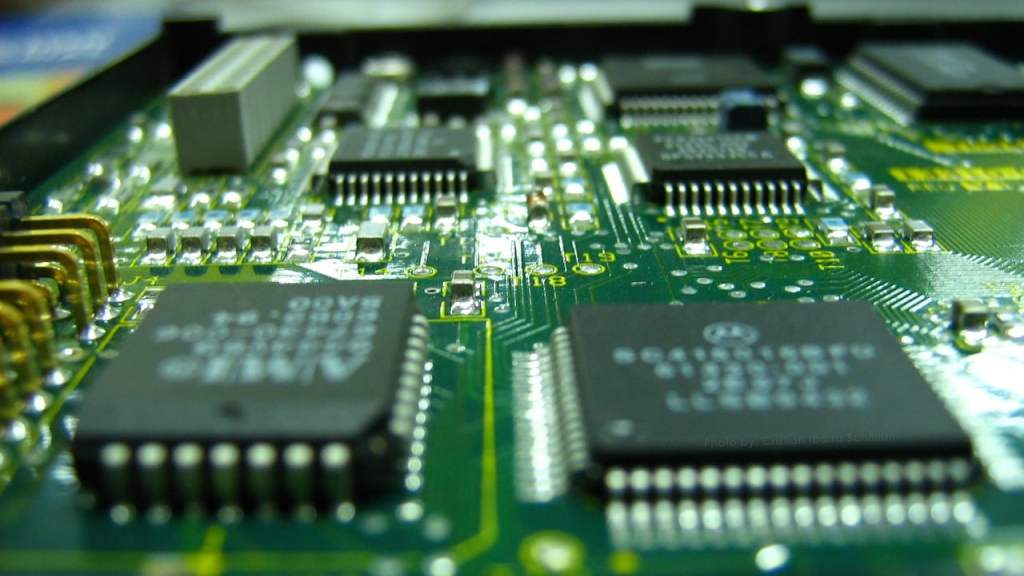

India’s Semiconductor dream has started to unfold. The country is set to launch its first domestically produced semiconductor chip utilizing 28 to 90 nanometre technology by this year end. Under its Semiconductor Mission, the country is also currently developing six chip fabrication units. Taiwan is an important part of these developments–Foxcom or the Taiwanese Hon Hai Technology Group is a part of a new semiconductor joint venture with HCL, approved by India’s Union Cabinet on May 14. It’ll be set-up near Uttar Pradesh’s Jewar Airport within the Yamuna Expressway Industrial Development Authority (YEIDA) region.
Taiwan is also part of another recent developemnt at Dholera, Gujarat. The Indian government has signed a fiscal support agreement with Tata Electronics and Tata Semiconductor Manufacturing in early May for establishing another semiconductor facility worth INR 910 billion (US$10.44 billion) in Dholera. For this project, Tata Electronics has partened with Taiwan’s Powerchip Semiconductor Manufacturing Corporation.
Inorder to understand the semiconductor partnership between India and Taiwan, the Indo-Pacific Politics talked with Dr. Poonam Sharma, a post-doctoral researcher at the International Center for Cultural Studies (ICCS) at the National Yang-Ming Chiao Tung University, Hsinchu, Taiwan. She is keenly following the technology partnership between India and Taiwan and is working on enhancing chip diplomacy between the two countries.
Indo-Pacific Politics (IPP): What’s India’s Semiconductor dream, and how do you understand it vis-a-vis Taiwan?
Poonam Sharma: First, it is essential to understand that the Indian Semiconductor Mission (ISM), initiated by the Government of India, is a transformative drive to launch India as a leader in the Global Semiconductor Industry. This mission encourages research and development in the semiconductor industry and involves substantial financial investment on an international platform. Establishing domestic fabs and attracting Taiwanese suppliers would strengthen India’s global electronics value chain position and support the government’s ‘Make in India’ initiative.
The whole process would drive capital flows, create high-value jobs, and stimulate the broader tech ecosystem in India. Moreover, the entire process offers India–technical know-how and a depth of supply chain. Most importantly, the whole process strengthens India’s software and AI development in the global order.
IPP: 2: How important is Taiwan’s chip diplomacy globally? How is it unique between India and Taiwan? What’s driving it, and how is it envisioned in the next decade?
Poonam Sharma: Taiwan’s role in the global platform is significant as it is the frontrunner in the semiconductor industry; the island manufactures around 63.8 percent of the world’s semiconductors, and the 2nm process technology is the most advanced technology available globally. Consequently, Taiwan remains the global leader in technology and the related research and development in the semiconductor industry.
In February 2024, Powerchip Semiconductor Manufacturing Corporation (PSMC) and the Indian Company Tata Electronics entered into a venture to invest USD 11 billion to build India’s first wafer fab in Dholera, Gujarat. This joint initiative between India and Taiwan has provided the foundation for India-Taiwan joint manufacturing of chips in India.
India prioritizes a secure and consistent semiconductor supply, with an additional objective of economic benefits. India imports around 95 percent of its semiconductors from countries like Singapore, China, South Korea, and others. India intends to emerge self-sufficient with semiconductor manufacturing and an uninterrupted supply chain to withstand the rising competitiveness and progress in technological domains.
With its expertise and dominance in the semiconductor industry, Taiwan has a significant role in India’s Semiconductor ambition. In the future, the India-Taiwan partnership is expected to redefine global supply chains and set new benchmarks for economic collaboration. The partnerships between multinational conglomerates from India and Taiwan are not only working for mutual benefits but also about less dependency on China and shaping the future of technology and manufacturing on a global scale.
IPP: What opportunities and challenges does the India-Taiwan Chip diplomacy witness?
Poonam Sharma: Taiwan leads the Global Semiconductor industry, whereas India, backed by their Semiconductor Program, is a Global alternative to enhance the India-Taiwan Semiconductor Collaboration. The India–Taiwan Semiconductor ties are expected to bring advantages to both sides. For example, India’s cost advantage and government incentives make it an attractive destination for Taiwanese manufacturers seeking to diversify their production bases. The innovation drive, cost reduction, and an enthusiastic market for new products are proving more competitive for the Taiwanese firms.
Considering Taiwan’s manufacturing expertise, the semiconductor collaboration allows Taiwanese firms to leverage India’s chip design, assembly, and testing strengths. India’s advantages begin with a boost in India’s semiconductor production and a billion-dollar industry by 2030. Moreover, establishing domestic fabs and attracting Taiwanese suppliers would strengthen India’s position within the global electronics value chain, support the government’s ‘Make in India’ initiative, and strengthen India’s position in the Semiconductor domain.
India’s advantages begin with a boost in India’s semiconductor production and a billion-dollar industry by 2030.
Poonam Sharma, Post-Doctoral Researcher
IPP: What is India’s Semiconductor Progress at present?
Poonam Sharma: In the 21st century, semiconductors have a strategic hold that structures global power. A significant amount of semiconductor collaboration is currently being done between India and Taiwan to establish fabs. The most extensive collaboration between India and Taiwan is between the Powerchip Semiconductor Manufacturing Corporation (PSMC), and Tata Electronics to manufacture Chips for Gujarat and Assam (this is already ongoing and engineers and technocrats are already being hired and trained under this collaboration).
Foxconn also partnered with HCL to establish a semiconductor manufacturing facility near Uttar Pradesh’s Jewar Airport, with an investment of $433.6 million. Additionally, there are other JVs ongoing in Gujarat and Surat. While discussing the collaboration ecosystem between India and Taiwan, it is brought into the limelight that presently more than 200 Taiwanese companies are in India, with companies like Foxconn, Feng Tay, and Pou Chen establishing large-scale manufacturing units in India. In the present times, the development of the semiconductor industry not only brings technological sovereignty but also enhances international relations among countries.
IPP: How do ‘migration’ and ‘people-to-people’ contact impact the India-Taiwan chip diplomacy?
Poonam Sharma: The mobility of expats, academicians, business personnel, and the accompanying families of the technocrats and engineers migrating for work and life in Taiwan has profoundly impacted the nurturing of people-to-people interactions and cultural understanding between the culturally distinct India and Taiwan. Amid the talks on semiconductor ventures and investments, Taiwan and India concluded a memorandum of understanding in February 2024 to facilitate the employment of Indian workers in Taiwan, with significance in the migration of labor migrants from India to Taiwan.
This agreement was also a step to comply with the growing demand for workers in Taiwan in manufacturing, construction, and other industries, which has expanded in recent years. The exchange would also benefit India by opening employment opportunities for workers seeking jobs in the labor industry and migrating abroad.
This agreement on migration will enable both nations to socio-economically impact each other through the dimensions of exchanges and interactions through labor exchanges. On a broader note, Taiwan already hosts many Indian expats, academicians, and students working and living in Taiwan. These people-to-people exchanges are playing a critical role and a culminating ‘soft power’ between India and Taiwan.
 क्षेत्रीय संवाद (Platform for Regional Discourse ) 區域對話的平台