By Prof. (Dr.) Nishakant Ojha
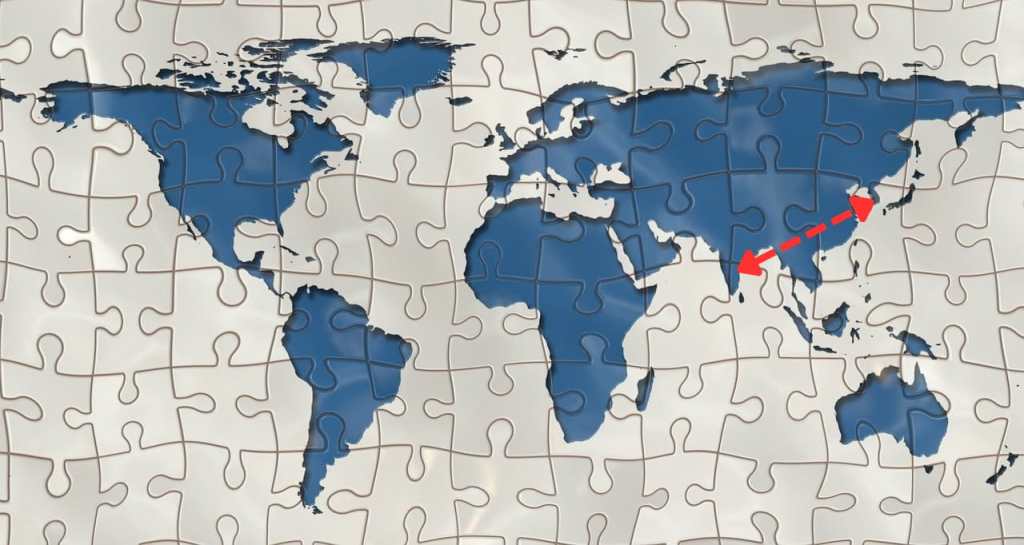
India’s growing engagement with Taiwan has increasingly drawn global attention. What was once limited to unofficial economic and academic exchanges has evolved into a multifaceted partnership involving trade, technology, education, labor mobility, and covert strategic dialogue. However, this outreach has also raised questions, particularly regarding how India’s Taiwan strategy aligns—or diverges—from the U.S.-Taiwan dynamic. This report explores India’s strategic calculus in engaging Taiwan, unpacks the key pillars of cooperation, and highlights the geopolitical nuances that make this partnership uniquely Indian.
“From Semiconductor Powerhouse to Strategic Pivot: Taiwan’s New Global Role”
1. Economic and Technological Cooperation: Strategic Convergence
Semiconductor Supply Chains: At the heart of India–Taiwan economic ties is a strategic effort to realign global supply chains away from China. India, seeking to become a semiconductor powerhouse, has attracted Taiwanese investment through incentive schemes. Notably, Tata Group’s partnership with Taiwan’s Powerchip Semiconductor Manufacturing Corporation (PSMC) in Gujarat marks a milestone. Supported by India’s $11 billion semiconductor subsidy program, the plant aims to create a new ecosystem for chip fabrication, bolstered by Taiwanese expertise and Indian engineering talent.
Trade and Investment: Over the past decade, bilateral trade has grown exponentially, rising from about $5 billion in 2010 to over $10 billion in 2024. More than 260 Taiwanese firms operate in India, with major players such as Foxconn, Pegatron, and Wistron setting up electronics manufacturing hubs in Tamil Nadu and Karnataka. These investments not only fuel India’s “Make in India” ambitions but also reflect Taiwan’s desire to reduce its over dependence on the Chinese market.
Institutional Agreements: India and Taiwan have signed several foundational agreements, including a Bilateral Investment Protection Agreement (BIPA), a Double Taxation Avoidance Agreement (DTAA), and an MoU on Science and Technology (2007). A 2024 labor mobility agreement allows Indian workers to take up jobs in Taiwan’s manufacturing and care sectors, addressing Taiwan’s aging population and labor shortages.
A 2024 labor mobility agreement allows Indian workers to take up jobs in Taiwan’s manufacturing and care sectors, addressing Taiwan’s aging population and labor shortages.
Prof. (Dr.) Nishakant Ojha
2. Political and Diplomatic Messaging: Quiet, Yet Purposeful
Diplomatic Representation and Symbolism: Despite not maintaining formal diplomatic ties due to India’s adherence to the One-China policy, India and Taiwan have established de facto embassies in the form of Taipei Economic and Cultural Centers (TECC) in New Delhi (1995), Chennai (2012), and Mumbai (2024). These institutions facilitate consular, trade, and cultural exchanges. The recent opening of the Mumbai TECC, despite Chinese objections, is a signal of India’s intent to normalize engagement without breaching diplomatic red lines.
Political gestures have also become more open. Indian parliamentarians attended Taiwanese President Tsai Ing-wen’s inauguration virtually in 2020. India’s envoy to Taiwan, Gourangalal Das, has played a prominent role in advancing ties, further strengthening institutional channels.
Language Shift on the “One-China” Policy: Since 2010, India has noticeably refrained from reiterating the One-China policy in its bilateral statements with China. While this omission doesn’t equate to rejection, it reflects India’s strategic ambiguity. It reserves the right to recalibrate its Taiwan stance, particularly if tensions with Beijing escalate.
3. Strategic and Security Collaboration: The Covert Layer
Cyber security Collaboration: One of the most institutionalized pillars of India–Taiwan strategic cooperation lies in cybersecurity. In December 2023, New Delhi hosted its first Global Cooperation and Training Framework (GCTF) cybersecurity workshop alongside Taiwan and the United States. The event brought together cyber experts, diplomats, and military veterans to address digital threats posed by authoritarian actors, notably China.
Taiwan, recognized globally for defending against sophisticated cyber attacks, shared operational strategies on AI security and infrastructure protection. India’s Defense Cyber Agency has since increased coordination with Taiwan’s National Information and Communication Security Task force and civilian bodies like NCIIPC [National Critical Information Infrastructure Protection Centre] and CERT-In [Indian Computer Emergency Response Team]. This silent but critical collaboration enhances India’s digital sovereignty while positioning Taiwan as a like-minded technological partner.
Intelligence and Surveillance Cooperation: Reports suggest growing synergy in intelligence sharing, especially in tracking the movement of Chinese military assets. India provides satellite and geo-spatial intelligence, while Taiwan contributes signals and human intelligence gathered from within China. This reciprocal arrangement strengthens situational awareness, particularly regarding Chinese naval movements in the Indo-Pacific.
While the collaboration remains unofficial, it echoes historical patterns. During the 1950s and 60s, India and Taiwan reportedly coordinated on radio-monitoring missions targeting Chinese activities. Today’s intelligence cooperation, although more discreet, builds upon that legacy to counter common threats in a volatile regional environment.
Strategic Dialogue and Military Diplomacy: Although India avoids any formal military pact with Taiwan, strategic dialogue has deepened. In August 2023, three former Indian service chiefs participated in Taiwan’s Ketagalan Forum—a significant security dialogue event. These “private” visits allowed for behind-the-scenes interaction with Taiwanese defense officials and academics.
Track-2 diplomacy—non-governmental or retired-official exchanges—has flourished. Indian military think tanks and retired officials engage Taiwanese counterparts in discussions on maritime security, gray-zone warfare, and Chinese coercion. Such back channel diplomacy avoids triggering Beijing while building informal security convergence.
4. Cultural and Human Capital Engagement
Academic and Language Exchange: Taiwan has made significant inroads in educational diplomacy, funding Mandarin language centers in India and offering scholarships to Indian students. The number of Indian students in Taiwan has risen from just a handful in 2003 to over 2,400 in 2023. Academic collaborations in AI, climate science, and engineering have grown under various India–Taiwan university MoUs.
Labor Mobility and Social Integration: The 2024 labor agreement marks a new chapter in people-to-people connectivity. Indian caregivers, industrial workers, and engineers are increasingly welcomed in Taiwan to support its aging economy. However, challenges remain. Incidents of racism and disinformation targeting Indian workers—often amplified by pro-China groups—have complicated integration efforts. Both governments are now working to foster awareness and counter negative narratives.
5. Navigating China’s Red Lines: Strategic Ambiguity
India’s outreach to Taiwan is not without risks. China views any engagement with Taipei as a violation of the One-China principle. Beijing criticized the opening of the Mumbai TECC in 2024 and has warned India against expanding ties. However, India’s strategy remains nuanced:
• No formal defense pacts with Taiwan.
• No diplomatic recognition of Taiwanese statehood.
• Yet, continuous deepening of cooperation in areas unlikely to provoke overt retaliation.
India’s calibrated ambiguity provides space to maneuver without inviting direct confrontation. It enables India to signal support for Taiwan’s autonomy and resilience without crossing red lines that would escalate tensions with China.
A common misconception is that India–Taiwan cooperation mirrors U.S.–Taiwan defense ties.
Prof. (Dr.) Nishakant Ojha
6. India–Taiwan vs. Taiwan–U.S. Strategic Relations: A Clear Distinction
A common misconception is that India–Taiwan cooperation mirrors U.S.–Taiwan defense ties. This section clarifies the crucial differences:
Security Engagement: Informal vs. Formal: The United States maintains a quasi-alliance with Taiwan through the Taiwan Relations Act (1979), providing arms, military training, and potential deterrence against Chinese aggression. In contrast, India has no defense treaty with Taiwan. Indian cooperation is restricted to cybersecurity, intelligence sharing, and unofficial military dialogues—primarily under the radar.
Strategic Aims: Geo-economics vs. Deterrence: U.S.–Taiwan ties are fundamentally about deterring Chinese expansion in the first island chain. India–Taiwan cooperation, by contrast, is rooted in economic complementaries—semiconductors, AI, critical minerals—and mutual benefit, not containment. India’s focus is on becoming a trusted partner in resilient value chains, not challenging China militarily on Taiwan’s behalf.
Multilateralism vs. Bilateralism: The U.S. manages Taiwan relations largely bilaterally. India integrates its Taiwan policy within broader frameworks—Quad, Indo-Pacific Economic Framework (IPEF), Taiwan’s New Southbound Policy, and GCTF. This makes India’s engagement more multilateral, layered, and nuanced.
Diplomatic Framing: The U.S. frames Taiwan engagement as a part of democratic deterrence. India frames it as part of regional economic resilience and strategic autonomy. India avoids endorsing Taiwan’s sovereignty explicitly, instead focusing on pragmatic collaboration.
Constraints
• No formal diplomatic recognition due to China’s sensitivities.
• Operational opacity—most engagements remain unofficial.
• Chinese retaliation—possibility of diplomatic or military pressure if ties cross red lines.
• Public perception—limited awareness in India about Taiwan’s strategic value.
8. Outlook: The Road Ahead
India–Taiwan ties are poised to deepen across several fronts:
1. Cybersecurity & AI Governance: Expand the GCTF into joint research hubs, AI ethics guidelines, and cyber incident simulations.
2. Semiconductor Education: Taiwan could help India set up chip design universities and talent pipelines.
3. Intelligence Network Building: A future informal alliance with Japan and Australia could evolve around shared surveillance of Chinese
Conclusion: Toward a Comprehensive Strategic Architecture
Taiwan’s outreach is no longer about defensive maneuvering—it is about proactive strategic insertion into the global matrix. By unifying economic diversification, diplomatic activism, and smart defense modernization, Taiwan is asserting its role not as a pawn, but as a pivotal player in the Indo-Pacific and global strategic order.
The democratic world must reciprocate with clarity and courage. The defense of Taiwan is not just about geography—it is about defending a rules-based international order where the sovereignty of free nations is not decided by the whims of authoritarian neighbors.
By unifying economic diversification, diplomatic activism, and smart defense modernization, Taiwan is asserting its role not as a pawn, but as a pivotal player in the Indo-Pacific and global strategic order.
Prof. (Dr.) Nishakant Ojha is an internationally acclaimed expert on national security, foreign affairs & strategic intelligence.
Views expressed in this article are of the author and do not necessarily reflect the views of the publication, The Indo-Pacific Politics.
 क्षेत्रीय संवाद (Platform for Regional Discourse ) 區域對話的平台