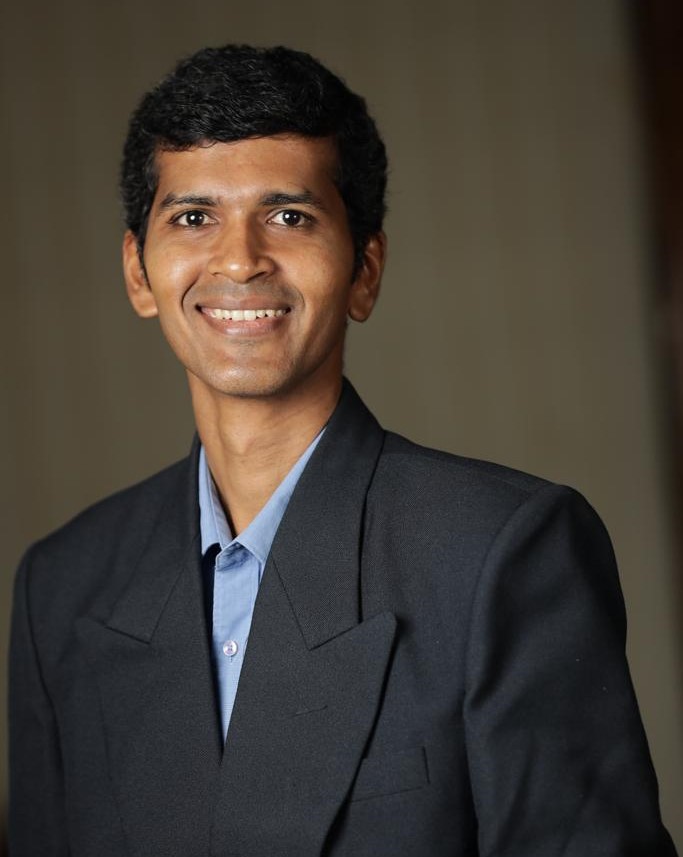
Dr. Ashwath Rao is a senior research analyst at Counterpoint Research. Counterpoint Technology is a global firm providing analytics, content, delivery or after-sales support to businesses in AI, Semiconductors, Automotive, loT & cloT, Consumer Electronics, eSIM, Smartphones, Manufacturing, Network and Infrastructure etc.
Dr. Rao’s expertise spans wafer fabrication equipment (WFE), foundry and memory process technologies, and the global semiconductor manufacturing landscape. He tracks key developments across the semiconductor supply chain, from upstream materials and equipment to downstream assembly and test.
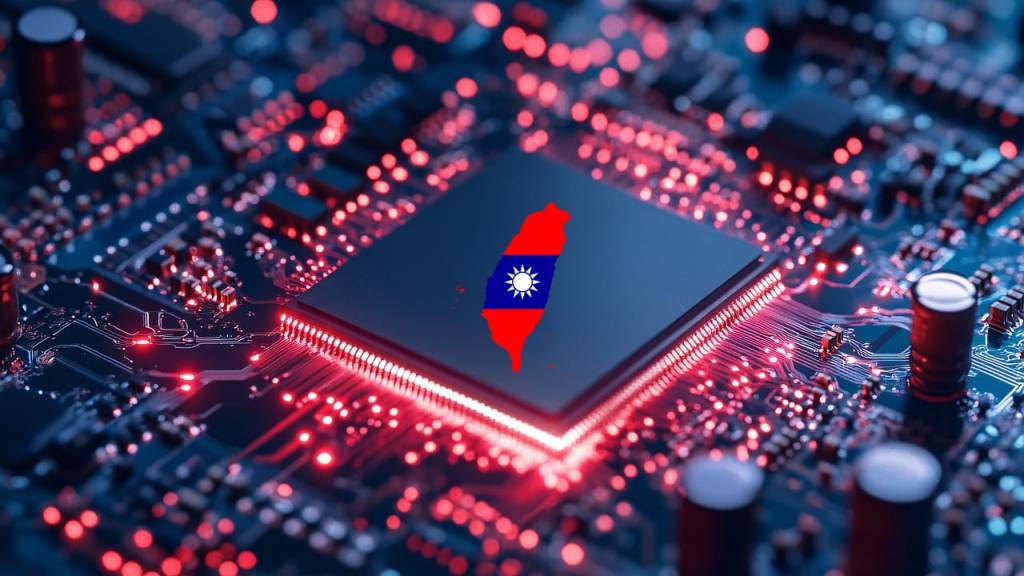
The Indo-Pacific Politics talked with Dr. Ashwath Rao to get an industry perspective about Taiwan’s semiconductor industry in wake of Trump 2025 tariffs. US President Donald Trump in April threatened Taiwan with a 32 percent reciprocal tariff rate. However Taipei is yet to be apprised of an updated figure that some other countries have already received. In addition, Trump has also said that semiconductor specific tariffs would come soon.
Taiwan’s geopolitical leverage is being tested, as U.S. pressure on companies to shift operations risks undermining its strategic position.
Dr. Ashwath Rao
Indo-Pacific Politics (IPP): How do you understand the Taiwanese semiconductor market in 2025 after Trump took over? How’s it impacted and changing and what new is it thinking and doing?
Dr. Ashwath Rao: The Taiwanese semiconductor market in 2025 is under pressure due to renewed U.S. tariffs and unpredictable trade policies under Trump’s administration. These policies have raised concerns about the competitiveness of Taiwanese exports and profit margins, particularly as higher tariffs make Taiwanese products more expensive in the U.S. market. The overall economic uncertainty, coupled with inflationary risks and global demand slowdowns, is challenging the stability and growth trajectory of the industry.
The market is undergoing structural shifts. Firms are evaluating options such as:
- Investing in U.S.-based facilities to reduce tariff exposure, though this comes with high labor costs, limited skilled labor, and margin compression.
- Relocating production to countries like Vietnam, India, and Mexico, which are not subject to high tariffs, although these moves are complex and risky due to Trump’s unpredictable tariff policies.
- Supply chain adjustments are being considered, but these are costly and could threaten smaller players like SMEs due to the capital and tech transfer required.
Meanwhile, Taiwan’s geopolitical leverage is being tested, as U.S. pressure on companies to shift operations risks undermining its strategic position.
To support businesses, the Taiwanese government is offering relief packages for businesses affected by US tariffs – relaxing loan eligibility, improving access to export guarantees, and easing application processes to help SMEs survive and stay operational.
Indo-Pacific Politics (IPP): In wake of the tariffs what new is the Taiwanese Semiconductor Industry thinking and doing?
Dr. Ashwath Rao: In response to these challenges, Taiwan is pursuing a multi-layered strategy:
- Expanding manufacturing in the U.S. to align with local incentives and reduce tariff exposure.
- Diversifying markets and supply chains through deeper alliances with the EU, Japan, and ASEAN under a “Taiwan plus one” strategy.
- Investing in domestic strength by boosting R&D, tax incentives, cybersecurity, and talent pipelines to keep critical technologies rooted in Taiwan.
- Enhancing geopolitical preparedness by simulating tariff impacts, strengthening diplomacy, and preparing for potential disruptions tied to military or political tensions.
Despite global diversification efforts, core technologies and packaging capacities are expected to remain in Taiwan due to cost efficiencies and a strong talent base. The next 6–18 months will be crucial, as decisions on U.S. investment and policy clarity will determine whether Taiwan remains the hub for semiconductor workloads or sees significant shifts abroad.
Taiwan is diversifying markets and supply chains through deeper alliances with the EU, Japan, and ASEAN under a “Taiwan plus one” strategy.
Dr. Ashwath Rao
Indo-Pacific Politics (IPP): What’s the value of the Taiwanese supply chain in the global semiconductor market? How’s it linked with the domestic semiconductor SMEs in Taiwan? Who are its global competitors?
Dr. Ashwath Rao: Taiwan’s semiconductor supply chain accounts for 20–25% of the global value chain. It is considered one of the most comprehensive and resilient ecosystems worldwide, with dominance in foundry (around 65%), IC design (~23%), and a growing packaging and testing (OSAT) segment (~10%). Taiwan commands around 60% of the global foundry market, and TSMC alone produces over 90% of the world’s advanced logic chips (≤5nm).
Taiwan’s supply chain strength is deeply rooted in its vast network of SMEs, which span across IC design, materials, PCB, backend packaging, testing, equipment, and automation. These SMEs are tightly integrated with giants like TSMC, ASE, UMC, and Vanguard, forming a mutually reinforcing ecosystem. They provide critical components and services such as precision parts, EDA tools, chip layout, mask-making, logistics, and contract manufacturing.
SMEs benefit from clustering in science parks (e.g., Hsinchu, Tainan, Taichung) and from close physical and operational proximity to major firms, allowing for rapid innovation, speed-to-market, and flexible manufacturing. The government and industry also support SME-focused talent development and training programs, ensuring workforce readiness and competitiveness. Many SMEs are export-driven, engaging globally through OEM relationships and fab support roles.
Taiwan faces competition from:
- South Korea – particularly in foundry and memory chips.
- Japan – a leader in semiconductor materials and equipment.
- United States – pushing reshoring, CHIPS Act subsidies, and EDA dominance.
- China – expanding aggressively across foundry, OSAT, and design sectors.
- Southeast Asia – emerging as alternative manufacturing hubs due to cost and geopolitical diversification.
Despite rising global competition, Taiwan retains a competitive edge through its vertically integrated ecosystem, SME agility, and depth in advanced nodes, packaging, and high-performance PCBs.
Indo-Pacific Politics (IPP): Many nations with money and labour are looking towards Taiwan for helping build its semiconductor ecosystem. What does Taiwan look at when it selects a country to invest in?
Dr. Ashwath Rao: Taiwan uses a largely independent set of criteria, though these are strategically aligned with its geopolitical and economic interests. Investment decisions are guided by national priorities such as resilience, diversification, and global legitimacy, especially in a complex geopolitical landscape.
Key factors Taiwan evaluates include:
- Political Stability and Security
- Preference for countries with stable governance, strong rule of law, and low geopolitical risk.
- Strategic Geopolitical Alignment
- Favorability toward nations aligned with democratic values and supportive of Taiwan’s global standing.
- Industrial Base and Infrastructure
- Nations with established or developing high-tech industrial ecosystems, skilled labor (especially in engineering and high-tech manufacturing), and existing or planned semiconductor clusters or R&D hubs.
- Government Support and Incentives
- Availability of subsidies, tax incentives, and long-term policy support for technology and semiconductor investment.
- IP Protection and Regulatory Environment
- Countries with strong legal frameworks for intellectual property, data security, and technology transfer, which are essential in IP-intensive sectors like semiconductors.
- Market Access and Business Opportunity
- Locations that offer new market access or proximity to key customers , cost advantages, or contribute to supply chain diversification.
Indo-Pacific Politics (IPP): Does Taiwan have an independent criteria in selecting a country for investment or is it more led by geo-politics?
Dr. Ashwath Rao: Taiwan follows its own criteria, rooted in national interest and industrial strategy, but geopolitical alignment has become increasingly important – especially since 2022. While Taiwanese firms such as TSMC lead global investments, they do so in coordination with national policy priorities. Investment is restricted in China, particularly for advanced-node technologies or sensitive IP- where government approval is required to prevent technology leakage.
Although Taiwan doesn’t publish a formalized investment framework, decision-making is coordinated between key agencies like the Ministry of Economic Affairs (MOEA), TAITRA, ITRI, and leading semiconductor firms. This semi-official playbook balances political alignment with economic opportunity, technology compatibility, and national security concerns.
Taiwan follows its own criteria, rooted in national interest and industrial strategy, but geopolitical alignment has become increasingly important – especially since 2022.
Dr. Ashwath Rao
Indo-Pacific Politics (IPP): Taiwan semiconductor technology is the best, do you think other countries aspiring for a semiconductor ecosystem will ever be able to catch up? Who’s near and who’s far?
Dr. Ashwath Rao: In the short to medium term, catching up with Taiwan- especially TSMC’s position at the technological frontier- is extremely difficult. Taiwan’s semiconductor leadership is built on decades of sustained investment, unmatched manufacturing know-how, a deep talent pool, and a tightly integrated ecosystem. Replicating this model is a multi-decade, high-risk endeavor requiring not just funding, but industrial discipline, IP strength, and global trust.
However, in the long term, it’s possible for other countries to become highly competitive in specific areas of the semiconductor value chain. While matching Taiwan at the leading edge (e.g. 3nm and beyond) remains unlikely for now, global diversification and focused investments are allowing nations to carve out their own strengths.
Closest Challengers:
- South Korea – Already strong in memory chips, and now pushing aggressively into logic and foundry. Samsung is scaling up its advanced node capacity while . aiming to be a well-rounded semiconductor powerhouse.
- United States – Dominates in chip design (Nvidia, AMD, Apple) and is making large-scale moves to rebuild domestic fabs through public-private partnerships.
Mid-Range Competitors:
- European Union – Investing in mid-tier and specialized semiconductors, especially for automotive and industrial use. While they lack cutting-edge fabs, their focus on strategic niches and R&D is growing.
- China – Committed to semiconductor independence and investing heavily in mature-node fabs and equipment. But geopolitical restrictions and technology access barriers keep it far from leadership in advanced nodes.
Long-Term Aspirants:
- India and others – Have potential in chip design, assembly, and niche segments like analog or automotive chips. However, leading-edge manufacturing remains a distant goal.
While nations can build regional hubs and achieve excellence in certain segments, fully replicating Taiwan’s semiconductor ecosystem – especially its advanced-node logic manufacturing – is unlikely in the next 10 years. The combination of time, capital intensity, supply chain integration, and talent is hard to duplicate.
That said, emerging factors like:
- Advanced packaging and chiplet-based architectures
- Geopolitical reshoring incentives
- Cross-border collaborations
Could enable other countries to play increasingly strategic roles without fully replicating Taiwan’s model.
Indo-Pacific Politics (IPP): Is there anything else that you would like to share on this topic with our readers?
Dr. Ashwath Rao: Taiwan, led by TSMC, will remain the cornerstone of global semiconductor manufacturing for years to come. While others are rising, and global competition is intensifying, true parity in cutting-edge fabrication will require more than just money – it will require replicating a national strategy and ecosystem decades in the making. The global landscape may become more diversified, but Taiwan’s lead at the frontier will remain hard to surpass.
 क्षेत्रीय संवाद (Platform for Regional Discourse ) 區域對話的平台