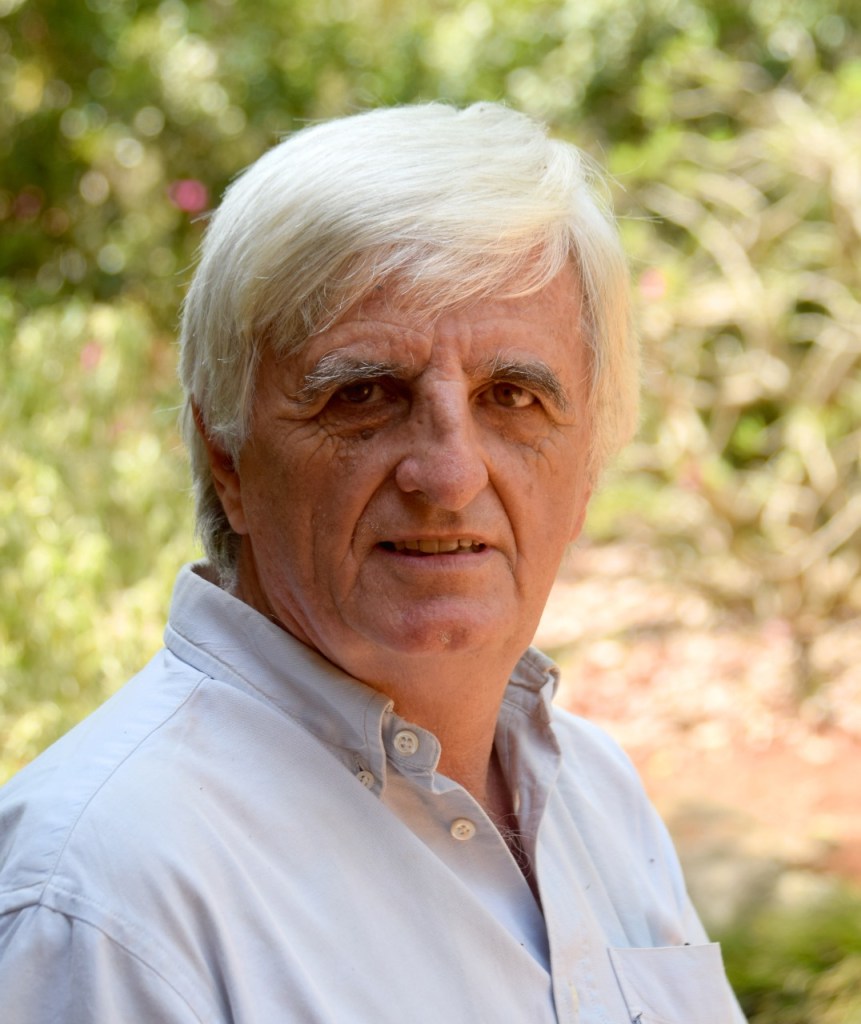
Claude Arpi, is a France born, India based historian, author and Tibetologist. He’s the author of many books including,The Fate of Tibet: When Big Insects East Small Insects; Will Tibet Ever Find Her Soul Again? India Tibet Relations (1947–1962); Tibet: The Last Months of a Free Nation. India Tibet Relations (1947–1962) and India and her neighbourhood: a French observer’s views.
He’s also the director of the Pavilion of Tibetan Culture at Auroville, inaugurated by the 14th Dalai Lama in 2009. His articles on Tibet, China, India and Indo-French relations and other research works can be read on: https://www.claudearpi.net/
The Indo-Pacific Politics talked with Claude Arpi about what China calls the Motuo or the Medog Hydro power Station on Tibet’s Yarlung Tsangpo river. It’s construction officially began on July 19 and once completed it’ll be the largest hydropower facility in the world. The design of the dam has led to wide spread insecurity in the lower riparian countries–India and Bangladesh and through this interview the IPP has tried to shed more light on some of those concerns.
The Indo-Pacific Politics: Is there anything geopolitical to the timing of China building the world’s largest dam on Yarlung Tsangpo (Brahmaputra)–the Motuo Hydro power Station?
Claude Arpi: First of all, we should not call it Motuo Dam. It’s called Metog–Metog is flower in Tibetan. As you know, China has been changing all the names, so we should not fall into Chinese tricks of changing the name. So it’s called Metog dam. I don’t think there’s [only] one dam. I’m sure there’s no one dam. There are five dams. Earlier in 2020 when the first plan was made there was a question of having nine hydro-power stations. So now it has been reduced, according to the latest release from Xinhua on Sunday [July 20], that to five hydro-power stations.
Regarding your question if there’s anything geopolitical in the timing of China building these hydro-power plants? I think it’s definitely linked with the Indus Water Treaty being put in abeyance after the terrorist attack in Pahalgam. So China had the plan to do this infrastructure for years, but I think the timing and the visit of the Chinese Premier Li Qiang to Tibet, on the site of the where the structure will start–It’s just the beginning, because there’ll be a structure [across] 50-60 kilometer. But he visited the place on Yarlung Tsangpo where the first tunnel will be put. So I think it’s linked with the fact that India has put in abeyance the Indus water treaty, and the fact that they also want to show their friendship with Pakistan. But obviously, it didn’t happen on Sunday. It would have happened in six months or in three months. It was bound to happen. They announced it. But I think it’s linked with what’s happened between India and Pakistan.
I think it’s linked with the fact that India has put in abeyance the Indus water treaty, and the fact that they also want to show their friendship with Pakistan.
Claude Arpi
Li Qiang, the Chinese Premier, mentioned resettlement of the population. He said they will be looked after; But which population is that? He mentioned immigrant’s population. So it probably means that the tens and thousands of workers which are going to come and work on the project for 10 to 15 years will need resettlement and will not be allowed to stay in that very small area within the great bend of the Yalung Sangpo. So that’s another very serious issue–[we need to watch] how the Chinese deal with it–but certainly the local population, the Tibetans and the Monpa living in that area of the [river’s] great bend will have not a very good deal.
The Indo-Pacific Politics: Do you think this will lead to a competition in dam building across the Himalayan and the trans-Himalayan terrain?
Claude Arpi: The competition in the Himalayan belt has already started because the government of Arunachal Pradesh has already announced two dams–two mega structure on the lower Siang river. Of course India, is different than China, and there is a lot of protest that the government of Arunachal will have to deal with. China doesn’t have this issue, and when it decides, they just do it without consulting anyone–not the local population, or anybody, or the local government, which in any case is a communist government. So there is no discussion about it. They just decide and do it. In India’s case, there’s discussion, there’ll be debate, and maybe there’ll be some changes in the original plan, but definitively, it will start a competition.
The Indo-Pacific Politics: Indian government has proposed a 11,200 MW Upper Siang multipurpose project in Arunachal Pradesh but it has remained delayed because of resistance from the local people. According to the Indian media, The Print, in response to the public opposition, the Indian government along with the state government of Arunachal Pradesh has come up with a proposal for a Rs 350 crore Special Development and Livelihood programme.
The Indo-Pacific Politics: What are India’s and Bangladesh’s concerns as downstream nations? How urgent are these concerns and what response do you expect from India?
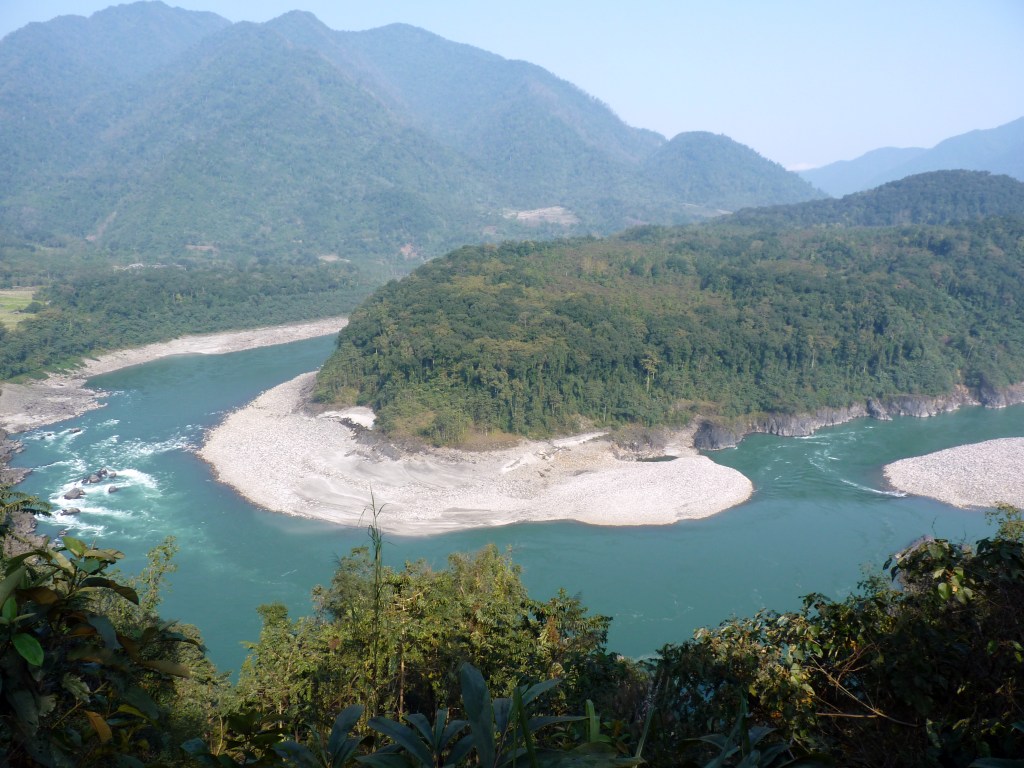
Claude Arpi: Obviously, India and Bangladesh are very, very concerned, because they are downstream and whatever happened in this area [will impact them]–that area is extremely fragile ecologically. And seismology of that area also is very high and not far away in 1950 on August 15, there was the biggest earthquake of the 20th century, 8.6 on the on the Richter scale. It was in the Lohit valley [in the Eastern Himalayas inside Arunachal Pradesh], near Rima [inside China on the other side of the border] but not very far from the Great Bend. Whatever happened in the Lohit valley could happen in the valley of the Yarlung Tsangpo.
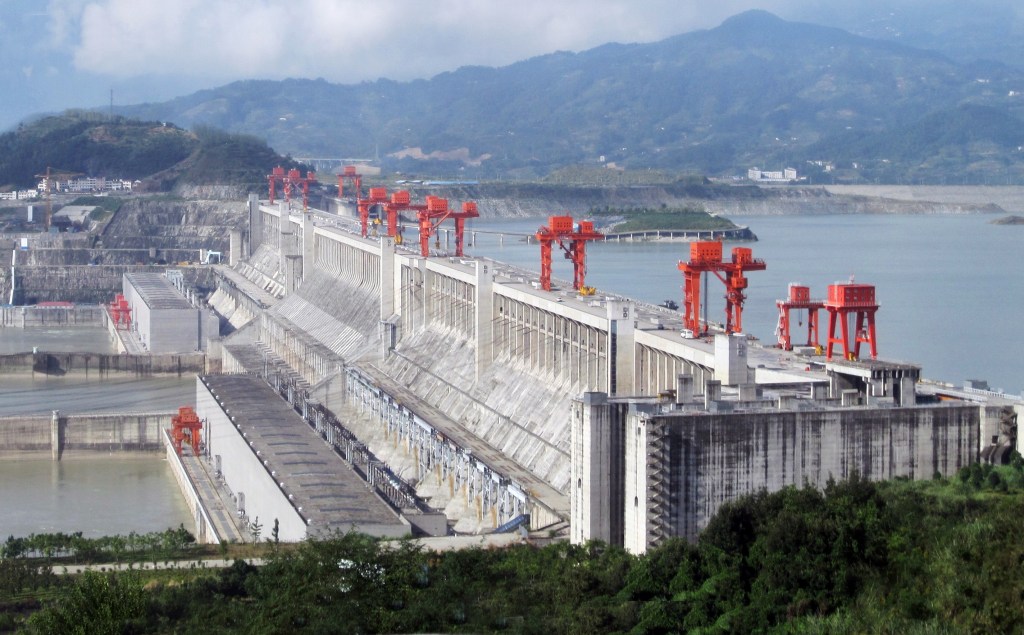
So India and Bangladesh should be worried, and I hope that they will put some strong protest–you have to understand this sort of structure, it will take maybe 15 years to build. It’s so big, it’s three times bigger than the Three Gorges dam. So maybe the government will wait a bit and see what is happening, but definitely in the long term, it will have ecological consequences.
The Indo-Pacific Politics: Do you think keeping in mind the massiveness and the seriousness of the project , the concerns raised will initiate a response from the US?
Claude Arpi: About response from the United States, frankly, I do not know! But they are not concerned directly. Who is concerned, is the state of Arunachal Pradesh, the state of Assam, Bangladesh, and local population in India, in Bangladesh, because they are just living downstream. Anything happening to the river like the river changing its course as it happened in August 1950 or any other serious issue happening on one of the five hydro-power plants will have consequences directly for these people and not for the people of America.
The Assam earthquake of 1950 led to a lot of devastation and significant changes to the morphology and the flow patters of the river Brahmaputra (Yarlung Tsangpo) along its route in Tibet to its last point in Dhubri district of India.
Times of India
And I don’t think that Mr. Trump is ready to put his weight on what he would consider a very small issue, very far away and having nothing to do with the economy of America. So I don’t see any intervention for the United States. And in any case, even if they would intervene, I don’t think China cares much, they will continue to do what they want to do, what they consider the right thing for them to do.
The Indo-Pacific Politics: How will it impact the cause of the Tibetans in Tibet and those outside seeking restoration of their freedom and resources?
Claude Arpi: How will it impact the cause of the Tibetans? Not directly? Because this area of the county of Medog, is one of the less populated in the entire Tibetan Plateau, and even in the entire People’s Republic of China. In the last census there was only 11,000 people living there. Of course, with the construction there’ll be tens and thousands of people coming on the construction site to do the work of tunneling and to do the hydro power plants and to install the turbines. So the population is going to be changed completely!
For the Tibetans, they believe in middle path, which means that they will have a genuine autonomy–subjects like environment will be kept with the local government, means with the Tibetan. But we have seen in this case, and we have seen before also that China really doesn’t care and will not consult the Tibetans or even the local population, which are mostly Mompa tribe. Nobody will be consulted! Thus the so called genuine autonomy that the Tibetans are looking for will never be respected by China. And the issue of the environment is a telling case.
The Indo-Pacific Politics: Is there anything else that you would like to share with our readers?
Claude Arpi: I should say one more angle, is the climate change. I think it’s very important to take note of it. If you look at what happened in the last three-four years in northern Sikkim, [in India]. First in 2023 there was that glacial lake [South Lhonak glacial lake] which burst and which washed away the hydro power plant in Chungthang, where the Lachen and Lachung rivers meet [to form the Teesta river]. The hydro-power plant was destroyed, and many, many casualties were there. So the climate change, nobody can control! China, I doubt has fully taken into account what is happening in the recent years on the planet, particularly in the Himalayan belt.
And the other concern I mentioned already is the seismicity of the area. And this also nobody can predict. There is no science which can predict today where the quake will take place. But this area is extremely fragile! That makes this mega project, on long term–Li Qiang, the Chinese Premier, called it the project of the century–so that’s not a joke. The project of the century will have definite implications for the countries downstream, meaning India and Bangladesh. I hope that people will realize this.
Another huge issue that I thought later is the muck or the debris from the dam construction area. Normally the rules are the following:
- Avoid dumping on slopes, near rivers, or in natural drainage paths. Select flat or gently sloped, geologically stable areas.
- Ensure the dumping site is away from habitation and farmlands.
- Use detailed geo-technical and hydrological assessments before choosing sites.
Can it be done in view of the steep topography of the area. 60 kilometers of tunnels is not a joke. Where does the muck go? How will China dispose off the muck in this fragile area? Will it go in the river for the downstream neighbors?
Where does the muck go? How will China dispose off the muck in this fragile area? Will it go in the river for the downstream neighbors?
Claude Arpi
 क्षेत्रीय संवाद (Platform for Regional Discourse ) 區域對話的平台