Indian Prime Minister, Narendra Modi will travel to Japan today evening for a two-day summit beginning tomorrow. Among many significant things happening between the two countries is the Japanese intent to invest $68 billion in India in the next ten years and an agreement to exchange over 500,000 people in the next five years. The two sides are also expected to refurbish 2008 Joint Declaration on Security Cooperation, initiate an economic security initiative on semiconductors, Artificial Intelligence and critical minerals, according to The Indian Express sources.
The Indo-Pacific Politics talked about Modi and Prime Minister Shigeru Ishiba’s upcoming meeting with Ryan Larbi, a budding geo-political analyst. Schmidt has freshly graduated from Science-Po Strasbourg Master Degree, University of Strasbourg and is preparing for a doctoral program hoping to be accepted at Kyoto’s Ritsumeikan Graduate School of International relation in April 2026. His year at Tokyo’s Hosei University as well as his professional experiences in Japan gave him the wish to stay there after PhD, perhaps serving as a teacher or researcher. His predilection topics orbit around Japanese Arctic geopolitics and its relation with Russia as he believes this region will grow in importance in the next decades.

The Indo-Pacific Politics: PM Narendra Modi is to visit Japan for a two-day trip this week, Aug. 29-30 for a summit with Prime Minister Shigeru Ishiba. Is there anything special about the timing of this summit?
Ryan Larbi: After Trump meetings with Japan, anyone else would appear as Japan’s best friend. Having [South Korean President], Yi Jae Myung and Modi meeting so close is perhaps a more visible sign that Japan is seeking more diverse allies that are more into sovereignty than hegemony. This is in line with Japanese “third world approach” that France also had in the Gaullist period, the recent Lula-Naruhito meeting attest of this will, to not only be part of the western world but also stay in touch with what was once called the non-aligned movement where India completely fits. [Brazilian President Luiz Inácio Lula da Silva and Japanese Emperor Naruhito met during Lula’s state visit to Japan in March 2025.]
Just like South Korea or Philippines, India has balanced relations between Atlantist and Emerging powers. Even though these countries can have territorial conflicts, more important matters such as detachment from dollar through BRICS are seen as more essential, thus and perhaps making Japan interested. With Atlantist failures in Ukraine, unilateral US attempts to change borders and slow growth, Japan sees more potential in emerging forces. However as Japan is a patient country, to me this is more a fortunate continuation of a long term project than 4 year cycles, even though with LDP [Liberal Democratic Party] weakening this could lead to more political indecisiveness as for now with 10 parties at the diet have yet to form, find the common method to the problem–they recognize all.
“Just like South Korea or Philippines, India has balanced relations between Atlantist and Emerging powers.”
Ryan Larbi, Geo-political Analyst
The Indo-Pacific Politics: Do you see this as the beginning of a new era in the India-Japan ties?
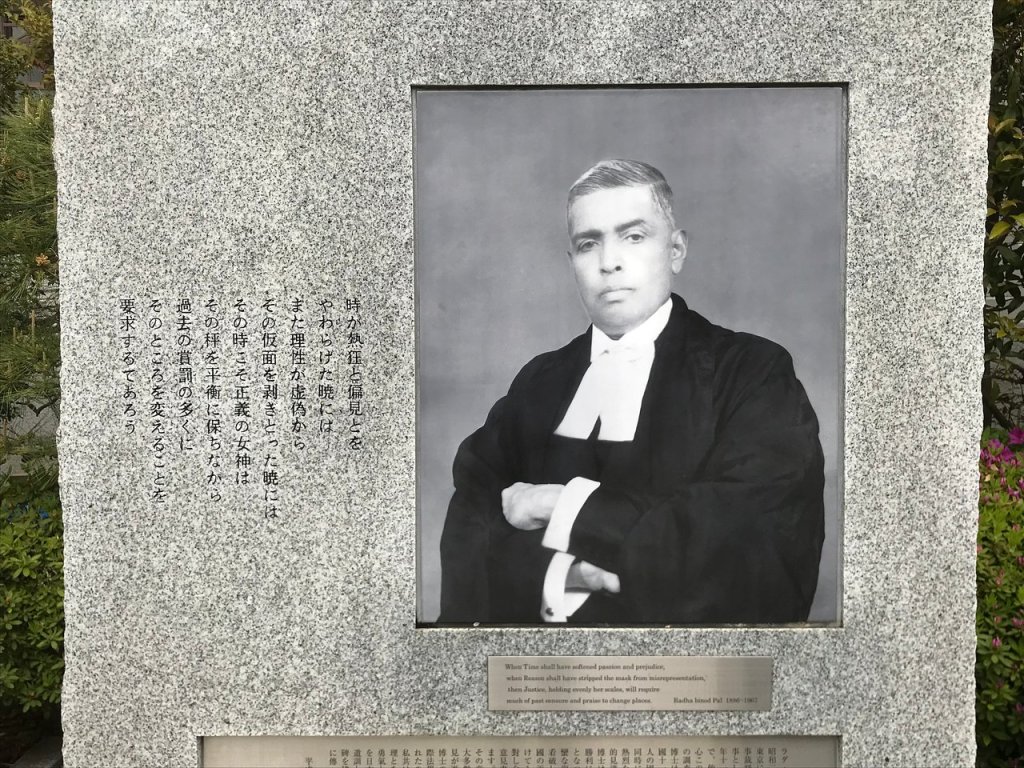
Ryan Larbi: Japan and India ties are quite ancient with links such as Dharmic religions, and even since the independence of India they have kept strong links. India was for example refused Japanese war reparation and [Indian] judge Radhabinod Pal defended Japan during Tokyo Trials [of war crimes committed by Japan during the 2nd World war]. This positive image of Japan comes from–a mix of Japan only invading a small part of India combined with anti-colonialism in the British Raj during the war. Not to mention that Japan and India are quite far away from each other which prevents the usual territorial conflicts.
Since then India has been an important receiver of Japanese ODA [Official Development Assistance], helping in projects such as Delhi sewer, power distribution and wildlife conservation. Overall unlike its close neighbor, Japan and India have no major conflicts in sight.
To me this is far from a beginning but things could accelerate further in the future, especially on potential immigration ties as Japan requires more and more foreign labour. Even if India cannot fully replace the US for multiple reasons like its productivity issue, its relatively neutral and even autarkic nature, India still has enough to propose for Japan especially for raw materials, spare pieces and services.
The Indo-Pacific Politics: There’s a lot of focus on critical minerals and about making the supply chains more resilient. How do you see India-Japan cooperation on critical minerals?
Ryan Larbi: Indeed, especially as a replacement for China, countries all over the world search to diversify their supply lines to make them resilient toward crisis, Covid here played an important role but it shouldn’t be forgotten either that the shadow of war with Taiwan [lurks and it] would disturb all supply lines. India is relatively stable since its independence and even inner trouble didn’t sapped confidence towards India as much as towards other countries.
A thing to note about the Indian mineral industry is–it is quite diversified and offers a lot to Japan be it for metallurgy or electronics. A place where Japan would be a less interesting client would be on coal, should Japanese climatic ambitions be respected, but this is mitigated by the fact most of the coal extracted in India is consumed locally. The tension here comes from Indian coal extraction being higher than any other minerals found there, therefore for export, Japan could see the offer limited as other countries like France invest a lot in their relation with India. It is expected to see Indians be courted more and more by Atlanticist power as their classical sources like China and Russia become less reliable in their eyes.
Indian mineral potential is not fully exploited yet however, for now its extraction is from pretty common and cheap minerals, however as its infrastructure increases in quality, more valuable minerals could be extracted profitably such as more important quantities of Uranium.
The Indo-Pacific Politics: India and Japan are also holding joint military drills with the Philippines in the South China Sea. What’s special about India-Japan strategic cooperation and how do you see it evolving in this decade?
Ryan Larbi: While the US fights for hegemony despite its weakened power, Japan and other countries of the Indo-Pacific, while following the US, prepare counter measures to Chinese hegemonic claims for other reasons. Japan and India here align on a vision of international relation that values sovereignty and commercial power rather than brute armed force. Sure the military is necessary for protection but is not a tool of projection.
India still however has some irredentism regarding Kashmir and Chinese Himalaya but these are not as visible to the international community as claims over Greenland and Taiwan, making India appear as a more peacefully reliable partner for Japan. Moreover, I believe Japan and the Indian military have some things to learn from each other. While JSDF [Japan Self-Defense Forces] focuses on Naval efforts, with limited personnel and high-tech, India is closer to Russia with more diversified terrains to cover and of course a higher focus on land army but with expanding naval doctrine. A difference that would be interesting to look at in the future are supplies, India gets weapons from Russia, Israel, France with a growing home market while Japan mostly imports from the US and home market.
“While the US fights for hegemony despite its weakened power, Japan and other countries of the Indo-Pacific, while following the US, prepare counter measures to Chinese hegemonic claims for other reasons.”
Ryan Larbi, Geo-political Analyst
The Indo-Pacific Politics: US 50 percent trade tariffs on India will become active today [August 27, 2025]. How do you gauge the India-Japan summit in context of the recent geopolitical shifts propelled by US trade and tariffs?
Ryan Larbi: It’s hard not to retake the same replies from question one but it always boils down here to a broken trust between the US and the rest of the world. India is historically known for its quite high tariffs, sometimes up to 30% in the 2000s and it helped its development, however those have been progressively lowered. Just like in Japan, Usonian products don’t fulfill Indian people’s wishes especially in terms of cars where more low cost options like Tata are available.
There is something I would have hard time finding sources about but the lack of aggressive response by Japan and India to the tariffs can also be a sign that they don’t expect them to last very long as the impact on the global market will be more and more visible in the next months or years. More importantly I think these trade wars create more and more Asian solidarity, something that only Japanese militarism ever promoted for its own interest which could lead to some suspicions if done too unilaterally by Japan.
The Indo-Pacific Politics: Is there anything else that you would like to share with our readers?
Ryan Larbi: I see a potential threat to Japanese and India relations which comes in immigration, if Indians represent a smaller community compared to Chinese and Koreans, they are often represented in a dehumanizing way. Migratory relations can create friction between two countries with shared interests, this is the case between Algeria and France for example. With populist being elected at the Diet like Sanseito [which is in opposition in Japan right now] it is probable that tension would rise.
This is not eased by the fact that many Indo-Aryan cultural elements present in Japan have been diluted for such a long time–this goes from Buddhism to Curry. This is not helped by India being portrayed quite negatively on social networks, be it from a malicious intention or not, videos of unhygienic streetfood have sadly more impact on public opinion than a well constructed discourse. It is up to Japanese authorities to properly integrate these populations to avoid more communitarianism especially regarding topics such as misogyny.
Finally I think that Japan-India more intense collaboration could lead to unexpected relation improvement with an other country, namely Russia. Russia and India are quite close so Japan could surf on this wave as war in Ukraine stops.
 क्षेत्रीय संवाद (Platform for Regional Discourse ) 區域對話的平台