‘It takes some political wisdom for Taiwan to maneuver between the two great powers.‘
Zhiqun Zhu, PhD, is a Professor of Political Science and International Relations at Pennsylvania‘s Bucknell University. He was Bucknell’s International Relations Department Chair (2017-2021), inaugural Director of the China Institute (2013–2017), and MacArthur Chair in East Asian politics (2008–2014). He previously taught at University of Bridgeport, Hamilton College, University of South Carolina, and Shanghai International Studies University. In the early 1990s, he was Senior Assistant to Consul for Press and Cultural Affairs at the U.S. Consulate General in Shanghai.
The Indo-Pacific Politics talked with Prof. Zhiqun Zhu about the changing situation in the Indo-Pacific, Trump’s trade and tariff war against India and China and also the impact of US tariffs on Taiwan.

There is no doubt that the Asia-Pacific remains critical for the United States, economically and strategically.
Prof. Zhiqun Zhu, Bucknell University
The Indo-Pacific Politics: In May at Taipei’s 5th World Congress of Taiwan Studies there was a discussion about a shift in US policy from the Indo-Pacific to Eurasia. Do you think that’s what we are witnessing today?
Prof. Zhiqun Zhu: I do not think there is such a shift. For the United States, both Eurasia and the Indo-Pacific are important strategically. During the Biden administration, much strategic focus was on the Asia-Pacific region, with the formation of AUKUS and consolidation of QUAD, etc. The strategic goal was clear: to deter and contain China.
The Trump administration changed that strategy. Trump treats China as a real peer competitor and has been trying to find the best way to deal with the China challenge. His current approach is to stabilize the bilateral relationship first and to reach out to establish strong personal relationship with Chinese leader Xi Jinping. In this context, he has tried to end several ongoing wars in the Middle East and Europe, especially the Russia-Ukraine war. So far, he has met both Putin and Zelensky as well as other European leaders, and he hopes to bring Putin and Zelensky together to reach a peace agreement. He claims to be a peacemaker and aims to win a Nobel Peace Prize.
Meanwhile, President Trump has not forgot about the Asia-Pacific. After taking office, he has had a phone call with President Xi and has hosted Japanese Prime Minister Shigeru Ishiba and South Korean President Lee Jae Myung in the White House. The US and South Korean forces have continued to conduct joint military exercises and US warships have continued to patrol the South China Sea and pass through the Taiwan Strait. All indications suggest that US commitment to the Asia-Pacific remains unchanged. There is no doubt that the Asia-Pacific remains critical for the United States, economically and strategically.
The Indo-Pacific Politics: Is there a shift in the American Grand Strategy?
Prof. Zhiqun Zhu: Different US presidents and administrations may have slightly different versions of the so-called “grand strategy,” but fundamentally the US grand strategy remains the same: to maintain America’s global dominance and prevent the challenge from a peer competitor.
President Trump’s “Make America Great Again” policy is not a retreat from America’s traditional strategic objectives. The ultimate goal of making America great again is to help America regain its global influence and dominance in this increasingly multi-polar world so that America will remain the most powerful nation in the world. Therefore, it is a misinterpretation to suggest that America’s grand strategy has changed under President Trump.
The ultimate goal of making America great again is to help America regain its global influence and dominance in this increasingly multi-polar world so that America will remain the most powerful nation in the world.
Prof. Zhiqun Zhu, Bucknell University
The Indo-Pacific Politics: How do you understand the US administration’s punitive tariffs against India and why have they not been able to sign a trade deal as was expected early this year?
Prof. Zhiqun Zhu: Analysts may come up with a different list of reasons why President Trump decided to impose punitive tariffs on India. Here are my three top reasons:
- Trump is not much of a fan of multilateral approaches in international affairs. In Asia, the Trump administration has barely mentioned QUAD as a strategy or tool to contain China. In the eyes of the Trump administration, perhaps the strategic value of India has declined.
- Trump really wants to end the Russia-Ukraine war. That many countries including India continue to indirectly support Russia by trading with it to prolong this war must have irritated Trump deeply.
- Unlike China which can use rare earths to retaliate against the United States, India does not seem to have any leverage over the United States, and India’s economy is not that much interdependent with the US economy.
A combination of these and possibly other factors have led to Trump’s decision to impose additional tariffs on India. However, as in many other cases, Trump’s policies are not fixed, and there is always room for negotiation. I’m sure India and the United States will find a way out of the current situation.
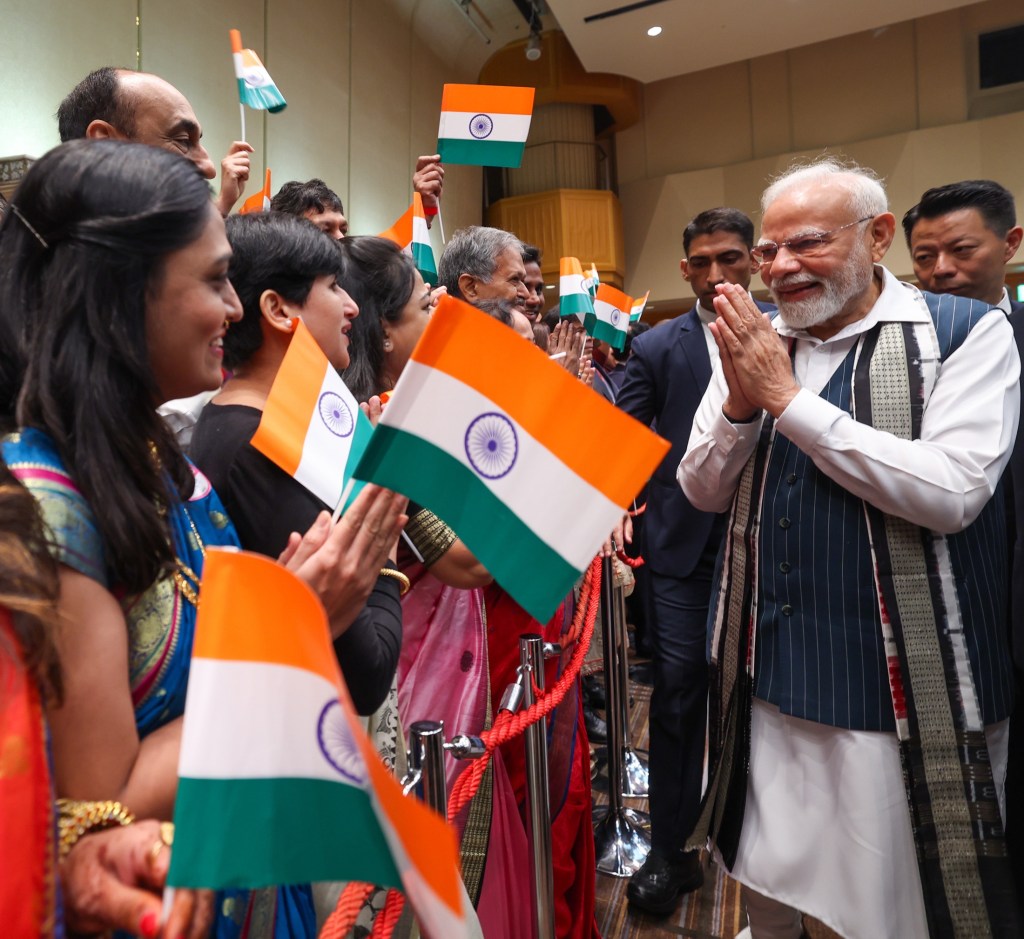
The Indo-Pacific Politics: Ahead of Indian PM Narendra Modi’s visit to China and Japan, how do you gauge the situation in the region? How do you see QUAD in this context?
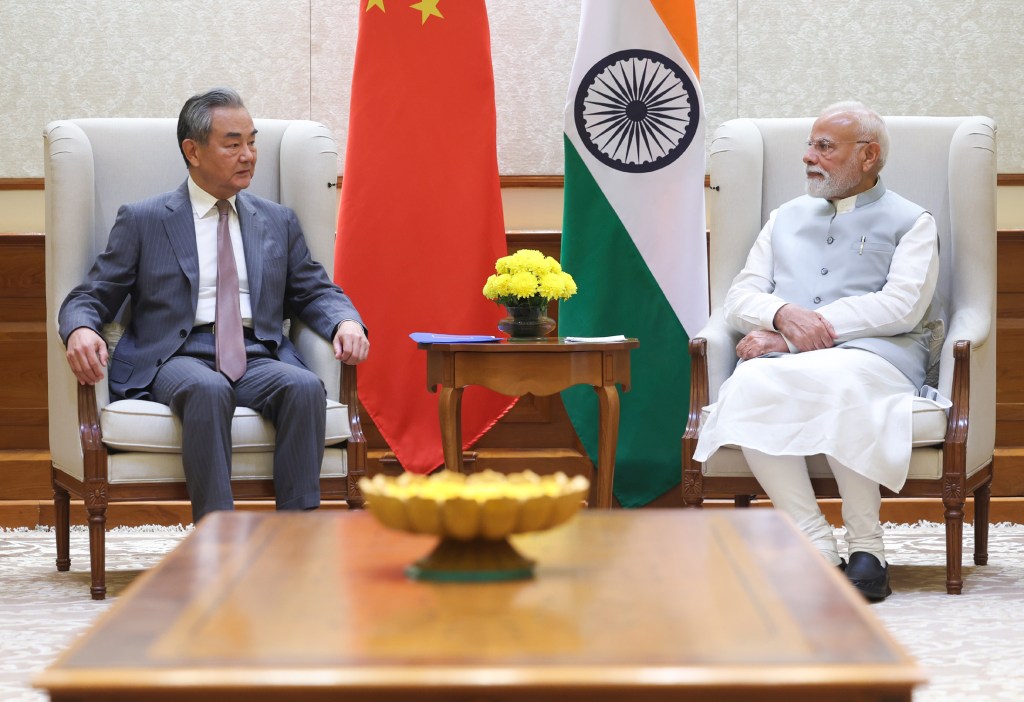
Prof. Zhiqun Zhu: I think PM Modi is making the right move by not putting all eggs in one basket. I believe it is in India’s best interest to maintain good relations with the United States. Meanwhile, China is right next door, it is obviously not in India’s best interest to have a rocky relationship with China. The SCO summit 2025 in Tianjin offers a great and convenient opportunity for Modi to visit China after seven years. Chinese foreign minister Wang Yi also recently visited India and met with his counterpart there. I’m sure Modi and Xi will have a cordial and warm bilateral meeting during Modi’s China visit.
India is like a wild card in contemporary great power politics and is wooed by other powers. It is smart for India to maintain good relations with all major powers—the United States, China, Russia, Japan, and EU countries.
QUAD as a concept and framework to counter China will not disappear, but at least under President Trump, it may become less prominent or less relevant in great power competition.
India is like a wild card in contemporary great power politics and is wooed by other powers. It is smart for India to maintain good relations with all major powers—the United States, China, Russia, Japan, and EU countries.
Prof. Zhiqun Zhu, Bucknell University
The Indo-Pacific Politics: Do you think engaging, trading and competing US-China decreased the possibilities of military conflicts in the Indo-Pacific?
Prof. Zhiqun Zhu: Absolutely. Extensive engagement and trade and great power competition have brought the two countries inseparably together. They are so interdependent economically with so many mutual interests and the link between the two societies has become so thick that it is unimaginable and infeasible to start a war between the two big powers.
The Indo-Pacific Politics: How does the recent US-China trade and tariff competition impact Taiwan?
Prof. Zhiqun Zhu: The United States has dynamic economic and trade relations with both the People’s Republic of China and Taiwan. The United States treats the PRC and Taiwan as two separate economic entities with different priorities.
The US-China trade is much more extensive and much larger than the US-Taiwan trade. For the United States, China is the major concern and competitor. The United States will attempt to prevent China from becoming more powerful. Trade and tech wars are launched to ensure that America will remain at the top.
In theory, the US-China competition is just between the two powers themselves. However, in reality, due to history and geo-strategic considerations, Taiwan has always been a major issue between the United States and China. The United States is fully aware that the PRC wants to unify with Taiwan, by force if necessary, so it is quite tempting to play the Taiwan card against China. Taiwan is stuck in the middle as competition between the two great powers intensifies. Unfortunately, there is not much Taiwan can do to distance itself from the great power competition. It takes some political wisdom for Taiwan to maneuver between the two great powers.
The Indo-Pacific Politics: Is there anything else that you would want to share with our readers?
Prof. Zhiqun Zhu: The world today is not peaceful. The last thing people in Asia want is another war, be it in the Taiwan Strait, on the India-China border, in the South China Sea, or on the Korean Peninsula.
India and China, as two largest nations and emerging powers, have a great responsibility to join hands to focus on development and peace, instead of reviving the terrible memories of past wars or highlighting their differences. If politicians everywhere will put people’s interests first and promote peace instead of inciting conflict, the world may hopefully become more peaceful and prosperous for our children.
 क्षेत्रीय संवाद (Platform for Regional Discourse ) 區域對話的平台