
By Roger Chifeng Liu
The situation on the Korean Peninsula has often been linked to the Taiwan Strait in modern times. In the spring of 1950, the U.S. Central Intelligence Agency (CIA) briefed the President and the National Security Council, assessing that the Chinese Communists would soon cross the sea to seize Taiwan.
On June 25 of that year, Kim Il-sung led the Korean People’s Army across the 38th parallel and the Korean War broke out; Mao Zedong thereby lost his best opportunity to invade Taiwan.
In 1636, on his second campaign, Hong Taiji [a Qing military commander] led Qing forces into Hanyang (present-day Seoul), compelling Joseon [Korea’s last dynasty] to submit—a conflict known as the Byeongja Horan (“Incident of the Year Byeongja”). King Injo [Yi Jong (이종; 李倧), was the 16th monarch of the Joseon dynasty] was forced to move the royal family to Ganghwa Island, while he and his ministers took refuge at Namhansanseong, south of the capital (in today’s Seongnam and Gwangju).
The following year (1637) Injo surrendered, an event remembered as the “Jeongchuk Surrender.” The Qing then ordered Joseon to erect a “Stele to the Merits of the Great Qing Emperor,” which still stands in Seoul.
A century later, under King Yeongjo, the scholar Hwang Gyeong-won—highly favored by the king and devoted to the ideology of “revering Zhou and cherishing the Ming” (zunzhou siming) and to Southern Ming studies—proposed in court that an altar be established in the rear garden of Changdeokgung in Hanyang to offer rites to the last Ming emperor, Chongzhen (Zhu Youjian).
On the first two days of the third lunar month in 1749, Yeongjo and his ministers discussed the matter; their exchanges are recorded in the Veritable Records of the Joseon Dynasty. [The Veritable records are the state-compiled and published records of the Joseon dynasty from 1392 to 1865. They consist of 1,893 volumes and are also called sillok (실록).]
Within a Joseon order shaped by “revering Zhou and cherishing the Ming,” studies of the Southern Ming—including the Zheng (Koxinga) regime in Taiwan—encouraged Yangban elites [ruling elites of Joseon dynasty] and great families to feign outward submission to the Qing while maintaining inward fidelity to the Ming, a posture that persisted until Japan’s annexation of Korea in 1910.
From the standpoint of Confucian ruler–subject ethics, Joseon elites arguably exhibited even stronger “moral integrity” (gijeol) than many of their counterparts in China. Joseon’s political loyalty—and even spiritual reverence—toward the Ming was striking.
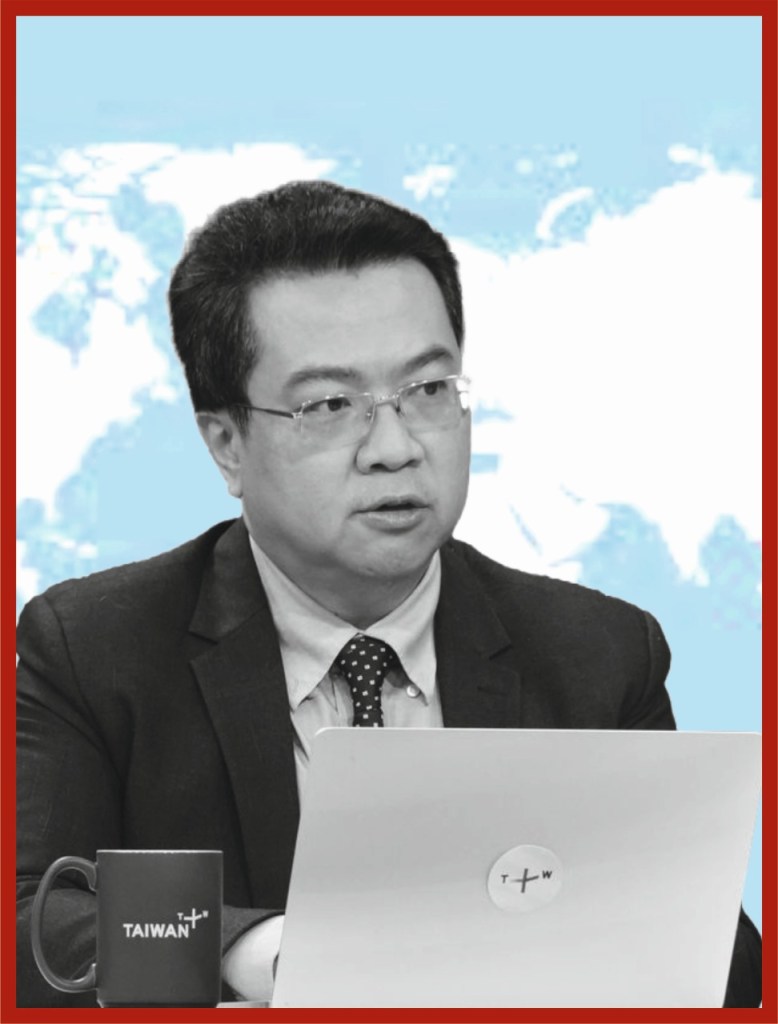
This is first in a three article series by Roger Chifeng Liu, an Indo-Pacific analyst and a professor of International Relations at Taiwan’s National Sun Yat-Sen University.
The second can be read here: Part 2: The Historical Linkage Between Korea, China and Taiwan
 क्षेत्रीय संवाद (Platform for Regional Discourse ) 區域對話的平台
2 responses to “Part 1: The Historical Linkage Between Korea, China and Taiwan ”
[…] The first can be read here: Part 1: The Historical Linkage Between Korea, China and Taiwan […]
LikeLike
[…] The first can be read here: Part 1: The Historical Linkage Between Korea, China and Taiwan […]
LikeLike