
By Rupal Kalebere
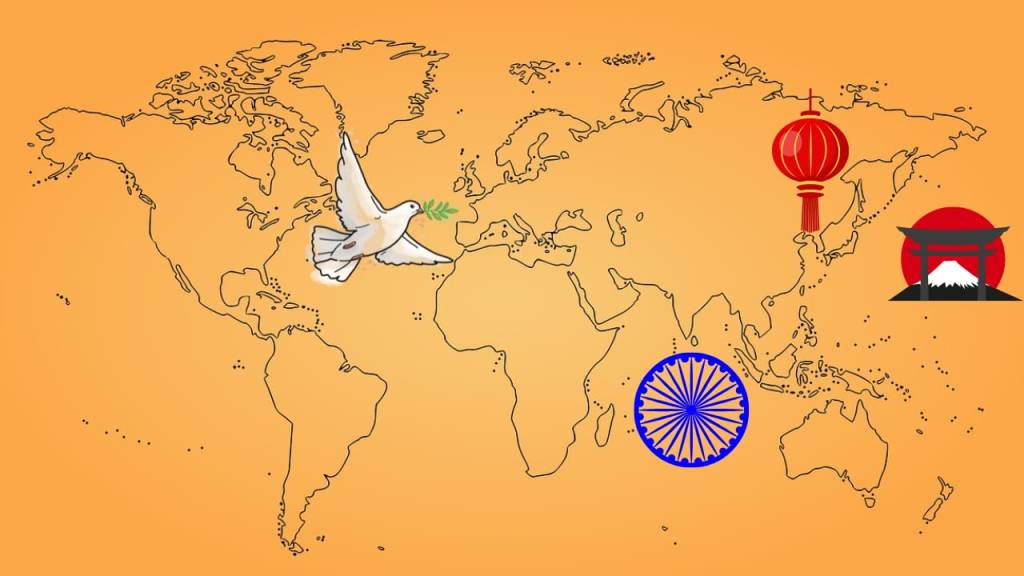
Prime Minister Narendra Modi’s visits to Tokyo and Tianjin in late August and early September 2025 highlight a new phase in India’s Asia strategy. These were not separate or contradictory events. Instead, they reflect two sides of the same approach: India is strengthening its partnership with Japan to build economic and technological resilience, while also engaging with China and others in the Shanghai Cooperation Organisation (SCO) to shape regional norms and keep dialogue open.
In Tokyo, the India–Japan summit delivered results with unusual depth. The two countries announced a new target of ten trillion yen in Japanese private investment in India, an Action Plan for half a million exchanges of people over the next five years, and a Japan–India Economic Security Initiative to secure supply chains in critical sectors such as semiconductors, clean energy, and pharmaceuticals. They also agreed on closer work in frontier technologies, including a joint AI Cooperation Initiative and renewed collaboration in space between ISRO and JAXA. Both sides reaffirmed their commitment to a free, open, and resilient Indo-Pacific, underlining that these agreements were not just about economics but about a shared strategic vision.
‘Global Partnership’
These announcements build on a longer history of India–Japan cooperation. Since the early 2000s, when Prime Ministers Yoshiro Mori and Atal Bihari Vajpayee declared a “Global Partnership,” the relationship has steadily expanded. Japan has been a leading partner in India’s infrastructure development, most visibly through the Mumbai–Ahmedabad High Speed Rail project.
Japanese investment has also flowed into the Delhi–Mumbai Industrial Corridor and the development of smart cities. What distinguishes the 2025 Vision is the emphasis on economic security and technology, reflecting how both sides see geopolitics increasingly shaped not just by military balance but by supply chains, standards, and innovation.
Equally important was the effort to embed the partnership below the national level. State–prefecture and city-to-city ties, as well as forums for small and medium enterprises, were highlighted as ways to give the partnership social and economic depth. This makes the targets more likely to succeed in practice, turning them into actual projects, jobs, and exchanges rather than remaining promises.
Cooperation in Africa was also noted, showing that India and Japan are thinking beyond bilateral ties and looking to shape wider regional development. By linking Asian and African growth through trusted supply chains, India and Japan are positioning themselves as reliable alternatives to China’s Belt and Road Initiative.
Complementary Purpose at Tianjin
The visit to Tianjin for the SCO Summit was different in tone but complementary in purpose. Modi set out three themes for India’s approach: Security, Connectivity, and Opportunity. His message was clear. On terrorism, he warned against “double standards,” insisting that the fight must be consistent and principled. On infrastructure, he stated that connectivity projects which bypass sovereignty “lose both trust and meaning,” a pointed reminder of India’s objections to the Belt and Road Initiative.
At the same time, India did not limit itself to criticism. It supported the Summit’s adoption of the Tianjin Declaration, a 2035 Development Strategy, and the creation of new centers to cooperate on cyber security, narcotics, and organized crime. The discussions also covered important financial issues, including greater use of local currencies in trade, new payment systems, and the idea of an SCO development bank. For India, these debates are less about rejecting global markets and more about building additional options so that countries are less vulnerable to sanctions or financial shocks.
India’s approach to the SCO reflects pragmatism. While its strategic competition with China remains sharp, New Delhi recognizes that the SCO is one of the few platforms that bring together China, Russia, Central Asia, and South Asia. Energy access, counter-terrorism, and connectivity are all issues that matter deeply to India, and disengagement would only leave space for others to shape outcomes. By being present, India can articulate its principles, block proposals that violate its interests, and participate in initiatives that genuinely serve regional stability.
China presented its Global Governance Initiative, calling for a more “equal and orderly multipolar world” and reform of institutions such as the UN. India shares some of these concerns, especially the need for greater representation of developing countries, but it approaches reform cautiously. India supports creating new mechanisms, but it also emphasizes that these should be transparent, complementary to existing institutions, and respectful of sovereignty. For New Delhi, reform is valuable only if it leads to fairer representation without weakening rules-based cooperation.
‘India’s approach to the SCO reflects pragmatism. While its strategic competition with China remains sharp, New Delhi recognizes that the SCO is one of the few platforms that bring together China, Russia, Central Asia, and South Asia.’
Rupal Kalebere, Geo-political Analyst
Two-track Strategy
Put together, the Tokyo and Tianjin visits show the logic of India’s two-track strategy. With Japan, India builds long-term capacity with trusted supply chains, technology cooperation, and predictable capital flows. With the SCO, India stays engaged in Eurasian institutions, stating its principles and shaping debates even when interests diverge. This is not about choosing sides or tilting toward one power. It is about strategic autonomy: keeping multiple options open while defending sovereignty and promoting development.
There are challenges. Japanese investment goals have sometimes fallen short in the past, and SCO institutions often struggle to move from broad statements to concrete action. But the details of the 2025 India–Japan Vision like critical-minerals cooperation, sub-national linkages, and specific project mechanisms show greater attention to delivery. Similarly, the SCO’s new specialized centers and financial discussions are steps toward more practical cooperation. The challenge for India will be to turn both sets of commitments into real outcomes, avoiding the trap of over-promising and under-delivering.
The broader context is one of shifting power. The United States remains a major partner for India, but its growing use of tariffs and sanctions has encouraged many countries to look for alternatives. This trend of “de-risking” from single points of dependence is visible across Eurasia. Countries are hedging against the risks of relying too heavily on any one currency, institution, or partner. India’s response has been pragmatic: deepen ties with trusted partners like Japan, remain present in organizations where China and Russia set the agenda, and ensure its own voice is heard.
In this sense, Tokyo and Tianjin were not contradictions. They were complementary expressions of a single strategy: anchor resilience with close partners, and engage constructively where rules and norms are being written. For India, this two-track approach reflects confidence in its ability to work with diverse partners, defend its interests, and help shape the emerging multipolar order. By combining economic depth with diplomatic presence, India is not just reacting to global shifts, it is actively positioning itself as a shaper of Asia’s future.
‘In this sense, Tokyo and Tianjin were not contradictions. They were complementary expressions of a single strategy: anchor resilience with close partners, and engage constructively where rules and norms are being written.’
Rupal Kalebere, Geo-political Analyst
Rupal Kalebere is a researcher in defense policy and law, currently serving as a Senior Researcher at the Society for Aerospace, Maritime and Defence Studies (SAMDeS) and Programming Director at Young Professionals in Foreign Policy (YPFP) Tokyo.
Views expressed in this article are of the author and do not necessarily reflect the views of the publication, The Indo-Pacific Politics.

 क्षेत्रीय संवाद (Platform for Regional Discourse ) 區域對話的平台