During Jammu floods India shared river water information with Pakistani diplomats and not with the designated engineers as was done earlier under the treaty. This was a humanitarian gesture.
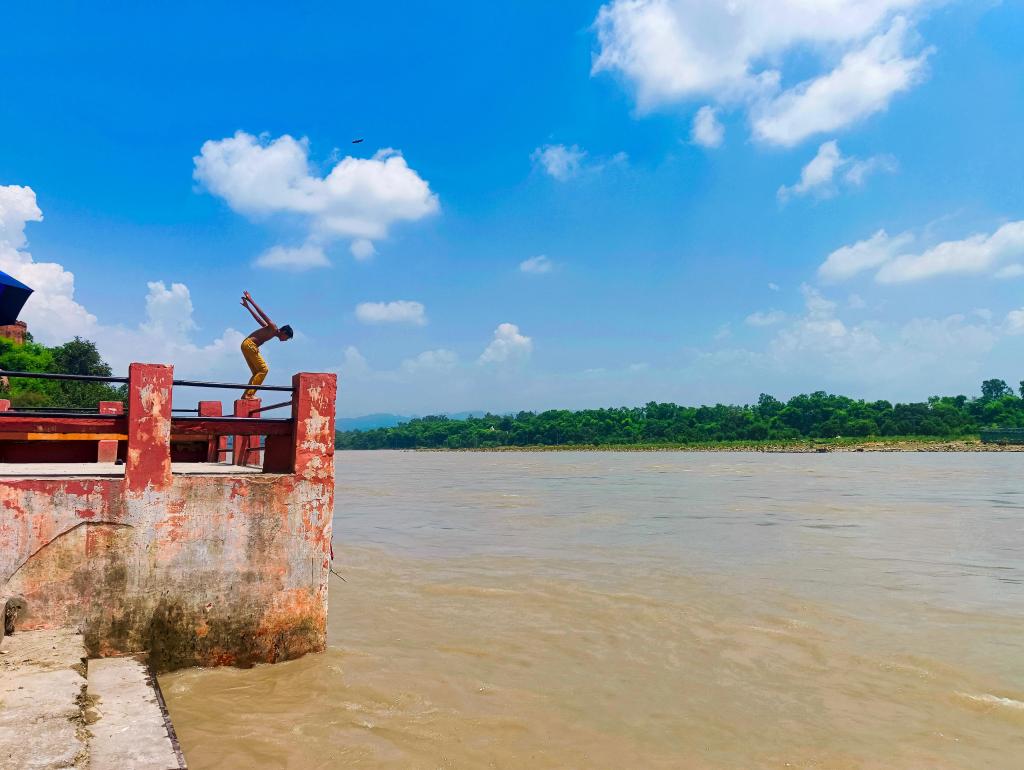
By Venus Upadhayaya
After India suspended its participation from the Indus Water Treaty on April 23, media the world over reported about India temporarily stopping the water of the Chenab river that flows into Pakistan. The border communities in Jammu were first hand witnesses to it and in absence of credible, fact-based information had developed their own theories about the closure.
In August I visited the village of Sungal in Akhnoor in Jammu to talk to the border residents and to gauge the situation post Operation Sindoor 1. The locals in Sungal described the complete stoppage of Chenab water as a temporary closure for about six hours on May 5–when they could see the river bed and walk over it. They also mentioned watching a lot of unusual variation in the river flow between April 23 and May 7 when Operation Sindoor was launched.
I also heard a lot of other things from the interviewees, like rumours about India bursting the lower welded gates of Salal Hydroelectric Power Project after April 22 and this propelled me to factcheck. Fact checking should be a part of all journalistic endeavors as that not only builds credibility but also helps counter narrative warfare.
I eventually came to know from authoritative sources that the gates of Salal Hydroelectric Power Project were never welded in the first place and they were not bursted. More importantly, my cross checking did bring to light many facts about how mistrust and unfriendly practices often marred the coordination between India and Pakistan under the former Indus Water Treaty.
Fact Check
India started building the Salal Hydroelectric Power Project over Chenab uphill in Reasi district in 1970. Pakistan objected to its construction under the Indus Water Treaty and in 1978 India and Pakistan resolved their differences diplomatically.
Under this resolution, the Permanent Indus Commission, a body set up under the Indus Water Treaty for implementation of the agreement and for settling disputes oversaw the cementing of the outlet bottom gates of the dam. The locals believe that these gates were blasted open after April 23 but my source denied that.
I confirmed this with Sant Kumar Sharma, a veteran journalist and the coauthor of two books on the subject–Indus Waters Story, Issues, Concerns and Perspectives and a more recently published book called Indus Water Treaty, Mirroring the Facts.
“As per the treaty 30 percent of the water should always flow in the river of the Indus basin and within 24 hours the remaining 70 percent should also return. After the Pahalgam attack India temporarily stopped 100 percent of water in the Chenab while it opened all water of the lower Jhelum in Srinagar. On April 23 we also stopped sharing the river water data,” said Sant Kumar.
This according to him was to give a message to Pakistan that India has suspended the treaty. He said there are 280 sets of river data which India was sharing on a real time basis with Pakistan and all this stopped on April 23.
“Indus Water Treaty isn’t sacrosanct. We were telling them what we are capable of doing. However the 1978 cemented doors weren’t touched,” said Sant Kumar while terming their future status as a strategic affairs matter for India.
If India was sharing 280 sets of river data with Pakistan under the former Indus Water Treaty on a regular basis imagine the regular work it implied and if India had cemented the outlet bottom gates of the dams under a diplomatic framework it meant certain coordination and compliance.
By stopping all this, India is telling the global community that it acted responsibly as an upper riparian state until April 23 but had to take tough decisions in the interests of its national security. This also gave a message to Pakistan that compliance on matters of cross-boundary resource issues (rivers being one of them) can’t be separated from integrated security concerns.
Jammu residing Sant Kumar said that India has only built Run of the River (ROR) dams under the Indus Water treaty but after its suspension it may not remain so. ROR dams generate electricity through the normal flow of the river with minimum or no water storage. According to Sant Kumar the treaty was already redundant and in 2020 he had advocated for a revised version of the treaty but after Pahalgam the entire treaty turned into abeyance.
He blamed the perpetual mistrust between India and Pakistan for the tensions and gave the example of the Danube river in Europe which is shared between 19 countries without any coordination problems.
“Indus Water Treaty doesn’t exist anymore. India said on April 23 that until Pakistan doesn’t stop terrorism, the Indus Water Treaty will not be restored,” said Sant Kumar while adding its future is unpredictable.
Floods in Jammu
Jammu witnessed massive floods in late August and early September and according to Sant Kumar, India issued a warning to Pakistan as a humanitarian gesture. This was done outside the framework of the suspended treaty and the information was shared with diplomats and not with the designated engineers as was done earlier under the treaty.
Keeping in mind the example of the narrative warfare on the subject of the Indus Water Treaty, as is visible in Sungal, it’s important that in border regions the army and civil society start building long-term initiatives to counter propaganda. Indian defense establishment should work with premier institutions like National Institute of Mental Health and Neuro-Sciences (NIMHANS) and the Department of Psychiatry in regional AIIMS to develop community interventions for trauma care and for countering narrative warfare.
It’s high time we figure out how trauma care and countering narrative warfare are interlinked. If India wants to go far in building its strength and infrastructure in the border regions, it should make these psycho-social care interventions one of its top priorities. Without resilient communities on the border, national security can’t be ensured.
 क्षेत्रीय संवाद (Platform for Regional Discourse ) 區域對話的平台