
By Rupal Kalebere

On 18 September 2025, India’s Chief of Army Staff visited the Army’s drone training facility at Likabali in Arunachal Pradesh, marking the full-scale integration of Unmanned Aerial Systems (UAS) into Indian Army training and operations. The visit reaffirmed commitments first announced at the Kargil Vijay Diwas ceremony on 26 July 2025, where the Army leadership stated that every infantry battalion would include a dedicated drone platoon, artillery regiments would induct counter-drone systems and loitering munitions, and new composite “Divyastra” batteries would be created to enhance precision and survivability.
These developments can be rightly called India’s ‘Eagle in the Arm’ initiative–reported widely across Indian media, it reflects an institutional vision rather than isolated declarations.
Policy intent since its inception has been formalized through official communication. In a Press Information Bureau (PIB) release dated 27 August 2025, the Defence Minister confirmed that the Army Training Command would provide drone-technology instruction to all soldiers by 2027. The statement also mentioned the planned creation of Drone Platoons, Divyastra Batteries, and Rudra Brigades as measures “appropriate to changing times.” This remains the clearest official articulation of India’s plan to make drone operation a universal military skill.
Subsequent PIB releases show that the institutionalisation effort extends beyond classroom training. On 31 May 2025, the Ministry of Defence reported Army trials conducted under near-combat conditions. The tests involved UAS, Unmanned Aerial Vehicle (UAV)-launched precision-guided munitions, loitering munitions, Vertical Take-Off and Landing (VTOL) drones, and Integrated Drone Detection and Interdiction Systems (IDDIS). At the same time, emergency procurement lists included IDDIS, loitering munitions, Remotely Piloted Aerial Vehicles (RPAVs), and Very Short Range Air Defence Systems (VSHORADS). Together, these acquisitions illustrate a deliberate expansion of both drone and counter-drone capabilities.
Parallel attention has been directed to quality assurance and sustainment. On 11 September 2025, PIB Hyderabad reported that the Directorate General of Quality Assurance (DGQA) organised a seminar on “Quality Assurance Strategies for Evolving Military UAVs and Drones.” The event underscored the need for lifecycle reliability, vendor certification, and technical standards to accompany rapid induction.
Taken together, these measures indicate that India is shifting from ad hoc acquisition to systematic doctrinal and organisational integration of UAS and Counter-Unmanned Aerial Systems (C-UAS) at the tactical level. This integration is supported by a defined training timeline extending to 2027, a structured procurement framework, and DGQA-led mechanisms for quality assurance.
“The Army Training Command would provide drone-technology instruction to all soldiers by 2027. The statement also mentioned the planned creation of Drone Platoons, Divyastra Batteries, and Rudra Brigades as measures “appropriate to changing times.”
Rupal Kalebere, Defense Expert
Why Universal Drone Readiness, and Why Now?
Recent conflicts have demonstrated that the large-scale use of small drones shortens the sensor-to-shooter cycle, increases unit autonomy, and fundamentally alters the economics of precision warfare. The Russia–Ukraine war has shown both the operational indispensability of drones and the attrition risks posed by electronic warfare. Drones have become central to intelligence, surveillance, and reconnaissance as well as artillery adjustment, strike operations, and logistics. At the same time, electronic jamming and counter-drone systems have emerged as equally decisive factors.
For India, the challenge is two-fold: to distribute organic drone capability across all levels of the force while also developing layered defences against hostile drones. Trials and emergency acquisitions such as Integrated Drone Detection and Interdiction Systems, electronic-warfare assets, Very Short Range Air Defence Systems, and loitering munitions demonstrate this dual orientation.
Cost and scalability further justify this approach. Commercial Off-the-Shelf (COTS) quadcopters and modular tactical drones can be deployed in significant numbers without imposing unsustainable budgetary burdens, provided that supply chains, electronic-warfare resilience, and training infrastructure are robust. Ukraine’s experience shows that low-cost systems can transform battlefield awareness, yet high attrition rates demand constant replenishment and tactical adaptation.
Doctrinal and Training Implications
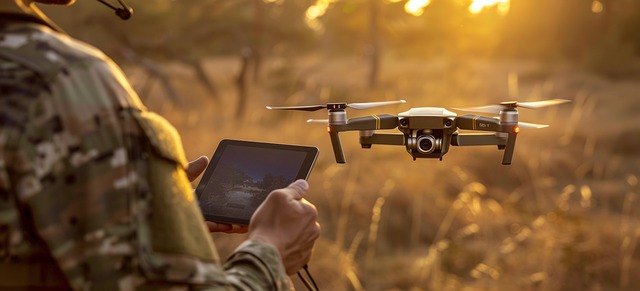
A balanced model is emerging in which all soldiers receive basic drone literacy, while advanced operation and maintenance are assigned to specialised personnel.
International practice offers relevant guidance. The United States Army’s Joint Counter-Small Unmanned Aircraft Systems University (JCU) at Fort Sill provides cross-service education on operating and countering drones. Complementary doctrinal manuals such as the Center for Army Lessons Learned (CALL) Small Unmanned Aircraft System Airspace Management and Control emphasise disciplined low-altitude airspace coordination and deconfliction.
For India, incorporating drone modules into the Indian Military Academy (IMA) Dehradun, the Infantry School Mhow, and the Officers Training Academy Chennai, as confirmed by PIB releases, should be complemented by the development of clear Standard Operating Procedures (SOPs) for airspace management at battalion and brigade levels. Regular re-certification cycles, attention to electronic-warfare resilience, and continuous simulation training will be necessary to sustain proficiency and reduce operational risk.
“International practice offers relevant guidance. The United States Army’s Joint Counter-Small Unmanned Aircraft Systems University (JCU) at Fort Sill provides cross-service education on operating and countering drones.”
Rupal Kalebere, Defense Expert
Comparative Readiness: Global Experiences in Drone Integration
India’s pursuit of universal drone literacy must be viewed in the context of global developments, as militaries worldwide are redefining training and doctrine in response to the diffusion of unmanned systems.
In the United States, small Unmanned Aerial Systems (UAS) are standard equipment at the squad and platoon levels. The Joint Counter-Small Unmanned Aircraft Systems (sUAS) University (JCU) at Fort Sill, Oklahoma, provides a joint platform for inter-service training in drone operation and counter-drone measures. Within the U.S. military doctrine of Multi-Domain Operations (MDO), drones are not isolated tools but components of a larger effort to integrate land, air, cyber, and space capabilities. Budgetary allocations under the Fiscal Year 2025 National Defense Authorization Act (NDAA) further emphasise the institutionalisation of counter-drone systems, confirming that drone readiness is now an operational baseline.
The Ukraine conflict offers a vivid example of practical universalisation under battlefield pressure. Ukrainian units at every echelon employ drones for intelligence, surveillance, reconnaissance, strike missions, and logistics. Civil-military partnerships, volunteer networks, and private industry have collectively sustained this capacity, while Russian electronic-warfare countermeasures have driven rapid tactical adaptation. Ukraine’s experience demonstrates both the transformative value of drones and the vulnerabilities that arise from electronic attrition and supply-chain exhaustion.
In Israel, the integration of unmanned platforms such as the Orbiter and Skylark systems at the tactical level, and the use of Harop loitering munitions, illustrate a model driven by qualitative superiority. Although the Israel Defense Forces (IDF) have not sought universal soldier-level drone readiness, drone literacy is deeply embedded in their operational culture. It provides agility and precision in conflict environments where rapid response and minimal collateral damage are strategic imperatives.
China’s People’s Liberation Army (PLA) represents a contrasting model focused on scale and automation. Its doctrine of “intelligentised warfare” emphasises artificial-intelligence-enabled autonomy, drone swarming, and mass production of low-cost platforms. The PLA’s experiments with coordinated swarms aim to offset conventional disadvantages and to saturate enemy defences through numerical and algorithmic superiority.
South Korea has opted for an explicitly national approach. In September 2025, Seoul announced its “500,000 Drone Warriors” initiative, under which every military conscript will receive basic UAS training. The programme began at the 36th Infantry Division in Wonju, signalling the institutionalisation of mass drone literacy within a conscription-based force. The initiative parallels India’s vision by making drone operation an expected skill for all personnel.
Within NATO and the European Union (EU), drones and counter-drone technologies are now categorised as strategic capability gaps. The EU’s Readiness 2030 / ReArm Europe Plan prioritises industrial expansion and standardisation in drone development and procurement. In September 2025, European leaders advanced the concept of a “drone wall” across the alliance’s eastern flank to enhance surveillance and counter-UAS protection. These initiatives reflect the recognition that airspace security and electronic resilience have become central to deterrence.
In comparative perspective, India’s declared goal of making all soldiers drone-literate by 2027 is exceptional in both scope and clarity. It more closely resembles South Korea’s universal model than the United States or Israel’s specialised systems, and it differs from China’s emphasis on automation and swarm warfare. The Indian approach is therefore distinguished by its human-centred model of drone integration, where individual soldiers rather than centralised algorithms form the operational backbone.
India’s goal “more closely resembles South Korea’s universal model than the United States or Israel’s specialised systems, and it differs from China’s emphasis on automation and swarm warfare.”
Rupal Kalebere, Defense Expert
Why Drone Readiness Matters
Operationally, drones extend a unit’s visual and tactical reach. They compress decision cycles, enable distributed situational awareness, and reduce risks to personnel. In high-tempo environments, this capacity can determine the difference between detection and surprise. However, as Ukraine’s experience shows, electronic-warfare vulnerability and attrition must be anticipated through redundancy and resilience.
Doctrinally, soldier-level drones decentralise intelligence and fire control. This demands new models of command and control (C2), integration of artillery and air defence, and clear rules of engagement (ROE). The U.S. Army’s Center for Army Lessons Learned (CALL) guidance on low-altitude airspace management provides an example of how procedural discipline can minimise fratricide and confusion in crowded aerial environments.
Industrially, India’s programme aligns with the Atmanirbhar Bharat (Self-Reliant India) initiative, which seeks to expand domestic defence manufacturing. Consistent demand for modular UAS and Counter-Unmanned Aerial Systems (C-UAS) can stimulate private-sector innovation and create high-skilled employment. The Directorate General of Quality Assurance (DGQA) has already initiated work on drone-specific quality standards, ensuring that local production meets operational and export benchmarks.
Geopolitically, mass drone readiness shapes deterrence and alliance interoperability. By integrating drones into every unit, India strengthens its posture along both its western and northern borders. Internationally, the spread of such capabilities raises broader questions about norms governing autonomy, counter-measure escalation, and data governance. The European Union’s Readiness 2030 framework and NATO’s focus on counter-UAS interoperability suggest that such standards are becoming a new domain of strategic diplomacy.
Risks and Constraints
Several operational and institutional risks accompany India’s ambitious programme. The first is electronic-warfare vulnerability. Small UAS platforms are susceptible to jamming and spoofing, which can compromise missions or cause uncontrolled flight. Without frequency-hopping communications, encryption, and navigation backups, these systems can be neutralised or hijacked.
The second is cognitive and task overload. Universal training is valuable, but excessive multitasking at the platoon level can undermine performance. Clearly defined operator roles, supported by structured re-certification, will be required to sustain competence without diluting combat focus. A third risk concerns airspace safety. Increased low-altitude drone activity introduces the potential for collisions and friendly-fire incidents. India’s doctrine will need to incorporate procedural deconfliction, altitude zoning, and coordination between drone units, artillery, and manned aviation.
Fourth, logistical sustainment poses challenges. Batteries, spare parts, and maintenance kits must be available in the field just as ammunition is. Emergency purchases may help seed capability, but long-term success will depend on lifecycle contracts and repair infrastructure.
Finally, quality assurance and supply-chain integrity remain central. Rapid scaling without rigorous testing risks uneven reliability. The DGQA’s recent initiatives indicate awareness of this problem, but institutional follow-through—through vendor audits, technical evaluations, and lifecycle monitoring—will determine success.
“Universal training is valuable, but excessive multitasking at the platoon level can undermine performance. Clearly defined operator roles, supported by structured re-certification, will be required to sustain competence without diluting combat focus.”
Rupal Kalebere, Defense Expert
Policy Recommendations
India’s transition from experimental use to universal readiness requires coordinated action in training, technology, doctrine, and governance.
Training. The Army should maintain a universal baseline of drone literacy while designating professional operator tracks at platoon and company levels. Simulation-based exercises, electronic-warfare awareness modules, and frequent recertification cycles will help sustain competence.
Technology and resilience. Procurement standards should mandate encrypted communications, anti-jamming capabilities, and autonomous recovery functions. Investment in artificial intelligence-based target recognition can reduce operator workload and improve accuracy.
Logistics and lifecycle management. Batteries, spare parts, and line-replaceable components should be integrated into existing logistics pipelines. Multi-year sustainment contracts should specify reliability and mean-time-between-failure (MTBF) metrics to ensure readiness.
Doctrine and command integration. The Army should codify a standard framework for small-UAS airspace management, including altitude bands, mission scheduling, and coordination with artillery and air defence. Integration with automated control systems such as the Akashteer Air Defence Network will provide real-time situational awareness.
Quality assurance. The DGQA should continue developing environmental, electromagnetic, and cybersecurity standards specific to drones, with mandatory testing at induction and periodic reviews thereafter.
International partnerships. Cooperation with allies through platforms such as the Quadrilateral Security Dialogue (QUAD), and bilateral partnerships with the United States, Israel, and the European Union, can accelerate technology transfer, training exchange, and counter-UAS interoperability.
Ethical and legal governance. India should codify principles ensuring human control over lethal effects, establish data-governance standards for imagery and sensor data, and clarify civil-military boundaries in domestic airspace use.
Conclusion
India’s “Eagle in the Arm” initiative represents a fundamental shift in the country’s military modernisation strategy. By committing to train every soldier in drone operation by 2027, India is institutionalising a technology that redefines how power, precision, and perception operate on the battlefield. The programme is underpinned by government documentation, structured procurement, and emerging quality-assurance frameworks.
In comparative perspective, India’s approach is ambitious and distinctive. It parallels South Korea’s universal model more closely than the specialised frameworks of the United States or Israel, and it differs from China’s automation-centred strategy. The success of this initiative will depend on disciplined doctrine, reliable technology, and effective logistics. If implemented coherently, India’s drone-ready soldier will not only transform national defence capability but also contribute to shaping global norms on the responsible military use of unmanned systems.

Rupal Kalebere is a researcher in defense policy and law, currently serving as a Senior Researcher at the Society for Aerospace, Maritime and Defence Studies (SAMDeS) and Programming Director at Young Professionals in Foreign Policy (YPFP) Tokyo.
Views expressed in this article are of the author and do not necessarily reflect the views of the publication, The Indo-Pacific Politics.

 क्षेत्रीय संवाद (Platform for Regional Discourse ) 區域對話的平台