By Vaibhav Agrawal

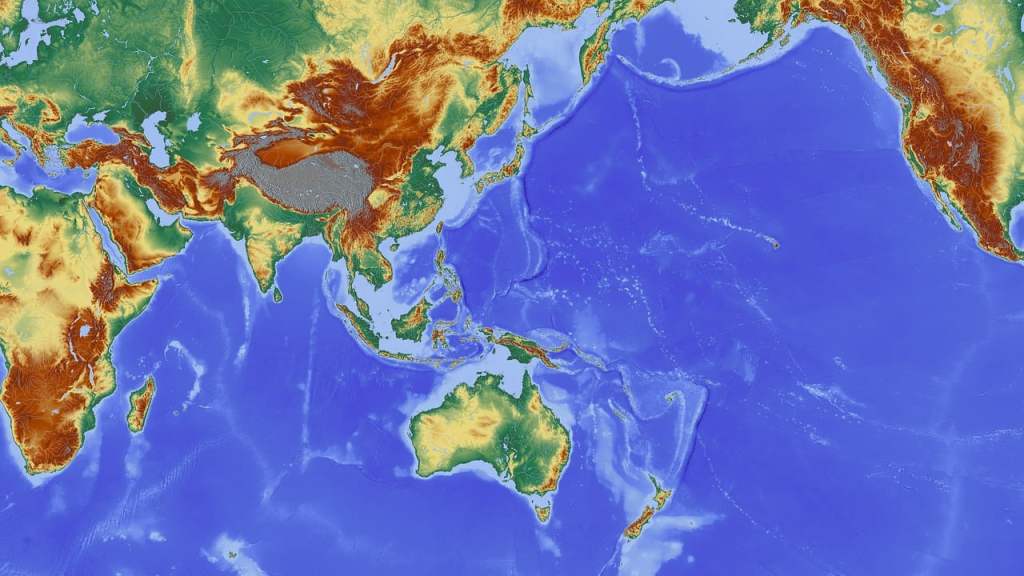
The strategic logic is simple but uncomfortable that Taiwan sits astride flows of unusually high economic density, and the consequence of instability there is not a localized hiccup but a systemic shock to global supply chains. I have watched consignments of precision electronics move through these watercourses with the same care one affords a bank transfer; a single delay or detour in the Taiwan theater translates, within days, into higher component costs, production delays and stressed contracts across Asia. The empirical reality under-girding that observation is plain that Taiwan remains the epicenter of advanced-node semiconductor production, and disruptions in its maritime approaches have outsized global effects.
Designing security for India’s exposure therefore begins with a fundamental re-calibration of objectives: security must be conceived not only as the defence of sovereign waters but as the uninterrupted, lawful flow of high-value commerce. That requires a transition from episodic crisis response to institutionalised resilience. In practice, this means India must invest simultaneously in three interlocking capabilities including forward naval reach and escort doctrines calibrated to peacetime risk, insurance and legal frameworks that de-risk lawful commercial passage, and diplomatic architectures that bake in cooperative security with littoral partners and trade hubs. No single instrument suffices; only a blended posture of hard, soft and legal power will create the predictability markets and shippers need.
Evolving Operations of Indian Navy
Operationally, India’s navy must evolve from occasional freedom-of-navigation signalling to a sustained, presence-based deterrent tailored to commercial routing patterns. Presence does not imply provocation; it means predictable, transparent patrols and escort options that shipping companies can contract into their voyage planning. I have argued in maritime fora that the value proposition to carriers is not a show of force but a service: a reliable naval-assured corridor reduces insurance exposure and creates a commercially verifiable alternative to protracted rerouting.
That approach also permits interoperability with partners, a deployed Indian tanker or corvette need not act alone if it can be braided into multinational passage escorts that are legally framed and politically calibrated. The tempering fact here is that such cooperative presence is increasingly being operationalised across the region, as evidenced by new joint sails and cooperative patrols among India’s partners.
Geopolitics and Maritime Insurance Market
Equally crucial is confronting the economic externalities that arise when insurers reprice geopolitical risk. The maritime insurance market has entered an era of structural premium elevation; costs that were once episodic are now permanently priced into freight economics. I have sat across underwriters and claims counsel of London and Singapore who treat “war-risk” as a line item, and the calculus is stark: without mechanisms to stabilise insurance risk (from collective escorts to pooled indemnity instruments), India and its private sector will continue to absorb higher logistics costs that cascade into export competitiveness.
Pragmatically, India should pursue two complementary measures: first, co-designed insurance backstops with allied states and private insurers that lower the marginal war-risk premium for vetted, escorted voyages; second, regulatory and fiscal incentives for shipping lines that use designated, secure maritime corridors. Both steps convert security into a measurable economic good.
Rise of Shadow Fleets
A second non-kinetic front is the legal and compliance architecture around sanctioned, shadow and grey-market shipping. The rise of “shadow fleets” and opaque transshipment practices has amplified the difficulty of distinguishing lawful commerce from illicit or sanctioned flows, a problem that magnifies insecurity for legitimate actors. My recent engagements with maritime intelligence analysts highlight that the shadow fleet phenomenon is not peripheral; it is now a structural feature of the global maritime domain and it degrades transparency and trust.
India must therefore invest in a legal-technical toolkit: domestic enactments strengthening port state control and vetting, bilateral information-sharing protocols for AIS/automatic identification spoofing, and active participation in international efforts to bulk up open-source maritime domain awareness. These actions will simultaneously protect commerce and reduce the reputational contagion that prompts firms to reroute preemptively.
Port and Logistics Diplomacy
Port and logistics diplomacy, the quiet cousin of naval power, deserves equal emphasis. India’s capacity to offer reliable alternate trans-shipment, bunkering and emergency logistics through friendly ports in the Bay of Bengal and beyond is a hard currency in any risk-adjusted routing decision. I have been in port-board rooms where commercial planners weigh a three-day network delay against the reputational cost of a contested transit; the calculus frequently favours detours unless the alternative port network offers speed, cost-competitiveness and legal predictability.
India should accelerate targeted investments in port infrastructure, digital customs interoperability and expedited legal redress for cargo claims, measures that reduce friction and make Indian-aligned corridors commercially preferable rather than merely strategic.
Diplomacy must be granular and transactional as much as it is strategic. Large, headline joint exercises matter; so do low-visibility, high-utility agreements on bunkering rights, ship repair, information exchange and judicial cooperation for cargo claims. My observation from discussions with regional partners is that small, routinely executed confidence-building measures generate more commercial certainty than intermittent grandstanding.
India’s Act East and SAGAR platforms are appropriate umbrellas, but the operational deliverable should be a set of mutually recognised corridor standards: encrypted route-clearance protocols, standardized escort request procedures, and agreed legal immunities for ships operating under multinational protection. Those standards can then be marketed to insurers and shipping lines as a package that materially reduces voyage risk.
Technology and Legal Safeguards
Technology and data are force multipliers if deployed with legal foresight. Real-time maritime domain awareness, resilient communications and secure satellite AIS will help distinguish legitimate commercial traffic from malign actors. But technology alone is insufficient without legal safeguards for data sharing and privacy, and without a credible operational chain for response.
During recent consultancies I’ve seen how data fusion centers transformed situational awareness for ports that adopted them; yet the persistent bottleneck is intergovernmental legal frameworks permitting sharing of commercially sensitive location data. India’s role should be to convene normative protocols for data exchange that balance commercial confidentiality with security imperatives, underwritten by reciprocal legal protections.
Preparing for Grey-Zone Inspections
Finally, the architecture must accept ambiguity and prepare for competition below the threshold of open conflict. The most damaging trend will not necessarily be a blockade; it will be chronic friction like grey-zone harassment, repeated inspections, AIS interference etc. that cumulatively raises costs and erodes trust.
India’s planning, therefore, must be long-horizon and process-oriented: institutionalise naval escorts as a peacetime commercial service, legislate insurance backstops and incentives, expand port capacity and legal interoperability, and cultivate a network of information and judicial cooperation across littoral states. Those steps convert strategic intent into operational predictability.
If I have one blunt takeaway from my experiences, policy work and engagement with shipping executives, it is that security that does not advertise its utility to commerce will fail to attract commercial buy-in. India’s greatest advantage is its dual identity as a maritime state and a commercial hub; the design of future security must therefore be commercial-first and defence-enabled. That is how you create corridors that shipping lines choose because they lower cost and legal friction, not simply because they are politically desirable.
The implementation challenge is significant, but the framework is clear: integrate naval presence, legal instruments, insurance engineering and port diplomacy into a single, market-oriented product. Do that, and India will not merely respond to instability around Taiwan; it will shape the incentives that determine whether instability translates into economic pain.

Vaibhav Agrawal is a maritime and logistics legal professional specialising in high-value cross-border shipping, finance, and compliance. His practice covers sanctions compliance, multimodal transport disputes and cargo claims under arbitral frameworks.
Views expressed in this article are of the author and do not necessarily reflect the views of the publication, The Indo-Pacific Politics.

 क्षेत्रीय संवाद (Platform for Regional Discourse ) 區域對話的平台