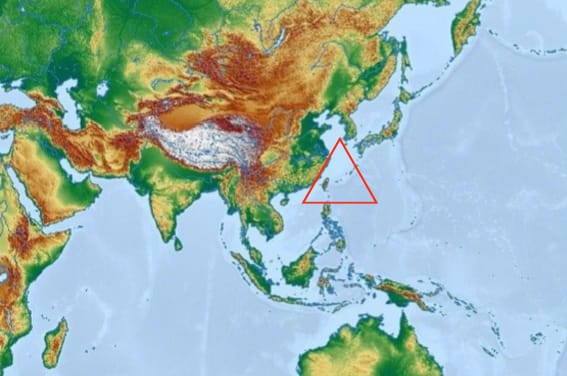
There’s an existing discussion on the growing triad between the US, Philippines and Japan but at the backdrop of it is the strategic triangle between Japan, Taiwan and Philippines. In fact the latter runs like an underlying thread through the former because while the tensions across the Taiwan strait are popularly looked at from the US-China lens, Taiwan’s location at the center of the “First Island Chain” makes it a coke point for both Japan and Philippines as well.
In this context, Philippines has emerged as the core of a regional strategic axis against China–with the US, Japan, Australia and even India strengthening their strategic ties with the Philippines. The latter is certainly and increasingly emerging as the center of gravity of an anti-China front in the Indo-Pacific region, particularly in the very sensitive South China Sea. This implies that even if countries aren’t able to get into formal strategic alliance with Taiwan, they can with the Philippines and that’s the game-changer.
Here are a few recent strategic agreements that the Philippines has signed with countries in the region or is about to sign in 2026. Many of these are reminiscent of the U.S.-Philippines Enhanced Defense Cooperation Agreement signed in 2014:
January 11, 2024: Memorandum of Understanding on Defense Cooperation with the United Kingdom
March 8, 2025: Status of Visiting Forces Agreement With Canada
April 21, 2025: Memorandum Circular No. 82, significantly relaxing previous restrictions on official exchanges with Taiwan.
April 30, 2025: Status of Visiting Forces Agreement with New Zealand
August 5, 2025: Strategic Partnership with India including a Pan of Action for 2025-2029
September 11, 2025: Japan-Philippines Reciprocal Access Agreement (RAA)
Australia and the Philippines Defense Agreement of 2026 (publicized in August 2025)
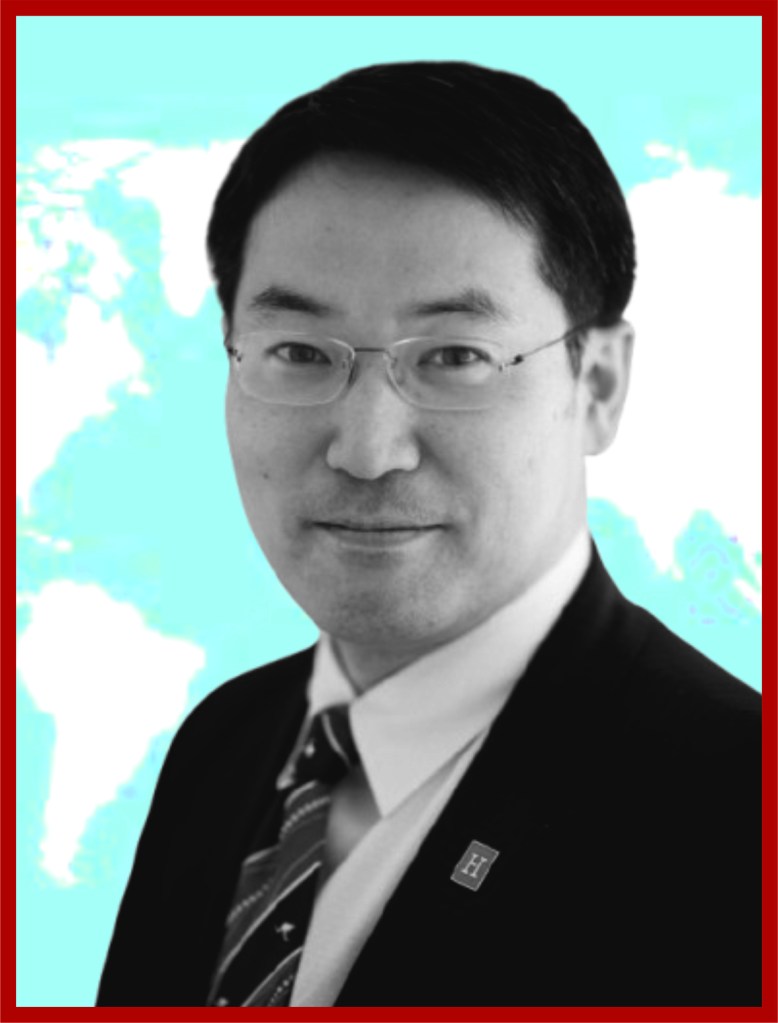
The Indo-Pacific Politics interviewed Dr. Satoru Nagao, Fellow (non-resident) at the Washington DC based The Hudson and an expert on India’s military strategy and Japan-US-India security cooperation about Philippines’ growing strategic relevance in the region and the strategic triangle between Japan, Taiwan and Philippines. Dr. Nagao’s opinion about India’s emerging role in this triad between Tokyo, Taipei and Manila is particularly noteworthy.
The Indo-Pacific Politics: Recently there has been news about increasing defense ties between Manila and Taipei. A new policy by Philippine President Ferdinand Marcos Jr has reduced restrictions on exchanges between the two countries. The Philippine coast guard and Taiwan’s Coast Guard Administration recently carried joint patrols of the Bashi Channel. Taiwan also sent observers to a joint US-Philippine-Japan military exercise that took place in the Batanes Islands called Kamandag in late May. What’s the backdrop to this situation and how’s the QUAD, particularly India watching it?
Dr. Satoru Nagao: For a long time, there has been a problem between Taiwan and the Philippines, such as territorial issues in the South China Sea and fishery issues in the Bashi Channel, etc. US-Taiwan and US-Philippines are cooperating militarily. But there was little security cooperation between Taiwan and the Philippines. Thus, recent cooperation is a new move. The new move is caused by a new situation. The new situation is the possibility of China’s invasion to Taiwan. When China invades Taiwan, there are three reasons that make Philippines very important for Taipei.
Firstly, strategically, Taiwan-Philippine cooperation is important. To invade Taiwan, China needs to concentrate its military forces against Taiwan and the areas around Taiwan. But if many countries around China cooperate, China cannot concentrate its military forces to invade Taiwan. For example, currently, many countries around China, including the US, Japan, India, Australia(QUAD), Taiwan, South Korea, Vietnam, and the Philippines, are seeking to possess long-range missile capabilities that can attack the mainland of China. In the case of Taiwan, Taiwan is extending missiles to attack Shanghai. The US is also deploying the Typhon missile system, which is the latest ground-based launcher of Tomahawk cruise missiles, in the Philippines, and Philippine army officers conducted joint exercises to use this missile with the US. India also exports Brahmos cruise missile which can attack artificial islands of China in the South China Sea. China needs to share some military assets to defend for these missiles. This means that China cannot concentrate all military resources to invade Taiwan. Therefore, along with QUAD countries, missile cooperation of countries around China, is useful to deter China’s invasion to Taiwan.
Secondly, tactically, Taiwan-Philippines cooperation is important. When China invades Taiwan, the US will support Taiwan from the bases in Japan and the Philippines. There is a possibility that China will intimidate or attack Japan and the Philippines to cease their support for the US-Taiwan. Japan and the Philippines need to be tough against China’s intimidation or attack. Thus, even in peacetime, Taiwan-Japan and Taiwan-Philippines should promote and strengthen their friendship to take a firm stance against China in wartime.
Thirdly, even in a peacetime political situation, Taiwan-Philippine security cooperation is important. If China deploys military forces on the Pacific side of Taiwan and blocks Taiwan, the Taiwanese will worry about their fate. There is a possibility that they will accept China’s annexation instead of war. Therefore, access routes to Taiwan in the Pacific must be open. In this case, Japan and the Philippines are important to secure the Pacific side of Taiwan.
The Indo-Pacific Politics: With increasingly aggressive China in the region, Taiwan’s location makes a tie-up between Japan-Taiwan-Philippines (JTP) a geostrategic need. What do the Indians need to understand about the Japan-Taiwan-Philippines strategic triangle?
Dr. Satoru Nagao: India is facing China’s territorial expansion in the India-China border and the Indian Ocean. In 2011, China’s incursions in the India-China border were 213 but they increased to 663 in 2019. China is deploying submarines in the Indian Ocean, that is threat for India’s sea line of communications. And India’s economic rise is faster than China’s now. This means that India will catch up to China. But China will try to prevent the rise of India. If so, India must deal with China’s activities as soon as possible.
China’s core interest is securing and developing coastal cities like Beijing, Shanghai, Hong Kong etc. To supply water to these cities, China needs the India-China border regions. To supply energy resources, China needs the sea routes in the Indian Ocean region. Therefore, the threat of China against India was caused by the coastal cities of China.
For China, Taiwan is a threat to these coastal cities. Because of the location, missiles launched from Taiwan can reach Shanghai, Hong Kong, etc. Taiwan is a weak point in China’s security. To deal with China, countries need to deal with the threat of China, which needs Taiwan.
To defend Taiwan, US-Taiwan-Japan-Philippines cooperation is vital. If India promotes this cooperation, China cannot take Taiwan, and China cannot deploy a big force to the India-China border and the Indian Ocean because China needs to share many resources against Taiwan. Supporting Taiwan-Japan-Philippines is India’s interest. India is providing missiles to Philippines. This is a good way to promote cooperation. In addition, if India raises tension on the India-China border when China is preparing to invade Taiwan, China cannot invade Taiwan because China cannot concentrate its military resources on Taiwan. View from the situation, India has a key card to deal with China.
The Indo-Pacific Politics: Philippines defense ties with India are also increasing with Manila buying the Indian BrahMos missile system–it received the second batch of BrahMos this year. This implies that in the JTP strategic triangle for the first time there’s an Indian weapon system operating! What’s the impact of the presence of an Indian weapon system in this JTP strategic triangle? Plus Japan already has increasing defense ties with India including joint defense exercises like Dharam Guardian! How does China perceive it?
Dr. Satoru Nagao: As mentioned above, the BrahMos missile could be a game-changer. Small countries like the Philippines, missiles, and drones are cost-effective measures to fill the gap of military balance instead of expensive fighter jets and naval ships. However, for a long time, the US has hesitated to provide long-range missiles to other countries. The range of BrahMos is 290km, which can attack artificial islands of China in the South China Sea. And BrahMos are supersonic speed missiles that the current missile defense system cannot easily intercept. Thus, China needs to worry about these BrahMos missiles.
And if all countries around China possess strike capability, such as long-range missiles, China needs to worry in all directions at the same time and cannot concentrate its military resources on one side. That situation deterred China from invading.
What happened in the South China Sea is a good example to prove this because China’s territorial expansion has one pattern. When the military balance changed and China found a “power vacuum,” China expanded its territories. In the 1950s, when France withdrew from the region, China occupied half of the Paracel Islands. In the 1970s, the US withdrew after the Vietnam War, and China occupied the other half of the Paracel Islands. In the 1980s, when the Soviet Union reduced the number of troops in Vietnam, China expanded its activities in the Spratly Islands and occupied six features. And in the 1990s, China occupied Mischief Reef after the US withdrew from the Philippines. Thus, maintaining military balance and preventing the creation of a power vacuum is the way to deter China. If countries around China possess long-range strike capabilities, China needs to divide its military budgets and assets in multiple directions. In this case, it is easier for countries around China to maintain military balance.
View from such a situation, China is worried about both India’s weapon export and cooperation with Japan. But at the same time, China has not stopped its military provocations to expand China’s territories. Thus, the more China provokes Japan and India, the more Japan and India promote cooperation.
The Indo-Pacific Politics: Do you think that the increasing Chinese footprint in the Indo-Pacific is creating new response mechanisms from the nations in the region? How do you see Indian defense policy evolving in the Indo-Pacific vis-a-vis the JTP strategic triangle in the next decade?
Dr. Satoru Nagao: India is increasing its military budget. But China spent a far bigger military budget. And the recent trend is that the US is requesting allies to increase their defence budget. Now, NATO will spend 5% of GDP for defence. The US will ask other allies in the Indo-Pacific to increase their defence budget, too. Under such a situation, India needs to increase its defence budget to maintain a military balance with others.
In addition, promoting coordination with Japan-Taiwan-Philippines and other allies and partners of US side is beneficial for India. As mentioned above, forcing China to face multiple fronts is an effective way to maintain military balance. Security cooperation between the Pacific side and the Indian side is an effective way.
 क्षेत्रीय संवाद (Platform for Regional Discourse ) 區域對話的平台