By Dr. Nishakant Ojha

The Unenviable Geopolitical Position-Taiwan stands at a pivotal moment in modern history, delicately balancing its vibrant democracy against the mounting pressures of great power rivalry. In 2025, the island finds itself in a paradoxical situation internally stable, economically dynamic, and globally significant, yet constantly threatened by external coercion from across the Taiwan Strait. Ranked 40th in the Global Peace Index, Taiwan remains one of the most peaceful democracies in Asia, even as it lies at the heart of one of the world’s most volatile geopolitical flash points. This paradox forms the essence of Taiwan’s modern dilemma a thriving democracy existing under the shadow of an authoritarian power determined to reshape the regional order.
With a population of around 23 million, Taiwan’s importance far exceeds its geographical size. The Taiwan Strait is one of the world’s most vital maritime corridors, accounting for nearly half of global container traffic annually. At the same time, Taiwan is the cornerstone of the global semiconductor industry, producing nearly 92% of advanced chips under 10 nanometers. These semiconductors fuel everything from smartphones and AI processors to defense systems and electric vehicles. This rare convergence of democratic strength, economic indispensability, and strategic vulnerability makes Taiwan not only the linchpin of Indo-Pacific stability but also a critical test case for the resilience of liberal democracies under authoritarian pressure.
This article analyzes how Taiwan’s internal political dynamics interact with its external strategic environment, how great power competition intensifies its challenges, and how India and other Asian democracies can draw lessons from Taiwan’s complex balancing act.
The Great Recall: Polarization in a Vibrant Democracy
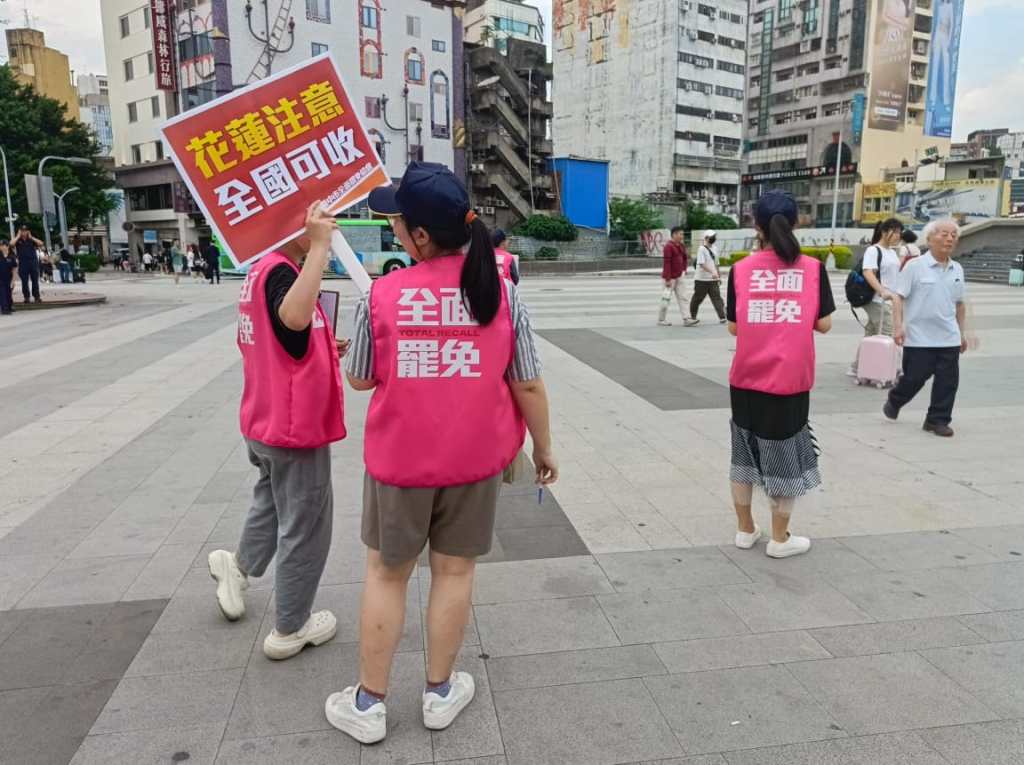
In 2025, Taiwan’s democracy faced one of its most turbulent political episodes in recent memory the “Great Recall.” This movement, which sought to remove 31 lawmakers through nationwide recall votes, reflected both the vibrancy and the volatility of Taiwan’s democracy. The campaign emerged from grassroots civic networks and youth-led volunteer groups disillusioned by legislative gridlock, political opportunism, and increasing ideological polarization.
While the recalls targeted primarily opposition lawmakers from the Kuomintang (KMT) and the Taiwan People’s Party (TPP), the deeper trigger lay in societal divisions over national identity, defense priorities, and cross-strait policy. The recalls eventually failed, as none of the targeted officials lost their seats, but the movement revealed the structural tensions within Taiwan’s democratic system where intense pluralism often translates into legislative paralysis.
The Democratic Progressive Party (DPP), Taiwan’s ruling party, has remained firm in resisting Beijing’s overtures and prioritizing national defense. The KMT, however, advocates cautious engagement and economic normalization with the mainland, emphasizing stability and pragmatism. Meanwhile, the Taiwan People’s Party (TPP) seeks to position itself as a centrist force but remains ambiguous on strategic issues. This fragmented political environment complicates the formation of a coherent national security policy, even as external threats intensify.
Despite its divisions, Taiwan’s democracy demonstrated institutional maturity the recalls, though polarizing, were resolved peacefully through lawful mechanisms. This ability to manage political dissent within constitutional bounds distinguishes Taiwan sharply from the authoritarian alternative across the Strait. However, such polarization also weakens its deterrent posture by signaling internal disunity, a factor Beijing watches closely.
Taiwan’s Geostrategic Significance: More Than a Flashpoint-
The strategic importance of Taiwan extends far beyond its territorial boundaries. The Taiwan Strait, only 130 kilometers at its narrowest point, is one of the most crucial maritime arteries in the world. Nearly 50% of the global container fleet passes through this corridor annually, along with massive shipments of crude oil and liquefied natural gas bound for Japan, South Korea, and beyond. Any disruption here would have catastrophic implications for global supply chains, potentially increasing transportation costs by 10–15% and delaying shipments by nearly a week.
Equally critical is Taiwan’s role in the global technology ecosystem. The Taiwan Semiconductor Manufacturing Company (TSMC) dominates the global semiconductor supply chain, controlling over half the global foundry market and producing nearly all of the world’s most advanced chips. These microprocessors form the backbone of modern civilization powering AI systems, advanced defense networks, quantum computing, and 5G communications. The global economy’s dependence on Taiwan’s microchips provides Taipei with a form of “technological deterrence,” where its destruction would cripple the world economy, thus deterring escalation.
Militarily, Taiwan’s geographic location makes it a key strategic pivot in the first island chain stretching from Japan to the Philippines. For China, control over Taiwan would open an unhindered gateway into the Western Pacific and weaken U.S. alliances in East Asia. For the United States and its partners, maintaining Taiwan’s autonomy is essential to preserving freedom of navigation and preventing China’s maritime expansion. Japan has openly declared that “Taiwan’s security is integral to Japan’s own national interest,” while the Philippines and Australia have expanded cooperation with U.S. forces through base-access agreements and joint patrols.
In essence, Taiwan is no longer a “regional issue” but a global security linchpin where any misstep could ignite economic and military repercussions across continents.
Defense Debates and External Pressures-
Taiwan’s defense debates reveal the extent to which domestic politics intertwine with its security challenges. Despite facing an existential threat, Taiwan’s defense spending around $19 billion or 2.5% of GDP lags behind what analysts deem necessary for credible deterrence. In contrast, China’s military budget exceeds $240 billion, coupled with an unrelenting modernization drive focused on capabilities specifically designed for Taiwan contingencies.
The KMT’s reluctance to accelerate defense spending has drawn concern from Washington, where policymakers fear Taiwan might be relying too heavily on external guarantees. The U.S. continues to provide advanced weapons systems, training programs, and joint exercises, yet American strategists increasingly warn that without domestic unity and sustained investment, Taiwan’s deterrent credibility could erode.
China, meanwhile, continues to sharpen its coercive toolkit. The People’s Liberation Army (PLA) has intensified gray-zone operations deploying record numbers of aircraft and ships near Taiwan’s airspace and maritime boundaries. Over 100 PLA aircraft crossed the median line in the first half of 2025, and large-scale exercises simulated full blockades involving coordinated air, surface, and missile units. This approach is designed to normalize aggression below the threshold of open conflict keeping Taiwan on edge while avoiding a triggering event that might invite U.S. intervention.
In response, Taiwan has adopted an asymmetric defense strategy, emphasizing mobility, concealment, and denial. Indigenous weapons such as the Hsiung Feng III anti-ship missile and hardened underground command centers enhance survivability. Annual reserve training cycles have been expanded, and urban civil defense drills are now routine. Yet, debates persist within Taiwan’s legislature over budget priorities some argue that social welfare and innovation spending must not be sacrificed, while others contend that without adequate defense, economic growth itself will collapse.
The Peace Paradox: Internal Calm Amid External Storm-
Taiwan’s position in the 2025 Global Peace Index (GPI) ranked 40th worldwide offers a striking contrast. The island enjoys remarkable domestic tranquility, with low crime rates, robust governance, and an active civil society. Yet, its external environment is fraught with danger. The GPI labels Taiwan’s relations with neighboring states as being in a state of “open conflict,” reflecting continuous military and diplomatic pressures from China.
Globally, the 2025 GPI report highlights worsening trends 59 active conflicts, the most since 1945, and a 13% deterioration in neighbor relations since 2008. Within this context, Taiwan’s internal peace appears even more remarkable. It stands as a model of democratic stability and a symbol of resilience in an era when authoritarian models are resurging. This stability enhances Taiwan’s soft power its ability to influence through attraction rather than coercion. As global public opinion increasingly sympathizes with Taiwan’s plight, its identity as a peaceful democracy under siege strengthens its moral standing on the world stage.
Navigating the Future: Strategic Pathways-
Looking ahead, Taiwan must tread carefully to balance deterrence with diplomacy. Innovative proposals such as the PRC-US-ROC Education Foundation, a trilateral platform for academic and cultural cooperation could reduce mutual suspicion through sustained engagement. Such initiatives acknowledge that the cross-strait conflict cannot be solved militarily alone; it requires dialogue, trust-building, and people-to-people connections.
However, Taiwan also faces an urgent need to address the “perception gap” in Washington regarding its defense preparedness. Analysts recommend increasing defense expenditure to 5% of GDP, emphasizing asymmetric capabilities like sea mines, anti-ship missiles, and mobile air defenses. Political unity on these issues is paramount; without it, foreign partners may question Taiwan’s resolve.
Economically, Taiwan must safeguard its semiconductor edge while diversifying production to friendly nations like Japan, India, and the United States. This strategy not only reduces vulnerability to Chinese blockades but also deepens its integration into trusted global supply chains. The semiconductor ecosystem itself can serve as a strategic deterrent a “silicon shield” that binds the interests of major economies to Taiwan’s survival.
The diplomatic challenge is equally pressing. Taiwan must continue to strengthen unofficial ties with major democracies through technology partnerships, investment agreements, and defense dialogues. Simultaneously, it should engage constructively with Beijing where possible, focusing on trade stability, humanitarian cooperation, and crisis communication to prevent accidental escalation.
China’s Cryptic Campaign: The Hidden Truth Behind Taiwan’s Challenge-
Beneath China’s rhetoric of “peaceful reunification” lies a far deeper and more insidious campaign, one that combines cyber warfare, economic infiltration, and psychological operations to gradually undermine Taiwan’s autonomy without firing a shot.
Since 2019, PLA Unit 61398 and the Strategic Support Force have conducted sustained cyber operations targeting Taiwan’s defense and semiconductor networks. In 2024 alone, Taipei’s security agencies recorded over 20 million cyberattacks per month, many traced to mainland command centers. These attacks are carefully designed not to cause overt destruction but to erode investor confidence, disrupt logistical chains, and plant distrust within Taiwan’s digital ecosystem.
Beijing has also weaponized trade as a tool of coercion. The suspension of Taiwanese pineapple imports in 2021, groupers in 2022, and petrochemicals in 2023 exemplifies precision economic retaliation, symbolic yet effective signals that Beijing can throttle Taiwan’s economy at will. Parallel to this, the CCP’s “31 Measures” policy offers Taiwanese professionals incentives to relocate to the mainland tax exemptions, housing benefits, and research funding to hollow out Taiwan’s innovation ecosystem quietly.
On the military front, China’s gray-zone warfare, constant air and naval incursions has become a psychological siege. Over 1,700 incursions in 2024 alone simulated blockade conditions, aiming to normalize the idea that Taiwan’s skies and seas are contested. Diplomatically, Beijing’s campaign to isolate Taiwan has been relentless since 2016, it has persuaded nine nations to sever diplomatic ties with Taipei through debt diplomacy under the Belt and Road Initiative.
The hidden truth is ideological. Taiwan’s thriving democracy undermines the CCP’s narrative that Chinese civilization is incompatible with liberal governance. Every successful election in Taiwan is a symbolic defeat for Beijing’s authoritarian legitimacy. Hence, the ultimate objective of China’s shadow campaign is not just territorial conquest it is ideological neutralization. By silencing Taiwan’s democratic example, Beijing seeks to erase the living proof that freedom and Chinese identity can coexist.
China’s covert actions cyber intrusions, economic manipulation, disinformation, and diplomatic isolation constitute a new form of hybrid warfare. It is a strategy of strategic suffocation: to make Taiwan appear isolated, dependent, and indefensible while maintaining plausible deniability. The world may focus on aircraft carriers and missiles, but the real battle is being fought through data cables, algorithms, and financial networks, the invisible front lines of modern power.
Strategic Impact on India: Opportunities and Cautions-
For India, Taiwan’s geopolitical evolution carries both strategic opportunities and latent risks. Positively, Taiwan serves as a vital partner in the emerging Indo-Pacific architecture. Its technological expertise especially in semiconductors and precision electronics aligns perfectly with India’s push for “Make in India” and “Digital Bharat.” Collaborations with Taiwanese firms can accelerate India’s industrial modernization and reduce dependency on Chinese supply chains. Politically, Taiwan’s democratic ethos resonates strongly with India’s own civilizational commitment to pluralism, making it a natural partner in shaping an Asia anchored in democratic values.
However, the relationship demands careful calibration. Beijing views any deepening India-Taiwan engagement as a provocation, potentially complicating the fragile India-China equation along the Line of Actual Control (LAC). Moreover, India must ensure that cooperation with Taiwan does not translate into direct security commitments that could entangle it in cross-strait crises. A pragmatic approach-focused on economic, technological, and cultural cooperation rather than overt military posturing-offers India the best balance between principle and prudence.
Strategically, Taiwan’s experience offers India valuable lessons in resilience, asymmetric deterrence, and information security. Taiwan’s success in blending civil preparedness with technological innovation provides a model for India’s own defense modernization in the face of hybrid threats. At the same time, Taiwan’s challenges serve as a reminder of the vulnerabilities of small democracies in the shadow of authoritarian giants-a cautionary mirror for India’s regional diplomacy.
Conclusion: Balancing Democracy and Survival-
Taiwan today stands as a beacon of democratic strength surrounded by authoritarian assertiveness. Its domestic political pluralism, while messy, is evidence of democratic vitality. Its technological prowess makes it indispensable to global economic stability, and its geopolitical position renders it central to Indo-Pacific security.
Yet, the path ahead is fraught with complexity. Taiwan must bolster its defenses without undermining its democracy, deepen alliances without provoking escalation, and engage Beijing without sacrificing sovereignty. The United States, Japan, India, and other partners must recognize that Taiwan’s survival is not merely a regional issue but a litmus test for the future of democratic resilience in the 21st century.As the historian’s lens focuses on this small island, the lesson is clear: power in the modern age is not merely military-it is informational, technological, and moral.
Taiwan’s ability to thrive amid coercion demonstrates that the spirit of freedom can still outmaneuver the machinery of control. In the words of Martin Luther King Jr., “The great liability of history is that too many people fail to remain awake during great periods of social change.” For Taiwan, for India, and for all democracies facing pressure, the call is to remain awake-to both the dangers and the opportunities that define this moment in history.

Dr. Nishakant Ojha, Strategic Foreign Affairs Analyst and Eminent Expert on Geopolitics in the Middle East and West Asia.
Views expressed in this article are of the author and do not necessarily reflect the views of the publication, The Indo-Pacific Politics.

 क्षेत्रीय संवाद (Platform for Regional Discourse ) 區域對話的平台