Dr. I-Chung Lai (賴怡忠), a senior policy maker and a Taiwanese foreign policy expert is the President of Taipei based Prospect Foundation, a government affiliated think tank. Dr. I-Chung has held many important offices of the Taiwanese administration. He’s the former Director General for DPP’s China Affairs and International Affairs, former Special Assistant to Taiwan’s Representative in Japan, and former Executive Director for the DPP Mission in the U.S.
Venus Upadhayaya, the 2025 MOFA Taiwan fellow and the Editor of the Indo-Pacific Politics talked with him in his office on December 4 about a myriad range of issues involving Taiwan including its current global status, its foreign policy, its economy, domestic politics and geopolitical ties with the United States, Japan and India. This nearly 2-hour-long interview was extremely interactive, full of anecdotes and reflective, insightful discussion.
For the sake of better readability, the entire interview is divided into three parts. This is the first part published on February 28, 2026 to commemorate 228 or Taiwan’s Peace Memorial Day.
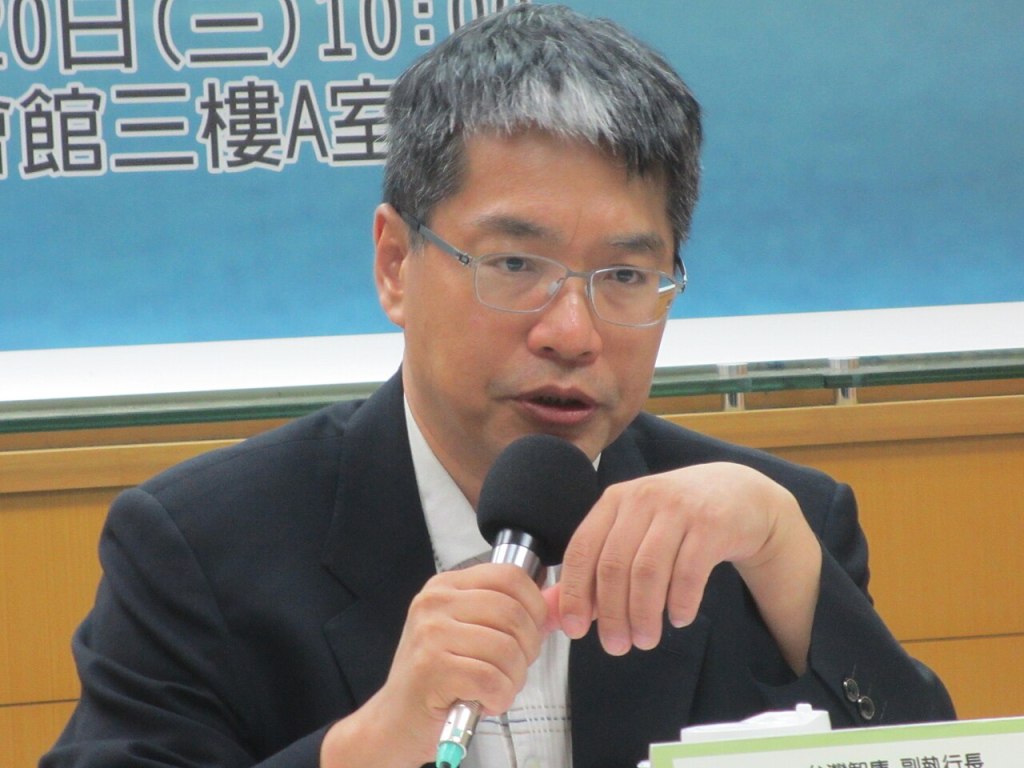
The Indo-Pacific Politics: What do you think is Taiwan’s global identity today?
Dr. I-Chung Lai (賴怡忠): I believe that Taiwan right now presents itself as the safe [keeper], the guardian of democracy, the very important innovation hub for the whole world, especially in high tech. And I also believe that Taiwan is a place that welcomes globalisation’s progressive values. I think those are things that people started to ascribe to when they talk about Taiwan and also how they see themselves in this world.
The Indo-Pacific Politics: What has been the process, according to you, for Taiwan to achieve that identity, and how difficult it is to sustain it?
Dr. I-Chung Lai (賴怡忠): I have to say that I think it’s a democratic transformation. Democracy in Taiwan was not a revolution! It’s a gradual facial transformation. And a lot of people, they said that Taiwan sold out transition to democracy in phases so that we’re able to achieve the peaceful transformation from the authoritarian state to the democracy. And then when we became a democracy, we found out that our neighbour, China, for various reasons, decided to destroy democracies. So we have to defend it! And that process also hardened our belief that this is Taiwan because China wants to destroy Taiwan–although that’s done in the name of anti-independence. And as Taiwan is preserving its survival, at the same time we found the recognition of it being a democracy becoming of central value to it.
So that’s being forced in his process–of course that also gets to play in the geopolitics–the people here have become very sensitive about what’s happening within China, within United States. What’s happening in Japan, what’s happening in East Asia in general. And that started to get into how they calculate it, in order to respond to the external challenges. And just like in the case of technology, in Taiwan, we do not want to boast about our importance in the global techno world, although in many other things, such as the wafer chip production, we are dominating. And that has been there for sometime, but five-six years ago , people started discovering it [our dominance].
We never boasted about our own importance, but it is sort of being discovered by others, and they started to ascribe that to Taiwan and the way our people [work], that we just go with the flow. It also demonstrates that our habit is basically about how we have to adapt to this world, and adapting means, usually we don’t want to broadcast ourselves. We want to just stay low and achieve something that’s really there, rather than telling everyone what we wanted to do. Of course, that mindset also got reinforced by our position in the global supply chain. Taiwan industries, if you look at them–almost every one of them, none of them produces the brand products. But we are so critical in almost every brand product. In every brand product, you find Taiwanese companies, their main components in it, and probably there’s a very big portion of it.
The Indo-Pacific Politics: So, you mean becoming critical for critical things?
Dr. I-Chung Lai (賴怡忠): Yeah, but we never say we’re critical.
The Indo-Pacific Politics: Yeah, I think that’s also a Chinese cultural trait, isn’t it? That’s a part of Chinese trait, maybe influenced by your Confucian culture.
Dr. I-Chung Lai (賴怡忠): You look at the Chinese right now, they have boasted about how they are so good.
The Indo-Pacific Politics: That’s what Chinese have become in the last few decades!
Dr. I-Chung Lai (賴怡忠): Probably the Chinese, in their own culture, wanted to show to the whole world–or earlier they wanted to show to their neighbours about how great, how mighty they are. But our culture is not like that, we never did that. We never said we are that big. That is because of the hundreds of years of history that we lived through, because we have been colonized so many times by [various] foreign powers. We know we had to adapt. We have to live with them. And the best way, the strategy to live with them is to try to achieve that greatness without being known. And then when the discovery was just too late, they had [already] become dependent on us. That’s the strategy that the last 100 Years of Taiwan’s historic experiences taught us.
The Indo-Pacific Politics: I have had some discussions in Taiwan with people who have experienced a lot of Taiwanese history. And they talk about Taiwanization that not just expresses the cultural or the social identity of Taiwan, but the entire process of your becoming a noted contemporary society. You had a martial law period for four decades (20 May 1949 and 14 July 1987), and then you had a gradual gaining of a democratic footing. You went through a lot of process to be what you are today. You witnessed some very bloody periods as well, right from 1947 and further on and today you have a very composite society. As an Indian I have reflected a lot on it, particularly on the aspect of how Taiwanese see an ideal society.
Like you said Chinese society is very boastful. I would say Taiwanese society also has a very loud expression of idealism that it’s an ideal democracy. Probably the way CCP expresses China as an ideal civilisation and PRC as an ideal communist society. Idealism in some ways breads a lot of utopia because there’s no absolutely perfect society. I’m talking about what I noticed in Taiwan because there are also many grey shades to the Taiwanese polity.
Coming back to Tiwanization, they talk many things within its ambit. There’s obviously lots of hope and then they talk about the beginning of the democratic movement in Taiwan–the euphoria, the excitement, grassroot activism–young people gathering to bring a change. And then we come to where Taiwan is today with many cross-strait interferences, all the espionage, many aspirations and the industrial achievements, all the challenges and a lot of geopolitics. In this context there’s a ROC (Republic of China i.e. Taiwan) and there’s a PRC (People’s Republic of China i.e. mainland China).
Dr. I-Chung Lai (賴怡忠): Yeah, we’re not looking at either of them, but we’re looking at both.
The Indo-Pacific Politics: And so in Taiwan I see people who say we are “the China” [i.e. we are the integrated China which is not the CCP China but includes the Chinese mainland and the island of Taiwan;] and some say we are “the Taiwan” and i.e. we have accepted we are a separate country from China [PRC in this case]. Within this narrative of a separate country, there’s a different dynamics of historical interpretation than how China is defined by the CCP. I mean PRC and ROC are based on different narratives of China and both have continued to evolve differently since the end of the 2nd world war. How do we understand this complex state of affairs?
Dr. I-Chung Lai (賴怡忠): I will say that the defining moment was in 1947, the February 28 massacre [also called 228 massacre involving violent suppression of an anti-government uprising by the Kuomintang–led Nationalist government]. Before that, when people in Taiwan, talked about the Taiwanization, they actually talked about Taiwan versus Japan, because Japan was a colonizer [of Taiwan from 1895 to 1945]. And then after Japanese were defeated, and went back to Japan, the [Kuomintang led] Chinese government came in the as the ruling authority. I think in this two years process, what Taiwan found out was a great disappointment–first of all. Second, this led to a very different China than they wanted to realize. And then this China looked at Taiwan as a foreign entity. They wanted to re-educate every single one of them. They wanted to wash out Japan’s cultural footprint from Taiwan, which had already become a part of Taiwan. So that became the cultural re-education experiment that China [administration that took over from the Japanese] imposed on Taiwan and it became a very-very bloody one, ending up very violently.
Note for readers: The martial law period that began in 1949 and lasted for 38 years is termed the White Terror Period in Taiwan. Taipei’s National Human Rights Museum sources term this as a “repressive rule”. During this rule many communist spies, political activist and many with unproven charges were arrested, interrogated and even executed under two statutes: The Statutes for the Detection and Eradication of Spies during the Period of Communist Rebellion and the Statutes for the Punishment of Rebellion. The BBC termed this as “tens of thousands” of arrests and at least 1200 executions between 1949 and 1992.
The Indo-Pacific Politics: Do you mean to say that a culture was imposed on Taiwan by the Chinese government that arrived in 1949? Are you referring to the martial law period?
Dr. I-Chung Lai (賴怡忠): I mean before the 1947 February massacre the people discovered that the Chinese ruling authority that came to Taiwan [in 1945 after the Japanese lost the war], occupied all the positions, preventing Taiwanese from being the masters. So in Taiwan, they will say that gone are the Japanese dogs, and then came the Chinese pigs. Gone are the dogs, then came the pigs, adage exists because they hate both. And so that is the time that the Taiwanese started to realize that in the past when they talked about Taiwan and Japan, it was a dichotomy–Taiwan versus Japan. And they thought that, well, since our ancestors migrated from China, and then later the motherland people came to rule us, we should be the same. But then they found that they’ve been treated differently. They’ve been treated differently for several reasons.
First of all, those colonizers, they came in, they despised everything, they looked at Taiwan as a foreign land. They looked at Taiwanese people as different kind of people. And then the Taiwanese realized that they are different because of how they [ruling Kuomintang] looked at them. And second, the Taiwanese also realized that this is a different China. They’re not the same people, not just because of the way they treated us, but also because of the different historical past we went through. So they realized that the China they had was something that exists only in their dreams.
The Indo-Pacific Politics: It’s a fantasy land.
Dr. I-Chung Lai (賴怡忠): That’s right.
Dr. I-Chung Lai (賴怡忠): It’s not the real China they’re facing. And the real China is very ugly. And of course, they came up with big massacres. A lot of Taiwanese intellectual elite realized that we have to be the master of our own histories. So as I told you, that during the 100 years of colonization that Taiwan endured, more so after 1947 massacre, intellectually, they started to realize that right now, we have to advance on our own, no longer accepting the foreign colonizers. So that concept started to drive the whole democratization process during the martial law period and of course, a lot of people lost lives, and were expelled during the martial law period and during the authoritarian regime rule. So in Taiwan, this process, very specifically of the democratization, unspoken stuff is about Taiwanization. But in the past [during martial law period], we could not talk about Taiwanization because we were ruled by the KMT ROC regime and it would be seen as the subversion of the state and one would be labeled as a communist supporter which would make it a crime.
But then when Taiwan finally got with democratization, the Taiwanization process also got attached to it and started coming up. So that is why a specific trait of the Taiwan democracy is about Taiwanization. With the growing Taiwanization, that is the growth of the Taiwanese identity, the appeal of “One China” is not really accepted by the Taiwanese people. And that started to rattle the US, China, Taiwan trilateral framework. United States was scared, because that will challenge their fundamental assumptions about how to manage their relation with China over Taiwan. The Chinese are rattled because not only the “One China” could be taken away, but it also comes with democratization. It will also have an impact on the domestic Chinese community, not just about democracy in the Han ethnic region but also in Tibet! How about Eastern Turkestan? How about Mongolia? And even some people also argue that Manchurian people probably also wanted the growth of their identity and want to be independent from China. So the PRC also got rattled, and this is more severe than competing about who is China’s rightful representative, the PRC or the ROC.
The Indo-Pacific Politics: So probably the idea of Taiwan itself is a threat, not just the strategic location of Taiwan. But the fact that Taiwan has been able to survive these many decades of constant pressure, and you have not only survived, but basically, you’ve prospered. You are, in a way the leading economy in the Southeast Asian region. And your way of development, your way of progress, has been unprecedented. Just compare it. The last few decades of you becoming a democracy! Only after 1989 your progress of democracy started.
You look at all other smaller nations around, therefore, I am very curious to understand what is the kind of aptitude that despite being under such stress and pressure you have progressed. Is it your national policy? Is it your science policy? Is it your aptitude? And then, as Indians we tend to think it’s because of the martial law period and because a discipline was enforced on you, so you have become disciplined. And then some Indians say, “Oh, does it means it is important to have a stick to discipline people?”
Dr. I-Chung Lai (賴怡忠): That’s a wrong lesson. Definitely a wrong lesson.
The Indo-Pacific Politics: Please help us understand that.
Dr. I-Chung Lai (賴怡忠): I will say, first of all the during the martial law period Taiwan’s economic situation and also the industrialisation you see right now including many public infrastructures being built was never there. The authoritarian period, before democracy started was actually a time that amplified and sustained all the corruption, the problems and how the environment was polluted. The people who got closer to the KMT ruling regime could have everything they wanted and no one could touch them. So the issue is before the democratization, when people ask about Taiwan, I will say we never had that rationality and those designs that you see manifesting today. A lot of it actually came with the democratization–the democratization meant that the politicians need to appeal to the people. And when people complain about certain things, they need to deliver solutions to them. Of course, it could be poor bureau politics but the way we were able to do it is probably less of the poor bureau politics, and more of competing for the better so that we’re able to have good rationality in certain things. We still have a long way to go with this.
But in comparison with the situation in 80s, even in late 80s, we really have moved a long way. I would not describe this as our intelligent culture. I would say that institutions really have a very important role to play in achieving this. They have helped to sustain things that are good and that should pop out and they were able to suppress something that is more negative. During the martial law period they were just punishing people who were questioning their authority.
The Indo-Pacific Politics: The punishment culture in Taiwan, I myself have sometimes seen that it ripples in the society here. The punishment as a psychic trigger. I have never experienced it this way in India. I grew up in a very traditional community, and we had very strict parenting, but we didn’t have the social concept of punishment. I really mean it. I hope you appreciate what I’m telling you, because I come from a very different democratic but a traditional society, and I have come here, after 20 years of work and travel around India, and so I sense this. I feel it. That punishment culture is very strong in the social fabric, in the social vibe in Taiwan. I won’t say it’s an identity. It’s no longer in your identity.
Dr. I-Chung Lai (賴怡忠): It’s like we think, that when something is abnormal, then it’s a punishment. Yea! Yea! [Reflective pause]
The Indo-Pacific Politics: If you [Taiwanese] have a sense of doubt towards someone, then you automatically trigger a sense of punishment. You know, for example, I’m carrying this bag [Interviewer points at a bag from a Japanese conference]. I carry this bag very proudly while moving around Taiwan, because it gives me a lot of escape from the social sense of your punishment.
[Collective laughter]
Dr. I-Chung Lai (賴怡忠): First of all Taiwan is a migrant society. So like when my ancestors came to Taiwan, they had to battle everything. And for them, if they didn’t work hard, they wouldn’t get anything. If they do not work hard, they would be left to die! So that’s the first thing we have been taught. It’s like, this is a God, sent principle. And second, I think the Japanese colonial period has a long lasting effect on the Taiwanese people. That means they value the self discipline and being personally responsible. Of course, they emphasize–usually the Western talk is about responsibility as an individual–however we talk about individual responsibilities plus the social norm. You have to be responsible for your actions, and then your action also cannot interfere with other people’s freedoms. So that is a second requirement. But in the Western culture the second requirement is not as strong, but in Taiwan if you do not follow that you can expect a social punishment against you.
[Collective laughter]
The Indo-Pacific Politics: Coming to colonisation, India also had to face 200 years of colonisation. Those 200 years of colonisation meant British exploiting us, ruining our economy, and exporting our raw material and then treating us as a market and leading to a lot of misery, including a lot of poverty in our population. So when we got independent, we had a different reality to face. We were really exploited for two centuries, by a power which was a very different civilization. But I somewhere feel–like I’ve been traveling now around Taiwan, I went to Chiayi recently, and I went to the Chiayi Art Museum there, and I was looking at an exhibition titled “Reunion at the Courtyard” of the Taiwanese artist, Chang Lee De-Ho from the Japanese period.
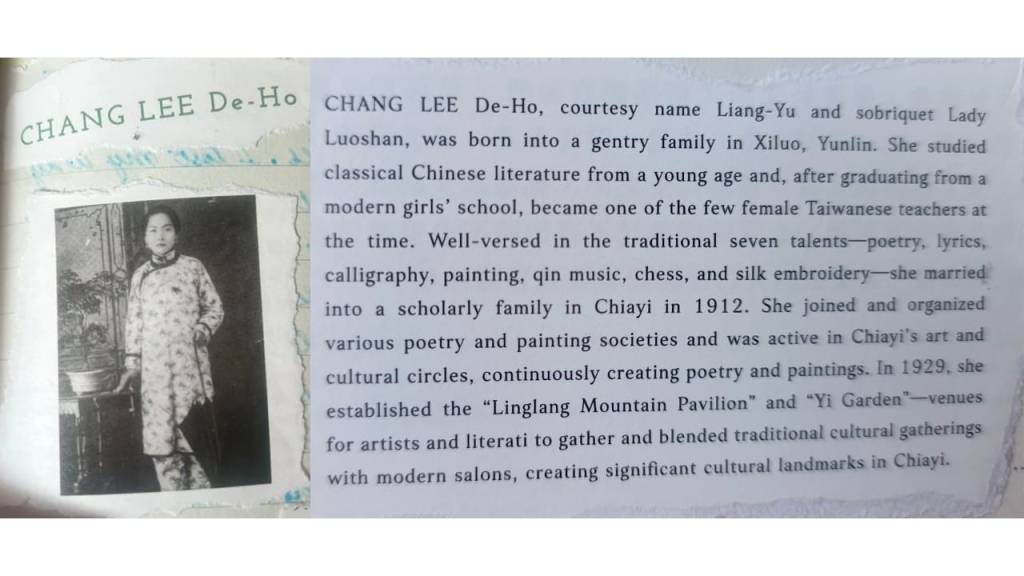
It was interesting to read about Taiwanese art and the artistic ecosystem in Taiwan under the Japanese and how these artists came together. Chang Lee De-Ho was defined as an artist with perfection in the seven Confucian arts. So it was not described as Confucian arts, but it was said that she was perfect in the “seven traditional talents”, which actually meant the Confucian arts. This to me highlighted how the Indo-Chinese civilisation in the larger South-east Asian region was impacted by Confucius. You were ruled by Japanese [from the neighbourhood], you weren’t ruled by a complete different civilisation like the British ruled India.
Dr. I-Chung Lai (賴怡忠): Yeah, you can say that. That’s right! So Japan–essentially we were ruled by a culture that’s more closer.
Through the above question the interviewer was reflecting upon the different historical contexts of Taiwan and India and how this has impacted both and continues to impact them. Somewhere this is reflected in the social and diplomatic behaviours of both India and Taiwan as well as in their emotional disposition and in their work cultures as well.
This is the first part of Venus Upadhayaya’s interview with Dr. I-Chung Lai (賴怡忠), the Director of Taipei based think-tank, The Prospect foundation. It was published on February 28, 2026 to commemorate 228 or Taiwan’s Peace Memorial Day.
Second part of Venus Upadhayaya’s interview with Dr. I-Chung Lai (賴怡忠).
Third part of Venus Upadhayaya’s interview with Dr. I-Chung Lai (賴怡忠).
 क्षेत्रीय संवाद (Platform for Regional Discourse ) 區域對話的平台