By Priyajit Debsarkar
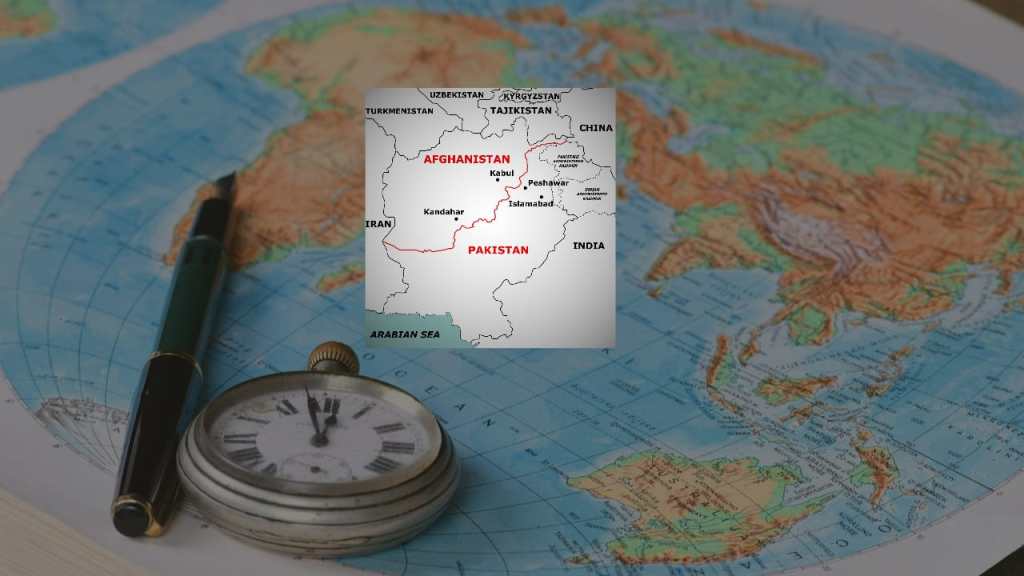
The situation in Afghanistan and Pakistan, especially the Durand line, has now transformed into one laced with dynamite. The Pashtoon community lives on both sides of Afghanistan and Pakistan in relative peace and harmony; however, this line has divided their societies and culture since the post-colonial departure of the British.
Afghanistan has always disputed the contours of this line as it is a significant obstruction in their traditional tribal way of life, and something which they allege the Pakistanis turn on and off at their wish, causing significant disruptions.
Bad, Ugly and the Good, Pakistan has long pedalled the conception of a good and a bad Taliban, whilst claiming to be a key ally in the war on terrorism, relying on Western aid and military assistance. According to the Pakistan Defence Minister, the recent air strike within Kabul and other cities of Afghanistan is definitely considered an act of war. Because it is not merely a skirmish along the disputed tribal borders, but an direct attack inside Afghanistan. When it comes to conventional military wisdom, Pakistan, in an apparent view, has an edge.
Dangerous damage and destruction both have equal capabilities of inflicting enormous, and it replaceable damages onto the other. Afghanistan has a long history of guerrilla warfare. They have almost three decades of such in-depth experience and have the mental nerve for perseverance and the resistance to almost coming back from the brink. Pakistan, even though it has tremendous advantages for a smokescreen blitz operation, but if the Afghans hold its ground, and the equilibrium may shift and even tilt. It is to be taken into consideration that the terrain in Afghanistan is extremely inhospitable and hostile.
The Taliban have a long history of resistance to aggressors, be it the former Soviet Union or Western forces, and hence Pakistan, being a nuclear-armed neighbour, puts the jeopardy of entire Southeast Asia at risk by taking pre-emptive measures and striking deep inside Afghan territory. Afghans also have another key advantage as the Pashtuns and other tribes live extensively inside Pakistan, where there is less of Punjabi dominance. Hence, Pakistan bears the risk of an internal impulsion in case retaliation happens from those sections of society.
Not only is the nuclear arsenal of Pakistan is at risk of being exposed to legitimate threats, but also global investment projects like the Belt and Road, CPEC initiative by China will be significantly hampered by such provocative measures, including casualties of innocent civilians, women, and children.
Pakistan and its military establishment, the deep state, have to ponder over the potential loss not only in the short term but in the medium and long term timeline, as any such potential blowback can have catastrophic consequences for its credibility in the international community.
The ball is in the court of Rawalpindi now to decide if they wish to expand even further and get dragged down in two front scenario, both on its eastern and western fragile flanks, or take a lesson from history by using the off-ramp approach.

Author – Priyajit Debsarkar, http://www.priyajit.co.uk
Views expressed in this article are of the author and do not necessarily reflect the views of the publication, The Indo-Pacific Politics.

 क्षेत्रीय संवाद (Platform for Regional Discourse ) 區域對話的平台