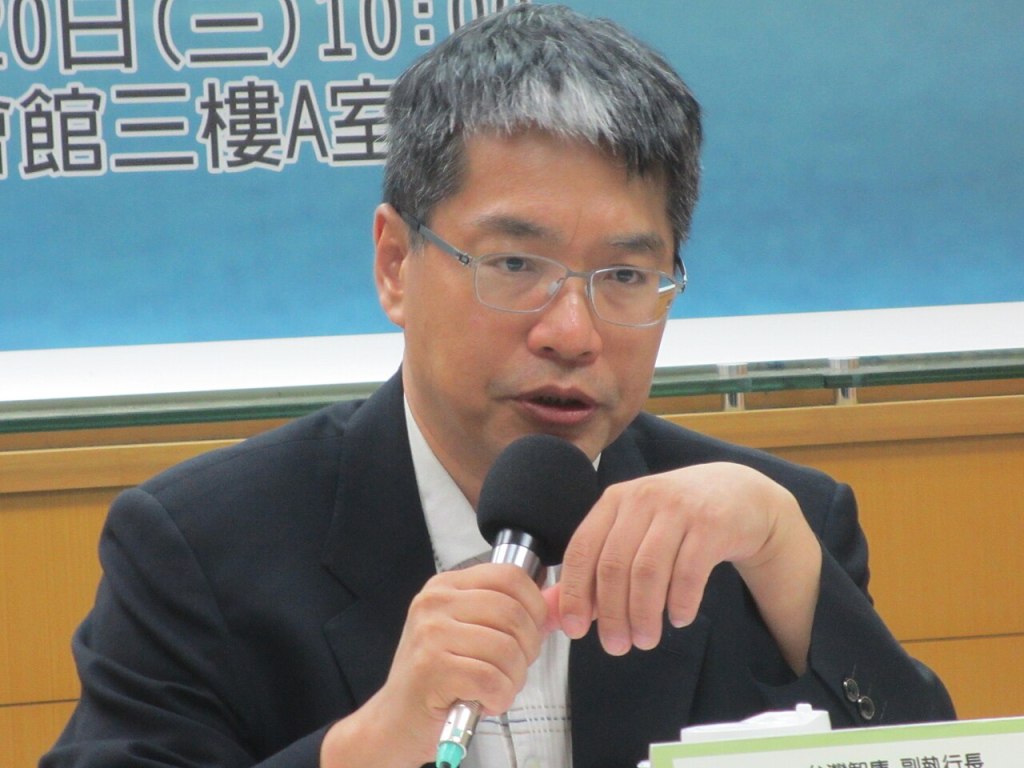
Dr. I-Chung Lai (賴怡忠), a senior policy maker and a Taiwanese foreign policy expert is the President of Taipei based Prospect Foundation, a government affiliated think tank. Dr. I-Chung has held many important offices of the Taiwanese administration. He’s the former Director General for DPP’s China Affairs and International Affairs, former Special Assistant to Taiwan’s Representative in Japan, and former Executive Director for the DPP Mission in the U.S.
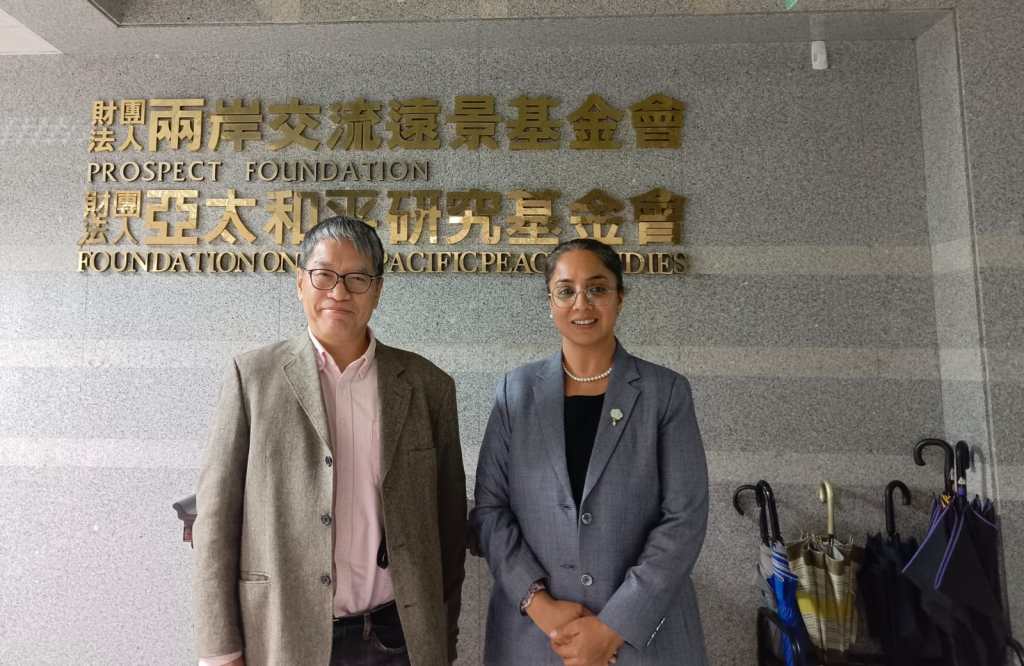
Venus Upadhayaya, the 2025 MOFA Taiwan fellow and the Editor of the Indo-Pacific Politics talked with him in his office on December 4 about a myriad range of issues involving Taiwan including its current global status, its foreign policy, its economy, domestic politics and geopolitical ties with the United States, Japan and India. This nearly 2-hour-long interview was extremely interactive, full of anecdotes and reflective, insightful discussion.
For the sake of better readability, the entire interview is divided into three parts. This is the third part published on March 12, 2026 and it talks about the South East-Asian diaspora in Taiwan; Taiwan’s decreasing population; Taiwan’s strategic importance in the Indo-Pacific region, the much-talked about probability of a 2027 invasion of Taiwan by the PRC; and the many shades of India-Taiwan relations including TSMC declining invitations to invest in India.
This part of the conversation includes some very tough questions answered with serious directness.
The Indo-Pacific Politics: The migrant community in Taiwan is from the entire Southeast Asia region and it is almost equal in population to your indigenous people’s population. The South East Asian diaspora is nearly 700,000 while the indigenous tribe population is nearly 600,000. [One in every 33 Taiwanese residents today is a Southeast Asian migrant worker in Taiwan, according to One-Forty, a Taiwanese charity working with migrant workers.]
However if we look at your demography, your population is actually decreasing. You are 23 million today, but by 2030, your population is estimated to decrease to 20 million.
Dr. I-Chung Lai (賴怡忠): Yea! The population problem is visible!
The Indo-Pacific Politics: This means that you will have recruitment problems in your military. You will have labor problems in your manufacturing industry. So you’re going to be facing a lot of problems in the next five years in this context, in addition to all the other geopolitical problems.
I visited a care center for the children of single, migrant mothers in Taipei. And I saw you have a huge population from Indonesia, which is actually a leading diaspora community. And there is also some illegal population of workers.
Dr. I-Chung Lai (賴怡忠): Yea, Yea! I know that many of them want to come in and do not want to go back home even after their contract expires.
The Indo-Pacific Politics: You know, I met a young Vietnamese couple in this shelter run by a woman and they had just given birth to twins, and they had come by a boat to Taiwan.
Dr. I-Chung Lai (賴怡忠): Oh! Ok! Did they come here, illegally?
The Indo-Pacific Politics: Yea!
Then I was looking at the American mission website and they seem to be bringing out an annual report on this particular aspect. [It’s latest report is called “2025 Trafficking in Persons Report: Taiwan“]. So, it means that there is something very important about it. Now, in the same context, Taiwan signed an MOU with India according to which you want 100,000 Indian migrant workers in Taiwan, and there was a lot of politics about it. You were supposed to have a [second working group] meeting [early in 2025], but there has been no official confirmation on it and as per late last year reports the negotiations are still ongoing. Please give us your viewpoint about what is happening. How do you see this in geopolitical context?
Dr. I-Chung Lai (賴怡忠): I will say that the migrants from the Southeast Asian Nations started to arrive in Tiwan in the early 90s, and that was also a part of the process of democratization in the past. When the KMT controlled Taiwan, its regime wasn’t very open to embracing foreigners. But I think in the early 90s, the combination of Taiwanese economic boom and also the need of the laborers, while the cost of labor started to rise, led people to argue that we need to import foreign laborers. So many of the immigrants, they first came as laborers. At the same time many Taiwanese men went to Southeast Asia–men of the mid to lower class–I do not know what happened, but they found it difficult to find a wife within Taiwan, and so they went to Southeast Asia to marry. And that also contributed to the increasing number of the Southeast Asian people in Taiwan.
The Indo-Pacific Politics: Did that also happen in the martial law period when soldiers were not allowed to have a wife?
Dr. I-Chung Lai (賴怡忠): During the martial law peirod, the soldiers were basically not allowed to have wives. And then when Chiang Kai-shek, sort of loosen it up, some of them, a good number of them, actually, they got married to indigenous people. Like, we have a former chief of the army whose father was a Chinese immigrant after 1949 and his mother was from an indigenous tribe. Then basically the Taiwanese men also tried to marry the immigrants from Southeast Asia. A good number of them, are Vietnamese, and some of them are Indonesian. But Vietnamese are the biggest source [in this category].
And we imported labor from Southeast Asia. So some of them after coming to Taiwan, settled and married and then had a family. Right now, yes, you are right that the Southeast Asian, offsprings, their number is probably the same as the number of indigenous people in Taiwan.
And we also have the third group of people i.e. the Chinese, not the Chinese immigrants from 1949 but the Chinese immigrant who came after the late 90s. So we have those different sources. And for the Southeast Asian people, Taiwan is like a magnet. And the Southeast Asian labor, whether that’s in construction or the home care has become a very important part of Taiwan right now.
The Indo-Pacific Politics: So why do you want Indians now? Because a Thai [whom I meant in my fellowship program] was asking why is Taiwan looking for 100,000 Indians when Thailand is ready to send more people?
Dr. I-Chung Lai (賴怡忠): It’s never enough. When the Indians come in, they are not [like the South East Asians existing here]. We are looking for a different kind of human capital from India. Many of the Southeast Asians came for jobs in the construction companies, basically hard labor. From India we are basically looking for more engineers–the people who shall probably work between the white and the blue collar [job segment].
The Indo-Pacific Politics: Okay! But recently, the MOU that was signed was reported in the news, in the Taipei Times and all other Taiwanese media, as an agreement needed to overcome a crisis in the Taiwanese manufacturing industry. Obviously, in Hsinchu you have a good number of Indian engineers. I think in Taichung, also there’s a good number of Indian engineers. Lot of Indian eateries are also opening up in Taiwan. That’s a different thing.
But why do you need Indians in the manufacturing industry? And what do you mean when you say there is a difference in the human capital from India. Are you saying that we expect Indians to come here and work, invest their labor and go back after a period of time? Like Indians have done in other countries.
Dr. I-Chung Lai (賴怡忠): I would say that the MoU itself never intended to have all of them stay in Taiwan. Of course, some of them, they want to work and if things, go well and the employer wants to retain them they will be able to stay. But the MOU basically is about inviting labor which will go back and after they go back they could be a part of the process of our talent investment in India. They will be available and they will help [in building] Taiwan’s investment in India. So the import of the Indian labor into Taiwan serves two things. First of all, we need manufacturing manpower there, and when they come inside Taiwan, they are not going to do hard labor like working on the construction site. The Indian labourers are going to be a part of the manufacturers.
The Indo-Pacific Politics: So are you saying that you’re creating a human capital pool for Taiwanese trade ecosystem, which is [like a] global [roster]. So your Indian human capital from Taiwan can go to India, or you will have the freedom to take them anywhere else, to your other manufacturing units and other parts of the world.
Dr. I-Chung Lai (賴怡忠): I think that really depends on the employers and the laborers. Of course, the exact conditions will be described in the MOU but I’ll say that when the Taiwanese look at Indians and others from neighboring countries who come to Taiwan to work in the manufacturing industry, we also expect that when we increase our investment in India and also in the manufacturing sector, those people with working experience in Taiwan could be an available resource because they would already be accustomed to our working conditions, and our working culture. They are very different from the labor from Southeast Asia and the Southeast Asian labor I want to say during their three or four decades of the working in Taiwan are already established. Like Indonesians when they came to Taiwan, they first went through six months of the language training before they actually arrived on the island and there’s always a human capital management company to help facilitate this process but we do not find that in India. In India, it’s always individuals who apply for the job. And that in Taiwan, we are experienced in dealing with.
The Indo-Pacific Politics: So do you mean to say that it’s a new experiment for Taiwan to invite Indian migrant labor?
Dr. I-Chung Lai (賴怡忠): That’s right! And I think people started to realize it’s a new experiment after signing the MOU, because a lot of them thought that probably it would be just like the labor from Southeast Asia. But they’re in different sectors.
The Indo-Pacific Politics: We’ll get back to the geopolitics in the Indo-Pacific region. How do you geopolitically see Taiwan in today’s Indo Pacific?
Dr. I-Chung Lai (賴怡忠): We’re under Chinese threat. So basically our position is that we need to establish or help to facilitate the balance of power in favour of maritime democracies. And so that’s very obvious. We want to maintain the first island chain–all democracies: Japan, Korea, Taiwan, Philippines–should establish a very strong balance of power so that we have the advantage and China won’t be able to really cross over. This linkage needs a backbone, and the United States is a critical element for that.
Right now we do not see immediate danger, but we do see less commitment exemplified by President Trump’s recent actions. I think all of us are busy trying to work our way to entice President Trump so that the structure will be maintained in the region. But basically people are thinking about these things. The threat from China is very obvious, so that’s how we look at it, and the US China competition, we believe is more structural, even though President Trump himself probably thinks differently. But whoever succeeds President Trump, even if it’s a Republican, will be forced by reality to come back to the competition aspect of it. So that is another thing. And the third thing is that for the geopolitics, what China right now would like to do is to reshape the whole world. The effect will not just be filled with by this first island chain democracies, but also any other country that comes along the Chinese rim, and that’s the first area they want to go out to. This Communist China has a particular distaste against the democracies. Especially Xi Jinping is a true believer of communist and Marxist doctrine, very different from the people like Hu Jintao or whoever preceded him.
So I would say that the India and China, although their competition is rooted in the cold war era when China wanted to contain India’s rise! But right now it’s precisely because of India’s democracy and that has become an added incentive for China, it really wants to hammer India down!
The Indo-Pacific Politics: So how potent is a 2027 threat of invasion of Taiwan by the Chinese?
Dr. I-Chung Lai (賴怡忠): I think Xi Jinping is taking 2027 as the target time for capability establishment.
The Indo-Pacific Politics: What do you mean by capability establishment? Do you mean he’s using 2027 as a timeline to reinforce his focus to gear up China’s entire war machinery?
Dr. I-Chung Lai (賴怡忠): Yeah! Yeah! Rather than just [setting] a time for the invasion!
The Indo-Pacific Politics: Oh, really? But why does he want to do it domestically? Why does he want things to be geared up? I mean is it a camouflage for some other game, or some other agenda? You are saying he’s actually oiling the entire domestic machinery while acting that the entire preparation is to target Taiwan. But if it’s a camouflage, then the agenda could be something else!
Dr. I-Chung Lai (賴怡忠): No, no! The agenda is still about Taiwan!
The Indo-Pacific Politics: Okay!
Dr. I-Chung Lai (賴怡忠): But Taiwan is like a necessary condition for something that’s bigger. Something bigger means that Xi Jinping [needs Taiwan] to challenge the United States, to reshape the whole post cold war world order.
The Indo-Pacific Politics: Oh!
Dr. I-Chung Lai (賴怡忠): If you look at Xi Jinping’s announcements from 2021 onwards, he put forward a Global Developmental Initiative. And in the year 2022 he put forward a global security initiative. And two months right after that the Russian invasion on Ukraine took place. In the year 2023 he put out the Global Civilization Initiative, and just in September, he announced the Global Governance Initiative. And in this particular Global Governance Initiative, he started to relativize, Democracy versus Chinese system.
And he started to say that the Chinese system cannot offer an alternative to democracy, but they’re actually better than the democratic systems. Xi Jinping during his spat with Japan, also talked about how the post World War two system should be, and China is the right guarantor for that order to become true.
The Indo-Pacific Politics: So it’s like assuming the global leadership?
Dr. I-Chung Lai (賴怡忠): Yea! And he does believe that the United States is not the rightful leader for the post world war two order and China would like to take over the ridership!
The Indo-Pacific Politics: Now I’m going to come to India, Taiwan, and I will start it with the one China principle. The context of one China principle that India adheres to is very different from the context of one China principle that US adheres to, because unlike the US, India shares over 2000 miles of a very challenging border with China which has its history in the post 1949 world. India started to have a border with China only after Mao annexed the regions of Xinjiang and Tibet.
So I’ve been brooding over it because though we say we are adhering to one China principle, actually our context is not the context of rest of the world. There is no other country which shares that with us. Even Taiwan doesn’t share that long border, and it’s a very complex border divided into three theaters–the eastern, western and the central. But each is very, very different in terms of its topography, in terms of its population, and then the Himalayas [that run along/through this border] are a civilizational, cultural thing for India, and so it is threatening a lot of things for India. Plus India also has a Tibetan diaspora, we have the CTA [Central Tibetan Administration] sitting in India. So how do you see that? How do you see India’s position in this context?
Dr. I-Chung Lai (賴怡忠): Yeah, I think for Taiwan right now, how we look at one China principle is basically how India looks at Taiwan-China. We in Taiwan, do not really look at Indian-China in terms of border issues, although we know that the border issue will have a influence on how Indians look at how they manage their relation with China, including how India reacts to the Chinese assertion that [some parts of it] are a part of China but for Taiwan to get into the Indian-China border disputes, I do not think that [will happen].
The Indo-Pacific Politics: I don’t think you are getting into the dispute. But what I’m saying is that the context is very different. There are two important theatres. Taiwan is one strategic theatre for China and Indian borders are another strategic theatre for China. So the deterrence is linked.
Dr. I-Chung Lai (賴怡忠): Yeah!
The Indo-Pacific Politics: You can open one theatre and you can close another theatre. China will never open two theatres together.
Dr. I-Chung Lai (賴怡忠): Yeah, I have to say that China is running with more focus on Taiwan. [Vis-a-vis India it has] taken a more defensive position. Defensive position does not mean that China is not offensive or China is not active, but China basically has taken a defensive position toward the China-Indian border, because the Chinese wanted to maintain their current aggressive postures, but not really push that much forward. And what they are doing to Taiwan, they are going to do to India as the next thing. And if you look at the China-India border, you can study the way China behaves. You can find out that even after the Galwan incident of 2020 where 20 Indian soldier lost their life, the Chinese probably lost twice as much as that! This should be a big deal in China, but then China behave as if it was nothing!
The Indo-Pacific Politics: They never confided that they lost 40 soldiers.
Dr. I-Chung Lai (賴怡忠): That’s right, usually if you loose 40 soldiers, in the Chinese traditional way, you would just amplify it into an anti-Indian protest.
The Indo-Pacific Politics: They amplified a few of them in their ceremonies and through a few gallantry awards they gave.
Dr. I-Chung Lai (賴怡忠): But not much! I would say, especially the Chinese tried to complement the Indians. The border dispute is one thing, but we can continue to get everything back to normal, at least. That’s what China said. This is very different from [Chinese behaviour] in the southeast China. See the situation between Taiwan, China and Japan.
The Indo-Pacific Politics: Ok! That sounds kind of interesting!
Dr. I-Chung Lai (賴怡忠): I’m not saying that India is the aggressive side, but China is basically telling that why not just put that dispute aside, then we can get everything ordered to normal. But China never did this to other countries, so that’s why I’ll say that the Chinese behaviour in their border dispute with India is more defensive right now. They do not want to fight two theatres at once. So that’s why they don’t want to loose focus on Taiwan and on the eastern seashore. And then when they finish it, they are going to focus on India. And also China, has different, multiple venues. They believe it’s not just about China-India but also about Pakistan-China.
The Indo-Pacific Politics: China has already resolved its border dispute with Pakistan in 1960s and they say they both are iron brothers. But that in itself is a dispute with India because the territory they shared with China [Shaksgam valley or the Trans-Karakoram Tract] is also claimed by India.
Dr. I-Chung Lai (賴怡忠): China works with Pakistan to contain India. Pakistan becomes a tool available for the Chinese in its issues with India.
The Indo-Pacific Politics: Do you think the US and the Chinese will fight in Pakistan? The way their infrastructure is coming up in Pakistan indicates Pakistan could be the land where China, US engage in a territorial fight. Particularly with Trump coming to power, the US is interested in Pakistani rare earths and their ports. The US wants to invest in Balochistan. And then you have the China Pakistan Economic Corridor [CPRC] with a very big, 60 to $80 billion of Chinese investment in the same territory!
Dr. I-Chung Lai (賴怡忠): I do not know if I have an answer to that. Of course, how Pakistan army chief was invited by Trump is too [indicative of something].
The Indo-Pacific Politics: Yeah, he met him and that was not taken well by Indians.
There is another important question. Some Indians have a question that the Nationalist Party [KMT] was actually dealing with the territories currently contested between India and the China [during the time before the civil war when KMT ruled over China from 1927 to 1949].
If you look at the northern frontiers of South Asia, after the Great Game period, the region where you today have Xinjiang, Aksai Chin, and Eastern Ladakh, that corridor was basically a part of the erstwhile kingdom of Jammu and Kashmir. The Nationalist Party [KMT] was negotiating there. There’s some history to it.
Dr. I-Chung Lai (賴怡忠): They [KMT] were negotiating there!
The Indo-Pacific Politics: So you see, Mao in 1952 built a road through Aksai Chin, linking Xinjiang and Tibet. After he annexed both these regions, and that’s when India woke up that China has occupied the Aksai Chin region. That’s when it first came up in the Indian parliament.
But before that, this entire region [along with Central Asia] during the colonial British time was a Great Game region between the Russian Empire, British Empire and the Chinese empire and the KMT inherited those state of affairs. During its rule over China it was negotiating in the region.
That strategic region, that tri-junction is where today China and Pakistan are building the China Pakistan Economic Corridor. So this entire region has a very complex history. The Indians would actually like to know how’s this dealt with in KMT’s original Constitution. If Taiwan’s original Constitution came from KMT, what is the stand of Taiwan’s Constitution on those regions today that the Nationalist Party was negotiating in history.
Dr. I-Chung Lai (賴怡忠): I will say that the right now, the ROC Taiwan, which is a little bit different from the [historic] ROC government—that is the current DPP as a ruling party—believes that in the disputes between India and China we have nothing to do. And I will say that probably the KMT, especially the current Chairwoman, the new one, she might take CCPs view about this border dispute.
The Indo-Pacific Politics: They [KMT] have recently given a statement indicating that they [want to] have a closer relationship with Russia. So if DPP is looking towards America, they are looking towards Russia. When you say today’s ROC is little bit different from the historical ROC, that little bit has to be defined for India. You see this, this is a very genuine concern.
Dr. I-Chung Lai (賴怡忠): You know ROC was the negotiator in the Macmohan line [negotiations between India, Tibet and China], I think. You have to know that the part of the problem is that we are unable to really dig out the ROC constitution and make a Taiwan constitution. We are forced to deal with this question every time when the Indians ask about the China-Indian border dispute.
Note for Readers: A revolt against the Qing dynasty by a group of revolutionaries dethroned the dynasty and established the ROC in 1911. The dynasty was abdicated in 1912 and Yuan Shikai became the first President of the ROC ruled China. He was KMT’s political rival. Yuan wasn’t personally present during the conference at Shimla in 1914 but he authorised ROC’s participation in the negotiations and dispatched Ivan Chen (Chen Yifan) to Shimla as his diplomat. Yuan refused to sign the agreement refusing to accept the border and it was finally signed as a bilateral between the British administration ruling India and the Tibetans.
The Indo-Pacific Politics: The CCP says it has five fingers–three are inside India, in Ladakh, Sikkim and Arunachal Pradesh and one each inside Nepal and Bhutan. So they are claiming Indian regions.
Dr. I-Chung Lai (賴怡忠): Okay when you ask Taiwanese about these issues they will feel that this is not our things. We have nothing to do with those. That is our current government’s attitude.
The Indo-Pacific Politics: And we take that. I mean, I take that. I do not have any authority [to speak for others] but I take that in my interview.
My next question is about the future of India-Taiwan relations. How important it is it, and how do you expect it to grow?
Dr. I-Chung Lai (賴怡忠): I have to say that this is the first time that an initiative has been taken to improve the India-Taiwan relations. When the DPP first came to power in 2000, immediately we looked at India because–one that meant diversifying economic resources away from China and people look at India as a nation with great potential–two, even if India is not able to become the next China, at least India could help to provide something to address the diversification needs.
The Indo-Pacific Politics: What do you mean by diversification needs?
Dr. I-Chung Lai (賴怡忠): We have too much investment in China. Especially after 2000, two years after the Asian financial crisis, the whole of Southeast Asia was still in shambles. So especially from the DPP leadership’s point of view at that time we needed to go to India. So it was Taiwan’s first approach.
Then they also looked at India as an important strategic counterweight against China–they can help to address Taiwan’s security needs. But having said that the Indian Foreign Ministry has an office here–but the design is that we do not have an Indian non-governmental presence in Taiwan, as well as an [independent] Taiwan’s economic presence in India. So basically, every Taiwanese engagement is managed by the foreign ministries on both sides, particularly by the Indian MEA. And the Indian MEA for the sake of its sensitivity toward Chinese concerns [vis-a-vis Taiwan] places all constraints regarding Taiwan-India engagement. A lot of these things we have experienced.
The Indo-Pacific Politics: Isn’t border a part of? Isn’t deterrence a part of it?
Dr. I-Chung Lai (賴怡忠): Sure! We understand that you wanted to manage [your relation with China], but putting that as a ceiling or putting that as a constraint on the Taiwan-India relation, then [that means] Taiwan, India [relation] will never take off. The Indian side continues to say that we should let the private [sector] decide on the economic issues, as if it can be totally managed by private transactions.
The Indo-Pacific Politics: But you see recently, when the Chinese objected to India’s engagement with Taiwan, Indian Foreign Ministry released a statement that India is doing business with Taiwan, which China is also doing!
Dr. I-Chung Lai (賴怡忠): Yea! So that’s one of the few things that we also heard in the year 2013.
The Indo-Pacific Politics: But then there’s a whole lot of difference between 2013-India and 2025-India, economically as well.
Dr. I-Chung Lai (賴怡忠): It should be different, but there are a lot of the constraints.
The Indo-Pacific Politics: So there is a disappointment in Taiwan! Somewhere there’s a great disappointment. Why is that so? Somebody from the Taiwanese establishment told me that Taiwanese politics works in a different way and to help Taiwanese understand India’s viewpoint, you need to have some interaction between the Indian political system and the Taiwanese political system. Both are democracies, but both are very different. There were people who were actually planning to bring Indian MPs to Taiwan, but then that also got politicalized!
Dr. I-Chung Lai (賴怡忠): For the Indian MPs, the restriction came from the Indian MEA.
The Indo-Pacific Politics: But does Taiwan understand that India is a country of 28 states with 28 [state] governments, and then you have UTS, and then there are different concerns for/of all these [states].
Dr. I-Chung Lai (賴怡忠): Well, I will have to say that for the India, Taiwan relation to substantially improve, the economic interaction has the most potential, but that has to be realized! But we haven’t been able to do that and that has something to do with Taiwanese businessman and their local experience in India and how their grievances or complaints haven’t really been heard or managed. While India would like to see Taiwanese investment in India, the Taiwanese businessmen would like to have political protection in India whereas India started to place all the constraints and the Taiwanese businessmen do not feel that there’s any opportunity for their concerns to be addressed.
And the recent Indian push for Taiwan to invest in Indian semiconductor is another thing!
The Indo-Pacific Politics: You don’t seem very hopeful about it!
Dr. I-Chung Lai (賴怡忠): Definitely!
The Indo-Pacific Politics: Is it because you didn’t [yet] have a trade agreement? Is that part of it?
Dr. I-Chung Lai (賴怡忠): It’s not just about that. The Indians continue to take the semiconductor investment like migrating a TV set production factory to India. I’m sorry that is not the case! The semiconductors you want from TSMC, you want the wafer producing company to go to India, to invest. It will involve the upstream, midstream, downstream, and a whole group of the investment to India, just like it’s happening in Arizona, led by the TSMC.
The Indo-Pacific Politics: About why TSMC couldn’t invest in India, somebody [a high placed source of the interviewer in New Delhi] was telling me that there was some kind of policy constraint coming from the Indian side. And so therefore the question is, TSMC has grown along with the American systems, whether they are work systems or they are policy systems, whereas Indian policy systems may be demanding something different.
TSMC is a 1000 billion dollars company, your next semiconductor company in the list is just worth 100 billion dollars. At 1000 billion USD the TSMC is huge. So where is it lacking?
Dr. I-Chung Lai (賴怡忠): Well, TSMC is a company with that scale, and what does it mean in context of India trying to get them to invest? I do not understand what you want to say?
The Indo-Pacific Politics: I was told that TSMC works with a massive ecosystem of specialized SMEs that provide niche services and these SMEs don’t fall inline with the policy frameworks in India. I can confirm it again with my source.
Dr. I-Chung Lai (賴怡忠): TSMC is not going to invest in India!
{The interviewer wants to specifically mention here that she was mistaken when she mentioned in the original interview that TSMC is a conglomerate of SMEs. Dr. I-Chung Lai corrected it there and then and the interviewer later confirmed it that TSMC instead works with a very evolved and efficient ecosystem of SMEs. The question above is a corrected version. It should also be noted that the interviewer’s source had also mentioned that the way forward for India and Taiwan to work together in semiconductor sector is through an US intervention. Since this was shared before the interviewer left for her 2025 fellowship early that year and much transpired between India and US in their trade negotiations after that, the question may again need to be attempted on another occasion.}
The Indo-Pacific Politics: That’s what I’m saying that there’s a lot of frustration, actually [on this matter.]
Dr. I-Chung Lai (賴怡忠): In addition to that, TSMC right now is busy with fulfilling its investment projects in Japan and also in Dresden in Germany. But there are other Taiwanese companies like TSMC who are also very important in terms of the semiconductors, and they are now interested in investing in India.
The Indo-Pacific Politics: PSMC is!
Dr. I-Chung Lai (賴怡忠): PSMC is not investing. They are involved in a tactical cooperation with Tata’s and that’s very different from TSMCs actual investments. They are involved in talent simulation. The Taiwanse semiconductor companies are right now not investing in India. The big reason is that for them to invest, they have to come with the big chunk of money and they also have to deal with not only the locations, the supply, the energy but also the sustainability, as well as check if they have an available market.
You don’t manufacture a TV set, and then later think about how to export that to other places. In the semiconductors industry when they are working to produce wafers, usually when they’re producing, they already know who their upstream customer is and who are their downstream clients, who they are and where they are. Certain location also come with a geographical advantage like incase of Arizona project it’s something to do with how our investment in that place works with other available US companies such as Intel and Samsung from South Korea. We expect there will be congregations. And also there are other national security implications due to the production of some advanced fighter jets there.
About TSMC’s investment at Kumamoto in Japan, it will be, directly Japanese semiconductors’ new strategies. So there will be many other things associated with it– it’s not just about investment, as they also invest in a lot of intangibles in that environment. So our company is not just throwing money there to produce something but they have to ensure that the Taiwanese people can manage the manufacturers. This means having answers to questions like–when we have a problem how do we solve it? Do we have available local talents to address those? Who are the clients? Because the way the semiconductor production works is that from the beginning of the design, all the way to the final object packing, testings–before we even started to produce these things–these decisions are already in place. Do we have those in India?
The Indo-Pacific Politics: Okay. I got it. So you basically expect better defined, established ecosystem in India for you to go and work there.
Dr. I-Chung Lai (賴怡忠): And especially when we talk about some sensible model, the government plays a critical role. And the Indians continue to deny the Taiwanese government to streamline things and don’t help our companies who go there. They thought that it’s a commercial project, so the TSMC can lead. Come on! This never works like that.
The Indo-Pacific Politics: So you are saying that the Indians expect TSMC to work from scratch in India because there is nothing there whereas the TSMC expects a certain setup to be established before it invests in India and it expects Indians to facilitate its work and investments in the country.
Dr. I-Chung Lai (賴怡忠): And also, in addition to that what if TSMC goes there and then you bring a lot of Chinese companies. The way to bring the Taiwanese companies is not like private transactions! How to organize them and define their role, the government needs to play a very important role in that!
The Indo-Pacific Politics: I think those are very practical concerns. I do think that the Indians and Taiwanese are taking it very emotionally. But as I’ve talked to other people, they have said Japan has already everything established so TSMC can just go there and start to manufacture, whereas the same setup or ecosystem that TSMC needs is not present in India. And these are things which Indians have also told me. So I think there are two different set of realities that [have determined India and Taiwan’s expectations from each other in this context.] This is what I understand.
The Indo-Pacific Politics: Philippines has bought BrahMos missile from India, and now Indonesia has also ordered the Brahmos missile from India. Do you think this kind of somewhere strengthens Taiwan’s strategic posture in the region?
Dr. I-Chung Lai (賴怡忠): I’m not familiar with this.
The Indo-Pacific Politics: Because see, Philippines has already brought it. The BrahMos missile is an inter ballistic advanced missile system from India. Whereas Indonesia, if you look at the news of last two months, Indonesia has recently ordered it. So if you look at the strategic triad between Japan, Philippines and Taiwan–Taiwan is like an undercurrent in this whole thing.
And now you have Indians supplying their one of the most advanced ballistic missiles to Phillipines and Indonesia. Indians have also indirectly become a part of this triad. I don’t think Indians have randomly made a decision to sell their most advanced missile system to countries in the region.
Dr. I-Chung Lai (賴怡忠): I have to say that generally the decision of Philippines and Indonesia to improve their defense system from India, benefits the balance of power in our favour. That’s because we do not think that the Philippines or Indonesia will target their missile system against Taiwan. Their missiles will basically be targeted at PRC.
But the next question is how will the Brahmos missile integrate with others, especially, those who work in tandem with the US-Japan and Taiwan system. The US-Japan-Taiwan is dominated by the US system. And BrahMos, sort of is a standalone–it is different from the United States. If it could be integrated!
The Indo-Pacific Politics: That said, just to bring one point in between that Philippines this year [2025] in August signed the Strategic Partnership Plan of Action for 2025-2029. [As per a statement by the Indian Ministry of External Affairs, this includes, “Collaborating and cooperating in co-development and co-production of defence equipment, to achieve the goal of self-reliance in defence production, and encouraging investments and joint initiatives in the establishment of defence R&D, and supply chain ecosystem.”]
Philippines actually had a number of other defense agreements with other countries this year, which is unprecedented. Similarly, India also had a defense agreement with Japan this year, other than the QUAD multilateral India had these bilateral agreements.
Dr. I-Chung Lai (賴怡忠): Yeah, but we are talking about a very practical arrangement through that missile system and how that impacts the already existing defense architectures! And architecture, not in the policy sense, but architecture in the military tactical sense.
The Indo-Pacific Politics: So you are saying that, how the Philippines and Japan, or Philippines and Indonesia integrate their defense systems into the larger, established defense systems led by US, will actually lead the regional security.
Dr. I-Chung Lai (賴怡忠): Yeah, that will actually be like a force multiplier to the defense. But if they introduce this system and then they have to treat it differently, it will become like a standalone missile.
The Indo-Pacific Politics: Then, basically the question is that there needs to be more of a cross country exchange about how these systems are working. More of joint military exercises, more communication, more information exchange in the region involving India. But then that’s probably a future thing. So if Philippines and India are making a 2025-2029 plan, obviously one has to see what that plan would include operationally, and if that plan is overlapping anyway, with what India is doing with Japan, or what India is doing with Indonesia. But India is there!
Dr. I-Chung Lai (賴怡忠): Yeah, the Indian contribution is definitely welcome.
This is the third part of Venus Upadhayaya’s interview with Dr. I-Chung Lai (賴怡忠), the Director of Taipei based think-tank, The Prospect foundation. It was published on March 6, 2026.
First part of Venus Upadhayaya’s interview with Dr. I-Chung Lai (賴怡忠)was published on Feb. 28, 2026.
 क्षेत्रीय संवाद (Platform for Regional Discourse ) 區域對話的平台