By Priyajit Debsarkar
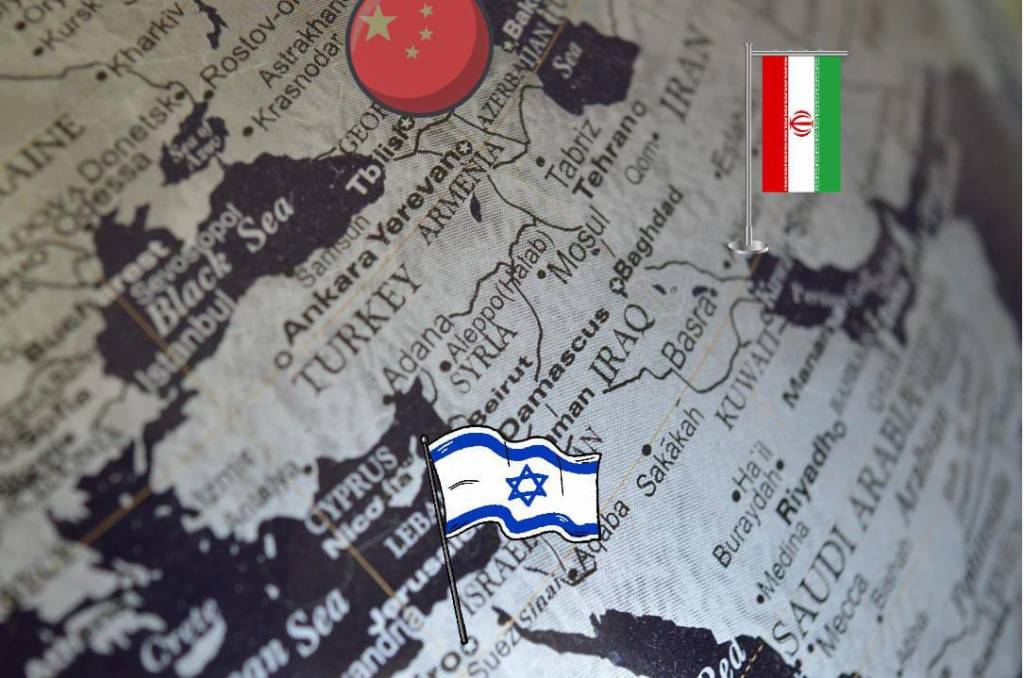
Bystander Beijing’s non alignment is a policy of choice for China when it comes the Middle east conflict which is spreading at an extremely alarming rate. As the war rages on the, heat is felt thousands of miles across with shut down stoves in Asia and beyond. The hostility is a direct challenge not only to Chinese energy security but also poses a unique warning to One Belt One Road initiative.
China, as a matter of principal is opposed to any regime change in Iran but matins strategic distance, despite the deep interests at stake when it comes to oil. China and Russia jointly called an emergency United Nations Security Council on Feb 28th, expressing high concerns over missile strikes.
Unenthusiastic onlooker, Beijing had advised it’s citizens in both Iran and Israel to prepare for evacuation a sign it was calculating escalation rather than an active intervention. As President Trump is due to arrive in China 31st March – 2nd April, it is cautious approach rather than direct confrontation. It appears that the war in the middle east, has a lower priority compared to trade linked tarrifis at home. It’s a hard gamble as in recent times as much as 90 percent of Iranian crude, heavily discounted had insulated Beijing from international volatility.
“The hostility is a direct challenge not only to Chinese energy security but also poses a unique warning to One Belt One Road initiative.“
Priyajit Debsarkar, Columnist
A key driver of Chinese industrial outputs and exports is stability of energy prices. Any oscillations come with workforce unrest and a risk to the political algorithm within. Unlike the 2025 Operation Sindoor were China actively not only assisted Pakistan with hardware but also provided access to real time data over arch rivals India. The clash lay bare the total reliance on Chinse equipment as Rawalpindi had total dependence on Beijing. However, Iran is much less under the influence of China when it comes to counterstrike capabilities. China has provided Tehran with non-security guarantee drones, air defence and surveillance nonetheless.
China had positioned satellites and naval assets in the region since the hostilities began but not solely to help Iran but to gather data for future battlefield dynamics lessons. China is certainly not viewing Iran with the same lens as that to Islamabad. So, support within limits is the party line. With a lack of active alignment there comes the credibility question of portraying leadership of the global south for sure.
It seems China has not yet made a key and decisive bet on Iran and is walking the tightrope as energy requirements are essential but not irreplaceable. The risk to the Belt and Road initiative is more directed to other Gulf states. Iran apart from crude, there is not much of leverage for China. With the UAE and Saudi economies under direct threat the focus Beijing has to restore and reset, rather than engage.
Infirm Iran, with an incapacitated Iranian regime can be of significant concern but it can also become an opportunity for China. This the risk Chain is willing to take as it may brighten their chance of a more Beijing dependant formulation in contrast to the west. If examined under magnification China is not a patron of Iran but a distant opportunist. With investments over 100 billons into energy, infrastructure and industrial projects the pitfall facing Chia is asserting itself as an alternative in the hour of peril.
Author – Priyajit Debsarkar, http://www.priyajit.co.uk
Views expressed in this article are of the author and do not necessarily reflect the views of the publication, The Indo-Pacific Politics.

 क्षेत्रीय संवाद (Platform for Regional Discourse ) 區域對話的平台