
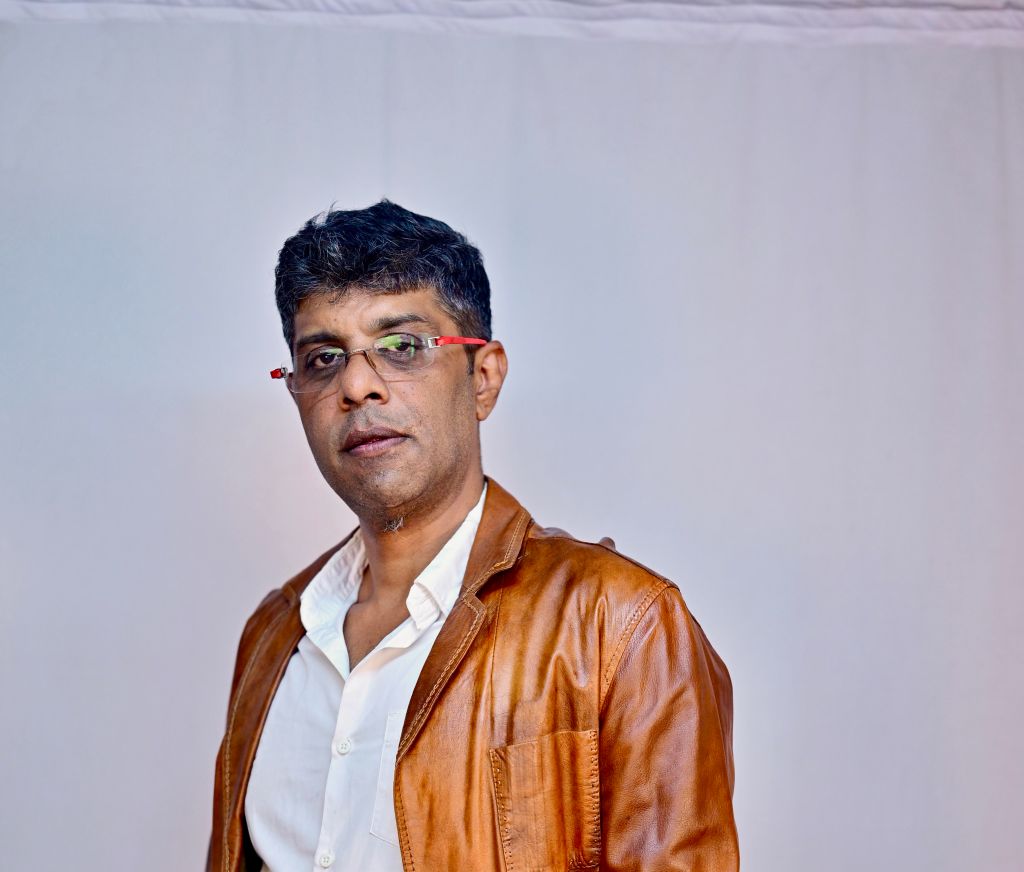
Vicky Nanjappa is an Indian journalist with over 25 years of experience. He started off in his hometown in Kodagu district reporting general topics for local newspapers. Following this he was based out of both Bengaluru and New Delhi, where he covered the legal beat before moving on to writing on internal security. He has covered all major terror attacks across the country as a roving correspondent for rediff.com.
Currently, Nanjappa is a freelancer, who contributes to various organisations as well as writing on topics on India’s security on his blog.

The Indo-Pacific Politics: What are India’s national security concerns in 2025?
Vicky Nanjappa: I would say that the Indian security agencies have never been busier. We got to witness one of the most brutal attacks at Pahalgam in which 26 innocents lost their lives. India retaliated strongly with Operation Sindoor and took down terror training facilities of the Lashkar-e-Tayiba and Jaish-e-Mohammad. However the quick pace with which the ISI is helping these terror outfits rebuild these facilities only show that the threat is far from over and it would be an ongoing battle.
In addition to threats from these terror groups mainly in Jammu and Kashmir, there are other issues too concerning national security. There is the problem of cyber attacks, honey trapping, espionage, narcotics smuggling and illegal immigration.
In-addition to terrorism related threats, “there is the problem of cyber attacks, honey trapping, espionage, narcotics smuggling and illegal immigration.”
Vicky nanjappa, strategic affairs journalist
The Indo-Pacific Politics: What would India’s national security concerns be from 2025-2030?
Vicky Nanjappa: The threats would be more or less the same as mentioned in the previous answer. However according to information that I have, between 2025 and 2030 the biggest threats would be from India’s neighbours. The threat from Pakistan is a well known fact. However the situation in Bangladesh is alarming. With the Jamaat-e-Islami gaining control, there is bound to be widespread radicalization and this could well spill into India’s northeastern states and West Bengal. Pakistan is planning another front to strike in India through terror outfits such as the Harkat-ul-Jihadi Islami and Jamaat-ul- Mujahideen Bangladesh.
While these issues would be ongoing, the biggest threat I see is from illegal immigration. Illegal immigration is not only related to lack of opportunities or economic crisis. It is an institutionalized racket. In the aftermath of the 1971 war, the ISI [Pakistan’s Inter Service Intelligence] and DGFI [Bangladesh’s Directorate General of Forces Intelligence] came together with a plan as they realized they cannot fight the Indian army. The plan was to send in as many illegal immigrants into from Bangladesh and then cause a demographic change in the bordering states. This would lead to land grabbing as these migrants would become the majority. Further the intention was to cause communal disturbances which would weaken India’s security. It is not just limited to the northeastern states or Bengal. The problem is deep rooted in the southern states such as Karnataka and Kerala.
“The biggest threat I see is from illegal immigration. Illegal immigration is not only related to lack of opportunities or economic crisis. It is an institutionalized racket.”
Vicky nanjappa, strategic affairs journalist
The Indo-Pacific Politics: How are India’s national security concerns shaping its foreign policy?
Vicky Nanjappa: India’s foreign policy is largely shaped by its national security concerns. There are persistent threats from nations such as Bangladesh and Pakistan. Moreover the border tensions with the neighbouring nations has pushed India to adopt a more assertive and security first approach.
This is reflected in the efforts that are being to isolate Pakistan on terror financing. India is also secreting its maritime domain in the IndianOcean, recognising the challenges it faces from China.
Beyond the neighborhood, the security concerns extend to energy diversification, technology resilience and also countering cyber threats. India is taking initiatives such as stronger participation with island nations, active participation in global counter-terrorism and building strategic defense ties with major powerhouses. In a nutshell the foreign policy has evolved from primarily non-aligned diplomacy to one that is pragmatic and the need to safeguard sovereignty and national security in a rapidly changing geopolitical environment.
“In a nutshell the foreign policy has evolved from primarily non-aligned diplomacy to one that is pragmatic and the need to safeguard sovereignty and national security in a rapidly changing geopolitical environment.”
Vicky nanjappa, strategic affairs journalist
The Indo-Pacific Politics: Though we have defined Viksit Bharat 2047, what would involve vis-a-vis national security to reach our 2047 goals?
Vicky Nanjappa: To achieve the vision of Viksit Bharat 2047, national security will have to be seen in its broadest sense—going beyond traditional military preparedness to encompass economic, technological, cyber, and energy security. Safeguarding territorial integrity from persistent threats posed by Pakistan and China will remain fundamental, but India will also need to secure its maritime domain, given the Indian Ocean’s centrality to global trade and strategic competition. Strengthening indigenous defense capabilities through Aatmanirbhar Bharat in defense production, space, and critical technologies will be key pillars in ensuring strategic autonomy by 2047.
It would also be equally important to address issues such as terrorism, radicalisation, narcotics trade and disinformation campaigns. For India to emerge as a developed nation by 2047, we must have a holistic national security strategy, the borders have to be protected to ensure internal stability and India must secure a place as a trusted and influential powerhouse.
The Indo-Pacific Politics: India’s economic rise is inevitable. and our geopolitical engagements are also being greatly impacted by it. How’s our economic rise shaping our national security discourse?
Vicky Nanjappa: India’s economic rise and national security would be directly connected. A growing economy would enable higher spending on defence and defence manufacturing. It would also help the nation invest more to tackle cyber crimes and all of would be critical to safeguarding the nation’s sovereignty. A strong economy would also ensures energy security and infrastructure development along the sensitive borders.
Economic rise also would give India more diplomatic weight in the global forums which would enable to shape narratives around terrorism, technology governance and supply chain resilience. This would in turn make India a key partner for major powers that would seek to balance China. This would enhance the security environment. Economic growth would be the foundation for India to secure its borders and emerge as a stable pole in a multi-polar world.
“India’s economic rise and national security would be directly connected. A growing economy would enable higher spending on defense and defense manufacturing.”
Vicky nanjappa, strategic affairs journalist
The Indo-Pacific Politics: Is there anything else that you would want to share on this topic?
Vicky Nanjappa: I would like to say that, while India has the capabilities to achieve all that has been said before, the challenges would be immense. There is no permanent solution when it comes to national security. It is an evolving situation and India would be have to constantly re-strategise according to what the situation demands. Pakistan’s entire strategy revolves around trying to bleed India by a thousand cuts. Hence, it would use everything at its disposal to hurt India. While Pakistan and China do remain challenges the situation in Bangladesh needs very close monitoring.
India would hope that there are elections held at the earliest, so that a better diplomatic outreach could take place. However when it comes to Bangladesh, India must be mindful that better ties would depend on how much of a role the Jamaat would play in any future government. Considering that this organisation is banned in India, resetting diplomatic ties would be hard in case of a Jamaat backed or Jamaat involved government in Bangladesh.
“There is no permanent solution when it comes to national security. It is an evolving situation and India would be have to constantly re-strategise according to what the situation demands.”
Vicky nanjappa, strategic affairs journalist


One response to “How India’s National Security Concerns are Impacting its Foreign Policy?”
Very well delivered,giving insights to common people in affairs of national security which is usually highly classified. Keep up the good work 👏
LikeLike