Dr. I-Chung Lai (賴怡忠), a senior policy maker and a Taiwanese foreign policy expert is the President of Taipei based Prospect Foundation, a government affiliated think tank. Dr. I-Chung has held many important offices of the Taiwanese administration. He’s the former Director General for DPP’s China Affairs and International Affairs, former Special Assistant to Taiwan’s Representative in Japan, and former Executive Director for the DPP Mission in the U.S.
Venus Upadhayaya, the 2025 MOFA Taiwan fellow and the Editor of the Indo-Pacific Politics talked with him in his office on December 4 about a myriad range of issues involving Taiwan including its current global status, its foreign policy, its economy, domestic politics and geopolitical ties with the United States, Japan and India. This nearly 2-hour-long interview was extremely interactive, full of anecdotes and reflective, insightful discussion.
For the sake of better readability, the entire interview is divided into three parts. This is the second part published on March 3, 2026 and it talks about the historical context to Taiwan’s political parties, Taiwan’s constitution and also about the importance of semiconductors for its national security.
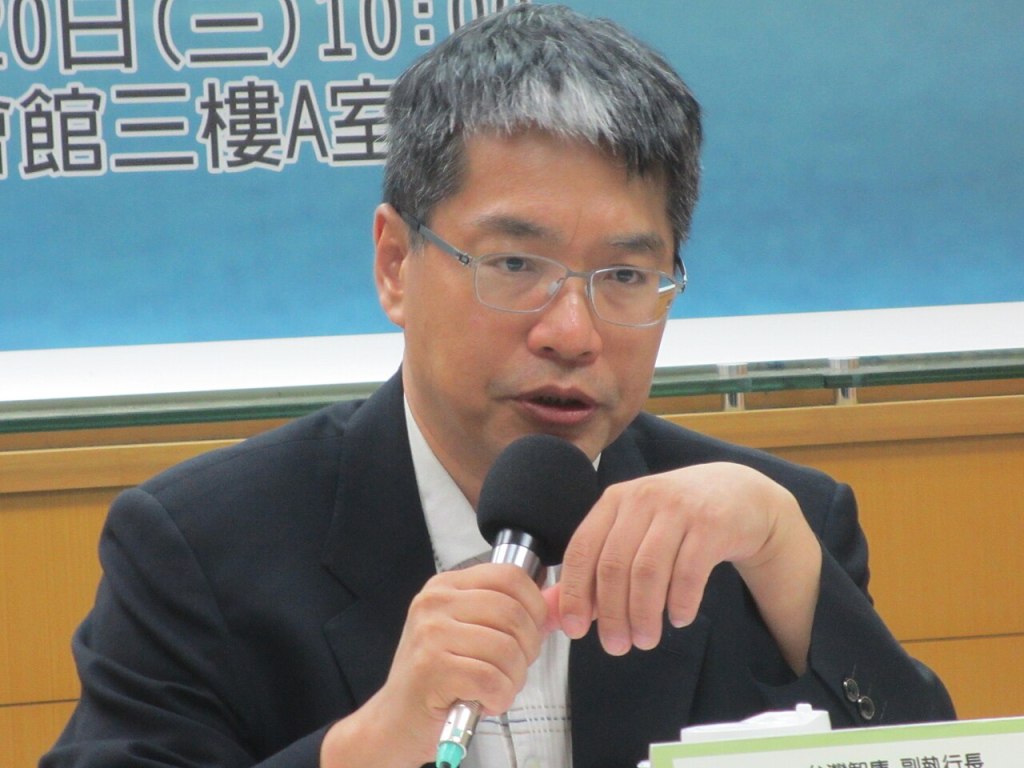
The Indo-Pacific Politics: When I was in the Epoch Times there was a lot of discussion on party culture in the context of how the Chinese Communist Party (CCP) socially operated. The CCP’s training of the Chinese people starts in preschools and kindergartens and further political education continues in primary school, middle schools and all the way to the college and university.
Dr. I-Chung Lai (賴怡忠): Okay, so it’s not just about the degree that you receive, but you also move within the CCP system, from the junior colleague to senior comrades.
The Indo-Pacific Politics: Yea exactly! So when I came to Taiwan I had people talking to me about the historic KMT (Kuomintang) party in similar if not the same terms. They said that the party (referring To KMT) is bad! They talked about the historic civil war between party one, i.e. the CCP and party two, i.e. the KMT. Because the Chinese people in New York talk about “Party Culture” I was set to think that there’s something intrinsic about the party culture during China’s civil war that’s inherited by the political culture in both China as well as Taiwan.
Dr. I-Chung Lai (賴怡忠): What do you mean?
The Indo-Pacific Politics: I mean during the civil war, one party was fighting the other party. One party established the PRC and other took over Taiwan or the ROC. Both represented an authoritarian culture–Taiwan witnessed that during the martial law period. So there are some traits of the party culture of the CCP and some traits of the party culture of KMT. [This context made me think about the how the civil war was a clash between the party cultures!]
Dr. I-Chung Lai (賴怡忠): First of all, CCP never ruled Taiwan, so when people talk about that KMT is bad because it ruled Taiwan and that the CCP is worse, they mean in a sense that they know by experience how bad the KMT is, and then they look at China and how the CCP is exploiting the Chinese people and it’s threatening Taiwan–they compare CCP in that context! Not because the CCP ruled Taiwan in their living experience! It is more about how the CCP treated Taiwan as if they own Taiwan. They do not accept our dignity. They ignore everything that we want to say.
But with the KMT, the Taiwanese have a living experience. They know when it ruled Taiwan [under the martial law] it was a colonial regime, and the people associated with the KMT behaved like they were above the law. How the courthouse in Taiwan was [conducted during the White Terror period]. There’s a famous word that the KMT runs the courthouse. It means [during the martial law period] all the judges and the prosecutors, as long as they were with the KMT, and worked with them, they were fine and were not in trouble.
The Indo-Pacific Politics: I saw a visual representation in the National Museum for Human Rights, Taipei about the way the entire judiciary was run by KMT regime during the martial law period.
Dr. I-Chung Lai (賴怡忠): But right now in Taiwan, our own party system is actually about DPP versus KMT. Of course, there are also some new parties coming from time to time. Right now when people talk about party culture in Taiwan–the KMT, their party membership is actually decreasing while DPP’s membership never crossed half a million, probably even less. Out of these half a million DPP party members, probably three-fourths of them are fake members. That is because in the DPP party, there’s an interior rule that we conduct the general election and party members elect the the party representatives, and then from among the party representatives, we can elect all the important party positions, such as the central review committee members, central executive committee members, and their central standing committee members. It’s a little bit like the Communist, but at a much smaller scale and that’s because they do not have a lot of members.
So some people, if they are wealthy, and they want to compete for something within the DPP, they start to ask people that they can pay the membership fee for them, but in-return they would have to vote for them. In the past, the party membership fee was a little bit higher. They also found out that they can’t deal with the fake membership issued especially for some people who have the wealth! So they brought in party reform and with that they decided to lower the rate of the party membership–it’s very, very cheap now like 300 NTD a year. So basically that’s like 10 US dollars. It’s nothing but that actually aggregated these issues!
When you talk about DPP, there’s also faction politics. The faction politics is not just about people. One scenario is in a faction, they like each other, so they become friends and then work as a group. In another scenario, there are also some people, they are wealthy enough to use their money to get random people to vote for them. Since I just paid your party membership fee, so you should vote for me! And so some people, they’re calling [the shots because] they’re big and they can control big membership, and then that enabled them to be in a better position to run for the central standing committee or the central executive committee.
Within the DPP, this has corrupted the politics–corrupted in the sense that I can have those members! But those members are not actually interested in DPP and are willing to vote for a candidate because the candidate can pay the party membership for them, so they have become the party members. So that’s why we call them fake members. The election actually gets [fashioned] by the people who are willing to pay for the party membership fee of these fake members. And these wealthy people are able to move up higher within the DPP, because they can [purchase] the power to elect who they want to nominate within the DPP, or at which position. They can even influence the party nomination strategies for their friends to run for the party. So that is the way of the party politics in Taiwan.
Thus when we talk about the party culture in Taiwan, I have to say that the Taiwanese people, a big number of them, are actually not affiliated with any party. It’s not like in China where the Communist Party rules whole of China and the only way for you to move up [within its ladder] is to be affiliated to it. But in Taiwan in the past, when the KMT was controlling everything, its membership within 16 million population in Taiwan was like 2 million but now probably, I think KMT when the last time they held elections, according to the number of people participating in the voting, their membership was less than 150,000.
The Indo-Pacific Politics: Okay, so that also means that for any kind of an election campaign in Taiwan, you need big money!
Dr. I-Chung Lai (賴怡忠): It is so! That’s the problem facing our democracy. Sometimes you just cannot escape it!
The Indo-Pacific Politics: That’s why I was saying that there is always a utopia in those Chinese circles in New York, because they are so depressed with the situation in China, they tend to look at Taiwan like a shining example. That there’s nothing wrong with Taiwan. They tend to breed a kind of false idealism. They go to the other extreme and I think Taiwan society is as grey as any other society or as grey as the situation in India. I would say India, also a democracy, has its own realities.
Dr. I-Chung Lai (賴怡忠): Exactly!
The Indo-Pacific Politics: Yeah, very complex realities in different regions! So Taiwan also has [grey shades] but because people always tend to look at Taiwan from the PRC context, they always tend to have a comparative [picture].
Dr. I-Chung Lai (賴怡忠): They want to say that Taiwan is a good China and good China can’t have anything wrong!
The Indo-Pacific Politics: So that’s why I said when I came to Taiwan I had a big notion to overcome, because I was yet to understand the difference between KMT and DPP. And then why people saddle between the KMT and DPP. There are people who change parties. And basically, politicians in Taiwan as politicians anywhere else in the world are also governed by self interest, interest of power. So if they don’t get it here they go there. If they don’t get it there, they go here.
Dr. I-Chung Lai (賴怡忠): Yea, things like this do happen.
The Indo-Pacific Politics: I’m glad that Taiwan is a realistic society.
The Indo-Pacific Politics: My next question is–you initially, in your first answer, talked about semiconductors. How important are semiconductors for you, not only in terms of your economy, but also your national security?
Dr. I-Chung Lai (賴怡忠): I will say that right now, Taiwan’s semiconductors are probably one of a few things that Taiwan found really matters to the whole world. In terms of national security, we need something that if China does something to Taiwan–who would assist Taiwan? Because we know that the big difference between Taiwan and China, is resource and population! Whatever may be the case we are overmatched by China. Obviously we have to leverage the international systems and semiconductors right now have become one of the few critical tools available. It’s an important reason why we think the world would like to work with Taiwan rather than standing idle. But of course, this is not a guarantee, we need more in order to secure the international attention and support. The more the better, and right now semiconductors play that important role.
The Indo-Pacific Politics: I’m very confused about the constitution of Taiwan. People have been telling me that the Constitution of Taiwan was originally the constitution of KMT, or the Nationalist party that took over Taiwan from the Japanese. After becoming a democracy you basically had amendments to that, but you didn’t have a new constitution.
Dr. I-Chung Lai (賴怡忠): That’s right, because we’ve been forbidden to have a new constitution. That’s the reason number one! Reason number two: It is so difficult to amend a new constitution. This is because of the historical legacy of the post world war two period. First of all, when the KMT came to Taiwan, the United States which was originally an ally did want to return Taiwan to the [original] ROC. But in 1950s when the the United States looked at how they lost the whole of China, and then how the KMT became a problematic authority in Taiwan, they believed that if they continued to hold their position, then probably the whole of Taiwan will also be lost to the Communist Party.
Earlier they had decided that for Taiwan’s status, not only the United States but also United Kingdom would have to work with Japan. But when Japan renounced the ownership of Taiwan, it never said to which country they returned Taiwan to. So the status of Taiwan in the international law, especially between the US and United Kingdom and probably also with many other nations, is undetermined. But for the KMT, the then ROC government, if Taiwan’s position is undetermined and not returned to the [original] ROC, then the whole legitimacy about their existence in Taiwan becomes questionable. Thus they insist that Taiwan is already part of the Republic of China. And they insist that because the constitution they had in China in 1945 was the constitution that arrived with them to Taiwan, [they thus insist it] is the right ruling constitution of Taiwan.
And of course, during the martial law period, even the KMT and ROC did not really exercise democracy through that constitution because they at that time invented new legislations that overrode this constitution by arguing that they were in a period to mobilize, to quell the rebellious communist regime. In that special period of war there was a special law and constitution was frozen.
The Indo-Pacific Politics: So is it still frozen? No,
Dr. I-Chung Lai (賴怡忠): No, right now it’s already unfrozen.
The Indo-Pacific Politics: It’s very confusing because when the KMT talks about reunification and I have checked its description on its linkedIn account. A few paragraphs from the top describe its history and the last paragraph is about reunification, and it is very confusing because it doesn’t really explain anything. In that context and because of the explanation you gave, I feel even more confused about it.
Dr. I-Chung Lai (賴怡忠): For anyone it’s very confusing even today because this Constitution came with the KMT from China to Taiwan and then the KMT insisted that it has the right ownership of Taiwan and Taiwan should be a part of the ROC.
The KMT insisted that it was doing so. But from 1947 all the way to 1991 they invented a law that’s called the “Mobilization to Quell the Communist Rebellion” law, and that sat above the constitution and the constitution itself was frozen. And then in 1991 under Lee Teng-hui, when he first became the KMT chairman and president of Taiwan, he worked hard to announce the abolishment of that legislation, so that we can actually exercise the Constitution.
The Taiwan democratization process from 1991 onward started to go through a process of development within the state, within the KMT, through the KMT, and also through the process that was inscribed in the constitution. So during the Taiwan democratization process one reason we did not really expel out the [KMT] colonial regime was because at that time, the leader, who was a Taiwanese, very cleverly set the ROC constitution for a democratic reform. That was the first time that Taiwan was able to do something that the constitution allowed, like conducting a full election to select all the representatives, and to also have the presidential elections with direct people’s participation.
If you look at the Constitution reform process, there are several amendments. The last meaningful amendment happened in 2005 but the rest of them, like four, to six of them happened from 1991 all the way to 2000 and then after that basically nothing happened. From 1991 to year 2000 all those amendments happened when the KMT enjoyed a super majority in Taiwan. Our Constitution requires that you need to have three-fourth majority in the National assembly with at least three-quarters of them should be present during the vote. So that’s the kind of high bar set for the constitutional amendments in Taiwan. They were able to do it in the 1990s when the KMT had a super majority, but after the DPP came in there was no way the DPP legislators could garner three-fourth majority–even when we were able to match about two-thirds of majority, that was very-very good.
However right now, the effective thing is that under this constitution, any party that can control more than 1/3 of the minority can effectively block every Constitutional reform. And that’s what happened! Another thing is that in addition to the mechanism ensured within the constitution, in the external environment, the United States, China, also look at the amendments with very close attention, and when they are not comfortable with any reform that might trigger distancing of China from Taiwan or [what doesn’t suit their policies]–they tend to also exert influence.
The Indo-Pacific Politics: So you have a mother and a father, who are incubating a baby, and there is a confusion between the mother and the father. It feels like the entire story of Taiwan continues to be in perpetual incubation including the Constitution. How the baby will come out eventually is yet not known!
Dr. I-Chung Lai (賴怡忠): We never came out of the womb. We are just trying to come out. Probably it’s stretched. But it’s still within the womb.
The Indo-Pacific Politics: But it’s a very competent baby inside. That’s what it seems to be. So something big is there, but it’s still in incubation!
This is the second part of Venus Upadhayaya’s interview with Dr. I-Chung Lai (賴怡忠), the Director of Taipei based think-tank, The Prospect foundation. It was published on March 3, 2026.
First part of Venus Upadhayaya’s interview with Dr. I-Chung Lai (賴怡忠) was published on Feb. 28, 2026.
Third part of Venus Upadhayaya’s interview with Dr. I-Chung Lai (賴怡忠) will be published on March 12, 2026.


2 responses to “PART 2: Taiwan’s Political Parties, Constitution & its Semiconductors with the Director of Prospect Foundation”
[…] Second part of Venus Upadhayaya’s interview with Dr. I-Chung Lai (賴怡忠). […]
LikeLike
[…] Second part of Venus Upadhayaya’s interview with Dr. I-Chung Lai (賴怡忠) will be published on … […]
LikeLike